
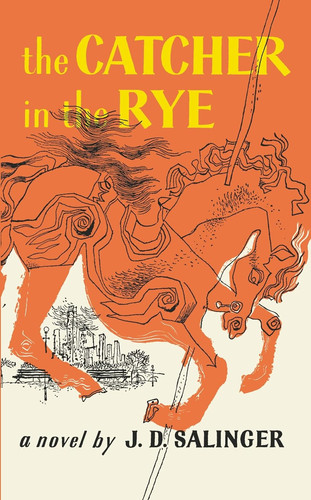
À Espera no Centeio (Portuguese Edition)
7.6 / 10 4M ratings
- Language
- Portuguese
- Published
- 2011
- Publisher
- Quetzal Editores
- ISBN
- 9789725649749
For sixteen-year-old Holden Caulfield, the world is full of phonies. After being expelled from yet another prep school, he finds himself adrift in New York City for a few days before he must face his parents. Narrated in a voice that is at once cynical, sarcastic, and desperately searching, Holden's journey through the city becomes a quest for connection in a world that feels increasingly artificial. He navigates a series of encounters with teachers, classmates, prostitutes, and his beloved younger sister, all while wrestling with the grief of a past tragedy and the confusing transition into adulthood.
This novel is a raw and unflinching portrait of teenage angst and alienation. It captures the universal struggle to find one's place in a society that often feels hypocritical and superficial. Through Holden's candid and unforgettable perspective, the story explores the profound desire for authenticity, the pain of loss, and the fragile beauty of innocence. It is a story for anyone who has ever felt like an outsider, questioning the world and their place within it.
This novel is a raw and unflinching portrait of teenage angst and alienation. It captures the universal struggle to find one's place in a society that often feels hypocritical and superficial. Through Holden's candid and unforgettable perspective, the story explores the profound desire for authenticity, the pain of loss, and the fragile beauty of innocence. It is a story for anyone who has ever felt like an outsider, questioning the world and their place within it.
Subjects
- Reference
- Literature & Fiction
- Genre Fiction
- Subjects
- Literary
- Action & Adventure
- Historical
- Self Service
- History
- Short Stories & Anthologies
- Anthologies
- Arborist Merchandising Root
- Coming of Age
- Religion & Spirituality
- Contemporary
- United States
- Fiction in English
- English & College Success
- English
- FICTION_GENERAL
- World
- Politics & Social Sciences
- Specialty Boutique
- New, Used & Rental Textbooks
- Teen & Young Adult
- Foreign Language Study & Reference
- Social Sciences
- Fiction
- Juvenile Fiction
- Religious
- Judaism
- Classics
- Short Stories
- Interpersonal relations
- American fiction (fictional works by one author)
- Literary Collections
- Religious Studies
- Juvenile fiction
- Conduct of life
- FICTION_COMING OF AGE
- AMERICAN FICTION (FICTIONAL WORKS BY ONE AUTHOR)
- Brothers and sisters
- Ancient & Classical
- New york (n.y.), fiction
- Fiction - General
- Social Themes
- Adolescence & Coming of Age
- Social & Family Issues
- American
- Literary Criticism
- Chang pian xiao shuo
- NEW YORK (N.Y.)_FICTION
- Jewish
- Large type books
- World Literature
- Romans, nouvelles
- City Life
- Religious Groups Studies
- Ying yu
- New York Times reviewed
- Adolescence
- Children's Books/All Ages
- Jewish Life
- ENGLISH LITERATURE_HISTORY AND CRITICISM
Original edition
The Catcher in the RyeOriginally published in 1951 English Little, Brown
Other editions (108)




Listen to the summary Narrated summary
Okay, so I got kicked out of Pencey Prep again. It's always the same phony crap with those schools, full of guys who are either big shots or jerks, and teachers who pretend to care but are mostly just grandstanders. Before I even really left, I had this run-in with my roommate, Stradlater, a secret slob but a good-looking guy, who was going out with Jane Gallagher, a girl I used to know. That really got under my skin, thinking about old Jane with a guy like him. After he came back, all full of himself, I tried to get him to tell me if he'd pulled anything with her, but he just acted like a big shot, which made me so mad I tried to punch him. He really socked me good, though. That was it. I couldn't stand another minute in that dump with all those phonies, so I decided to clear out early and head for New York City.
The train ride to New York was typical. I ended up talking to the mother of one of the Pencey jerks, Ernest Morrow, and I lied my head off about how great her son was, just to make her feel good. I'm a terrific liar, sometimes. Once I got to the city, I checked into this crummy hotel, the Edmont, and right away I started noticing all these perverts and phonies through my window. I even called up this old stripper I knew, Faith Cavendish, but she was a bust. I was feeling pretty lonesome and horny, which is how I ended up with Sunny, a prostitute, in my room. But when it came down to it, I just wanted to talk, not do anything. She was just a kid, really. Her pimp, Maurice, came up later and shook me down for more money, and then punched me in the gut. That whole thing was such a goddam mess.
I tried to connect with other people, but it was just one phony encounter after another. I went on a date with Sally Hayes, who was pretty, but such a phony, always talking about actors and how wonderful everything was. I got this crazy idea to run away with her, to live in a cabin in Massachusetts or Vermont, just the two of us, away from all the phoniness. But she started screaming at me, calling me a madman, and that was the end of that. Later, I met up with Carl Luce, an older guy from another school, at a bar. I just wanted to talk to him about sex and girls, because he was supposed to be so sophisticated, but he just acted like a big snob and told me I needed a psychoanalyst. Everything felt so goddam pointless. I was getting drunk, stumbling around, calling Sally again, just trying to find some genuine connection, but everyone was just so fake.
The only person I really wanted to see, the only one who wasn't a phony, was my little sister, Phoebe. So, I snuck back home, knowing my parents would kill me if they found out I'd been expelled again. Phoebe was still awake, writing in her notebook, and she was so happy to see me at first. But then she figured out I'd gotten the axe from Pencey, and she got really mad, telling me I didn't like anything. She kept asking me to name one thing I really liked. The only thing I could think of was Allie, my brother who died of leukemia, and that's not something you can just *like* in the present.
That's when I told her about my fantasy, about being the "catcher in the rye." I pictured all these little kids playing in a big field of rye, and if they started to go too close to the edge of a cliff, I'd be there to catch them before they fell off. I just want to save kids from losing their innocence, from falling into the phony adult world. But Phoebe, smart as she is, told me I had the poem all wrong. It's "if a body meet a body, coming through the rye," not "catch a body." She really is something, that kid.
After that, I called up my old English teacher, Mr. Antolini, who was probably the only adult I knew who wasn't a complete phony. He let me crash at his place, and he tried to give me some advice, telling me I was headed for a fall and that an educated man finds a way to live humbly for a cause. But then I woke up in the middle of the night and he was patting my head, which really freaked me out, so I bolted. I started thinking about heading west, just getting out of New York, away from everything.
I left a note for Phoebe, telling her I was going to run away, and she showed up at the museum with her suitcase, wanting to come with me. She wouldn't let me go without her, which broke my heart. I told her I wasn't going, and we went to the carousel. Watching her ride, reaching for the gold ring, I felt this overwhelming happiness, this feeling that I might be okay. You can't stop kids from reaching, from falling sometimes, and maybe that's okay. I ended up back home, and now I'm here, in this place, telling you all about it. I keep thinking about all those phonies, and how much I miss some of the people I knew. It's a funny thing, but you don't ever really tell anybody anything without missing everybody.
The train ride to New York was typical. I ended up talking to the mother of one of the Pencey jerks, Ernest Morrow, and I lied my head off about how great her son was, just to make her feel good. I'm a terrific liar, sometimes. Once I got to the city, I checked into this crummy hotel, the Edmont, and right away I started noticing all these perverts and phonies through my window. I even called up this old stripper I knew, Faith Cavendish, but she was a bust. I was feeling pretty lonesome and horny, which is how I ended up with Sunny, a prostitute, in my room. But when it came down to it, I just wanted to talk, not do anything. She was just a kid, really. Her pimp, Maurice, came up later and shook me down for more money, and then punched me in the gut. That whole thing was such a goddam mess.
I tried to connect with other people, but it was just one phony encounter after another. I went on a date with Sally Hayes, who was pretty, but such a phony, always talking about actors and how wonderful everything was. I got this crazy idea to run away with her, to live in a cabin in Massachusetts or Vermont, just the two of us, away from all the phoniness. But she started screaming at me, calling me a madman, and that was the end of that. Later, I met up with Carl Luce, an older guy from another school, at a bar. I just wanted to talk to him about sex and girls, because he was supposed to be so sophisticated, but he just acted like a big snob and told me I needed a psychoanalyst. Everything felt so goddam pointless. I was getting drunk, stumbling around, calling Sally again, just trying to find some genuine connection, but everyone was just so fake.
The only person I really wanted to see, the only one who wasn't a phony, was my little sister, Phoebe. So, I snuck back home, knowing my parents would kill me if they found out I'd been expelled again. Phoebe was still awake, writing in her notebook, and she was so happy to see me at first. But then she figured out I'd gotten the axe from Pencey, and she got really mad, telling me I didn't like anything. She kept asking me to name one thing I really liked. The only thing I could think of was Allie, my brother who died of leukemia, and that's not something you can just *like* in the present.
That's when I told her about my fantasy, about being the "catcher in the rye." I pictured all these little kids playing in a big field of rye, and if they started to go too close to the edge of a cliff, I'd be there to catch them before they fell off. I just want to save kids from losing their innocence, from falling into the phony adult world. But Phoebe, smart as she is, told me I had the poem all wrong. It's "if a body meet a body, coming through the rye," not "catch a body." She really is something, that kid.
After that, I called up my old English teacher, Mr. Antolini, who was probably the only adult I knew who wasn't a complete phony. He let me crash at his place, and he tried to give me some advice, telling me I was headed for a fall and that an educated man finds a way to live humbly for a cause. But then I woke up in the middle of the night and he was patting my head, which really freaked me out, so I bolted. I started thinking about heading west, just getting out of New York, away from everything.
I left a note for Phoebe, telling her I was going to run away, and she showed up at the museum with her suitcase, wanting to come with me. She wouldn't let me go without her, which broke my heart. I told her I wasn't going, and we went to the carousel. Watching her ride, reaching for the gold ring, I felt this overwhelming happiness, this feeling that I might be okay. You can't stop kids from reaching, from falling sometimes, and maybe that's okay. I ended up back home, and now I'm here, in this place, telling you all about it. I keep thinking about all those phonies, and how much I miss some of the people I knew. It's a funny thing, but you don't ever really tell anybody anything without missing everybody.
What other readers say
Liked
"The Catcher in the Rye" is widely celebrated for its profound ability to connect with readers, particularly during their formative years. Many laud the novel for its authentic portrayal of adolescent angst, disillusionment, and the search for meaning in a world perceived as "phony." Readers often express a deep, almost uncanny, identification with the protagonist, Holden Caulfield, feeling that the author perfectly articulates their unspoken thoughts and emotions. The book is frequently praised for its raw, conversational narrative style, which gives a vivid voice to Holden's internal struggles, making it feel both insightful and, at times, humorously relatable. For some, revisiting the book later in life reveals new layers of depth, highlighting Holden's underlying compassion, intelligence, and vulnerability, particularly in his relationships.
Disliked
However, the novel also garners significant criticism, with many readers finding Holden Caulfield to be an insufferable, whiny, self-absorbed, and hypocritical character. Critics often describe the plot as tedious, repetitive, and lacking in significant narrative development or a clear climax. The distinctive language and frequent use of certain phrases by Holden are deemed irritating and unoriginal by some. Additionally, the book's themes, such as its critique of societal "phoniness," are sometimes dismissed as superficial or cliched adolescent posturing. Modern readers occasionally find the content problematic, citing perceived instances of sexism and homophobia that they feel are not excused by the book's historical context. Some also argue that the portrayal of the protagonist's emotional state is inaccurate or insensitive.
In short
Ultimately, "The Catcher in the Rye" is a deeply polarizing novel that evokes strong reactions, ranging from profound adoration to intense dislike. Its reception often hinges on whether readers personally connect with Holden Caulfield's perspective and emotional state, particularly those who have experienced feelings of alienation or confusion during adolescence. It appeals strongly to individuals who appreciate character-driven narratives that delve into the complexities of youth, grief, and the struggle against societal expectations. Conversely, those who seek traditional plot structures, find the protagonist unlikable, or are sensitive to outdated social attitudes may find it a challenging or unsatisfying read.
No reviews yet. Be the first.