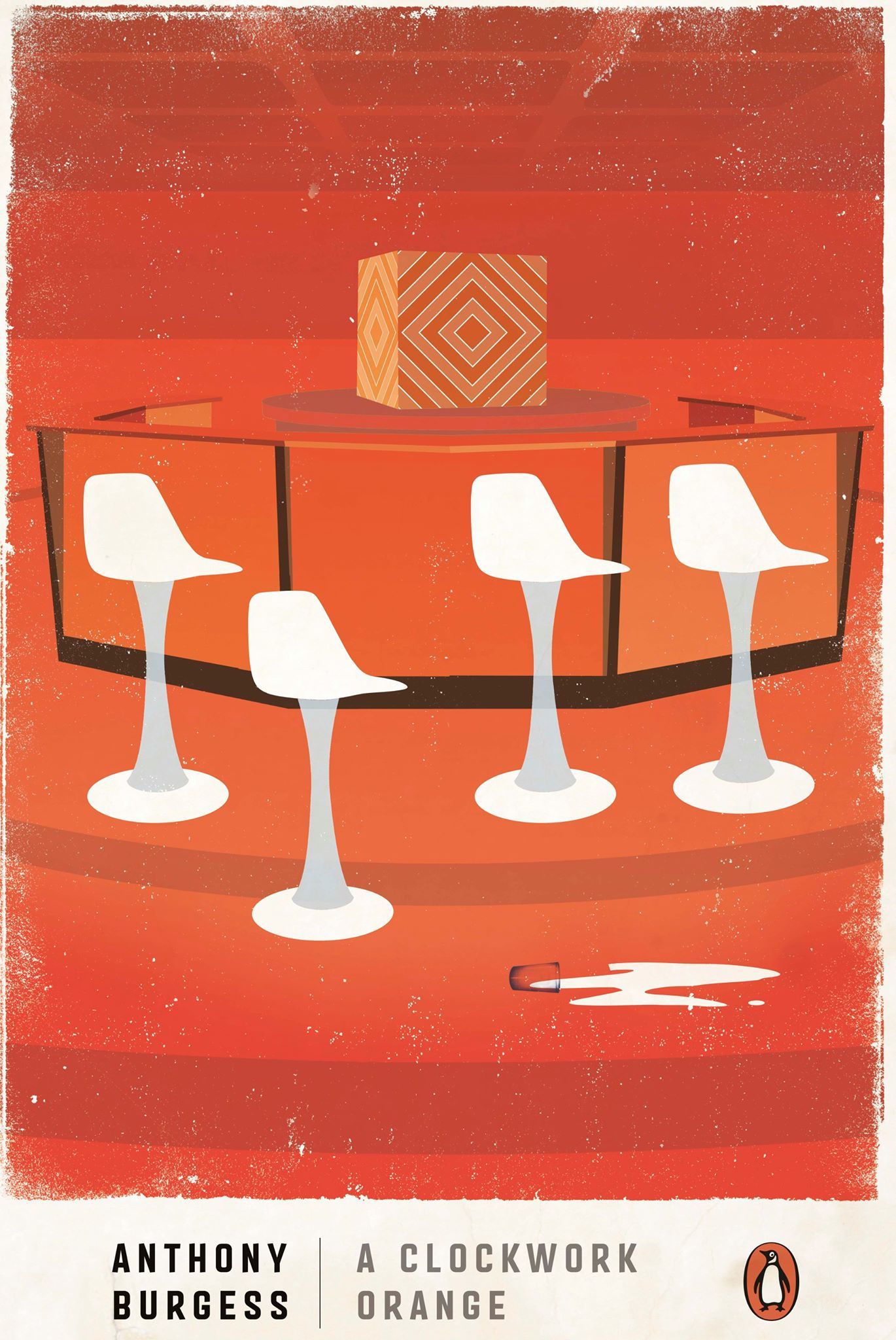
A Clockwork Orange
- First published 1970
- 176 pages
- English
- Classic
In a near-future England, Alex and his droogs spend their nights indulging in drug-laced milk and "ultra-violence," a spree of theft, assault, and terror set to the soundtrack of classical music. As the charismatic and sociopathic narrator, Alex recounts his exploits in a unique slang called Nadsat. But when a brutal crime lands him in prison, he is offered a chance at freedom. He can volunteer for an experimental aversion therapy, a state-sponsored technique designed to cure him of his violent impulses.
This novel confronts the reader with a difficult question: Is it better to choose to be evil than to be forced into goodness? When the state can psychologically engineer a person's morality, what becomes of free will? The narrative forces an examination of the nature of humanity, the limits of societal control, and whether a man stripped of his ability to choose is truly a man at all. It is an exploration of the conflict between individual liberty and social order, one that remains as disturbing and relevant as when it was first written.
What readers say
4.00
795K ratings across the web 7 in 10 readers loved it, 1 didn't like it
The reviews consistently praise "A Clockwork Orange" as a brilliant and thought-provoking work, rich with profound philosophical and ethical questions about free will, morality, and the nature of good and evil. Many highlight the book's invented "Nadsat" slang as a remarkable artistic and linguistic achievement. While initially challenging, readers often find themselves quickly accustomed to its unique vocabulary and cadences, which are lauded for immersing them in the protagonist's world, adding a distinctive charm, and even subtly softening the impact of the narrative's more intense moments. The writing style itself is frequently described as lyrical, powerful, and haunting, creating an unforgettable reading experience that feels both original and eerily prescient in its social commentary.
However, the book is not without its criticisms. A significant point of contention for many reviewers is the intensely disturbing and vivid depiction of violent acts, which some found difficult, sickening, or even gratuitous. The amorality of the main character and the nature of his actions are frequently cited as off-putting, making it a challenging read for those who prefer more conventionally enjoyable narratives. The Nadsat language, despite its eventual appreciation, often presents an initial barrier, leading to a slow start or even prompting some readers to abandon the book. Furthermore, some reviewers found the overall plot to be somewhat lacking or inconsistent, while others felt the book was overrated or less impactful than its reputation, especially when compared to its famous film adaptation. A specific point of division is the book's final chapter, which some believe undermines the narrative's overall force or believability, departing from the tone of earlier sections.
Ultimately, "A Clockwork Orange" is widely regarded as a significant and powerful work of dystopian literature, earning labels such as "masterpiece" and "highly recommended" from many who appreciate its unique qualities. It particularly appeals to readers who are drawn to philosophical and ethical dilemmas, especially concerning free will, morality, and societal conditioning. Those who enjoy experimental literary styles, social commentary, and challenging narratives that provoke deep thought and discussion will likely find it rewarding. However, prospective readers should be prepared for its intense and often disturbing content, as well as the initial linguistic hurdle posed by its distinctive invented language.
Reviews
No reviews yet. Be the first.
Details & editions
- This edition
- Penguin Classics, 2011
- ISBN
- 9789001808464
- Language
- English
Original edition Clockwork Orange, A Originally published in 1970 · English · Ballantine Books