
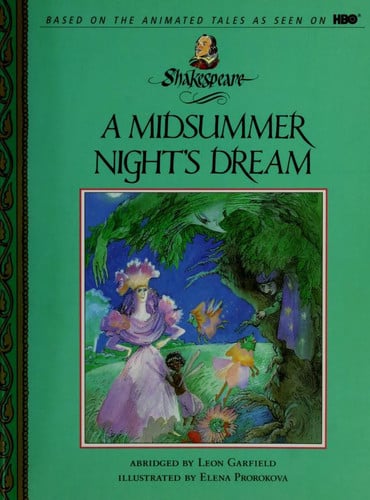
A Midsummer Night's Dream
7.88 / 10 594K ratings
- Language
- English
- Published
- 2021
- Publisher
- Independently Published
- Pages
- 106
- ISBN
- 9798704485858
In a forest outside Athens, the boundaries between worlds dissolve under the moonlight. Four young lovers, fleeing the strict laws of the city for the freedom of the woods, find their affections twisted into a comical and chaotic tangle. Hermia loves Lysander, but is promised to Demetrius, who is adored by Helena. Their escape into the enchanted wilderness places them at the mercy of feuding fairy royalty and the whims of a mischievous sprite named Puck, who wields a powerful love potion with hilarious and unpredictable results.
This magical comedy weaves together the fates of distressed lovers, a troupe of amateur actors rehearsing a play, and powerful fairies engaged in their own domestic disputes. As mistaken identities and magical enchantments spiral out of control, the play explores the absurdity and irrationality of love, questioning whether the characters are awake or merely players in a shared, fantastical dream. The result is one of Shakespeare's most beloved and enchanting works, a story that celebrates the chaos of the heart and the delightful madness that unfolds when the human and supernatural worlds collide.
This magical comedy weaves together the fates of distressed lovers, a troupe of amateur actors rehearsing a play, and powerful fairies engaged in their own domestic disputes. As mistaken identities and magical enchantments spiral out of control, the play explores the absurdity and irrationality of love, questioning whether the characters are awake or merely players in a shared, fantastical dream. The result is one of Shakespeare's most beloved and enchanting works, a story that celebrates the chaos of the heart and the delightful madness that unfolds when the human and supernatural worlds collide.
Subjects
- Comics & Graphic Novels
- Manga
- Kindle Store
- Categories
- Kindle eBooks
- General
- Reference
- Literature & Fiction
- Genre Fiction
- Mystery, Thriller & Suspense
- Thrillers & Suspense
- Suspense
- Arts & Photography
- Subjects
- Literary
- Self-Help
- Action & Adventure
- Fantasy
- Mythology & Folk Tales
- Folklore
- Science Fiction & Fantasy
- Epic
- Historical
- Self Service
- History
- Short Stories & Anthologies
- Anthologies
- Biographies & Memoirs
- Arborist Merchandising Root
- Children's Books
- Science & Math
- Education & Reference
- Education & Teaching
- Schools & Teaching
- Non-Classifiable
- Romance
- Novelty
- Romantic
- Computers & Technology
- CHILDREN'S FICTION
- Poetry
- Voyages and travels
- Family Life
- Contemporary
- United States
- Study Guides
- Mathematics
- Parenting & Relationships
- Romantic Comedy
- English & College Success
- English
- Humor
- Relationships
- FICTION_GENERAL
- Women's Fiction
- Bibliography
- Education Theory
- Politics & Social Sciences
- Specialty Boutique
- New, Used & Rental Textbooks
- Teen & Young Adult
- Dramas & Plays
- Art
- Humor & Entertainment
- Fiction
- Juvenile Fiction
- Professionals & Academics
- Fantasy & Magic
- Classics
- Graphic Novels
- Short Stories
- Fiction, historical, general
- Professional, Career & Trade
- Education
- Performing Arts
- Humor & Satire
- Humorous
- Arts, Music & Photography
- Description and travel
- Literary Collections
- Fiction, general
- Sociology
- Exhibitions
- Children's fiction
- Juvenile fiction
- Adaptations
- FICTION_HISTORICAL_GENERAL
- ENGLISH LITERATURE
- Nonfiction
- History & Criticism
- Magic
- Family Saga
- For National Curriculum Key Stage 2
- Satire
- Social Science
- Humanities
- Study and teaching
- Problems, exercises, etc
- Juvenile literature
- Classic Literature
- Teaching
- Theater
- Clean & Wholesome
- DRAMA (DRAMATIC WORKS BY ONE AUTHOR)
- Ancient & Classical
- Words, Language & Grammar
- World War, 1939-1945
- Audio Adult: Other
- LARGE TYPE BOOKS
- Audio Adult: Books On Tape
- Foreign Language Study
- Historical Fiction
- Special Topics
- Study and teaching (Secondary)
- Regional & Cultural
- Comedy
- Anthologies (multiple authors)
- European
- English, Irish, Scottish, Welsh
- Juvenile Nonfiction
- Language Arts & Disciplines
- Language
- German
- Fairy Tales, Folk Tales & Myths
- Criticism & Theory
- Movements & Periods
- Language Arts
- Man-woman relationships
- Genres & Styles
- English language
- Acting & Auditioning
- Literary Criticism
- Sources
- Drama
- Japanese
- Study Aids
- Study Aids General
- Literature
- Young Adult Fiction
- British & Irish
- Theatre
- LGBTQ+
- Gay
- Chinese
- Love & Romance
- Spanish
- BRITISH AND IRISH DRAMA (DRAMATIC WORKS BY ONE AUTHOR)
- French
- Criticism and interpretation
- British and irish fiction (fictional works by one author)
- Large type books
- English literature
- Dictionaries
- Arts & Humanities
- World Literature
- Web Development & Design
- Book Notes
- History and criticism
- Math
- Bilingual Education
- Movies
- Medieval
- Collections & Anthologies
- SHAKESPEARE, WILLIAM, 1564-1616_CRITICISM AND INTERPRETATION
- Americas (North, Central, South, West Indies)
- Sagas
- Foreign Language - Dictionaries
- Phrase Books
- Graphic Arts/Communications/Design
- Screenplays
- Comics & graphic novels, general
- Specimens
- CARTOONS AND COMICS
- Plays
- Cartoons and comics
- Shakespeare
- Problems, exercises
- Man-woman relationships, fiction
- Renaissance
- BRITISH AND IRISH FICTION (FICTIONAL WORKS BY ONE AUTHOR)
- Comic books, strips
- Web Design
- Graphic novels
- LITERARY CRITICISM
- Children's
- Literary Criticism & Collections
- Stagecraft & Scenography
- Interactive & Multimedia
- Textual Criticism
- Korean
- Theater & Musicals
- Drama (dramatic works by one author)
- English drama
- Public Speaking & Speech Writing
- Illustration
- Children's literature
- Concentration camps
Original edition
MIDSUMMER NIGHTS DREAM (HC) C2000Originally published in 1901 English Prentice Hall
Other editions (1005)
- A Midsummer Night's Dream

- Shakspeare's Comedy of a Midsummer-Night's Dream, with Notes, Adapted for Scholastic or Private Study by J. Hunter

- Shakspeare's Comedy Of A Midsummer-night's Dream, With Notes, Adapted For Scholastic Or Private Study By J. Hunter

- 'AMidsummer Night's Dream by Durband, Alan ( Author ) ON Oct-01-1989, Paperback'

- A MIDSUMMER'S NIGHT DREAM (Shakespeare: the Animated Tales)
Listen to the summary Narrated summary
In the grand court of Athens, the air hums with anticipation for the wedding of Duke Theseus and his bride, Hippolyta, queen of the Amazons. Though Theseus won her with his sword, he vows to wed her with pomp and reveling. But this stately joy is broken by the arrival of Egeus, dragging his daughter Hermia before the Duke. He demands the ancient privilege of Athens: that Hermia marry Demetrius, the man of his choosing, or face death. Hermia, however, loves Lysander, and her heart refuses to yield. Theseus, bound by law, gives her a terrible choice: wed Demetrius, die, or abjure forever the society of men in a cloistered life.
Left alone, Hermia and Lysander lament their fate. "The course of true love never did run smooth," Lysander sighs, and in that shared sorrow, a desperate plan is born. They will flee Athens, stealing away to the house of Lysander's aunt where the city's cruel law cannot reach them. They confide their secret to Hermia's friend, Helena, a woman drowning in her own unrequited love for Demetrius, who once swore his love to her before turning his eyes to Hermia. Seeing a chance to win back his favor, however small, Helena resolves to betray her friends and tell Demetrius of their flight, hoping only for his thanks and the chance to follow him into the woods.
Meanwhile, in another part of the city, a group of simple craftsmen - Quince the carpenter, Snug the joiner, and the irrepressibly confident Bottom the weaver among them - gather to prepare their own offering for the Duke's wedding. They will perform a play, "The most lamentable comedy and most cruel death of Pyramus and Thisbe." Bottom, eager to prove his theatrical range, offers to play not only the lover Pyramus but also the lady Thisbe and the lion, promising to roar as gently as a sucking dove. Their earnest, bumbling preparations conclude with an agreement to rehearse in secret, in that same palace wood, a mile outside the town, by moonlight.
That very wood is alive with a power unknown to the mortals who seek its shelter. Oberon, king of the fairies, and his proud queen, Titania, have met by moonlight, their quarrel disturbing the seasons themselves. They are locked in a bitter dispute over a changeling boy, a human child Titania has sworn to raise. To punish her defiance, Oberon sends his mischievous servant, Robin Goodfellow - a puck - to fetch a magical flower, love-in-idleness. The juice of this flower, laid on sleeping eyelids, will make any man or woman fall madly in love with the first living creature they see upon waking.
As Oberon waits, he overhears Demetrius striding through the forest, cruelly spurning the devoted Helena who follows him like a spaniel. Pitying her plight, Oberon resolves to mend this broken love. When Robin returns with the flower, Oberon anoints the sleeping Titania's eyes, whispering, “Wake when some vile thing is near.” He then gives the remaining potion to Robin, commanding him to find a youth in Athenian garments and anoint his eyes, so that he may fall for the lady who loves him so.
But the woods are full of Athenians. Robin happens upon the sleeping Lysander and Hermia. Seeing the man lying apart from the woman, he assumes this must be the disdainful youth. He squeezes the flower's juice onto Lysander's eyelids and departs. Soon after, Helena stumbles upon the sleeping man and wakes him. Lysander's eyes open, and the first thing he sees is Helena. He is instantly consumed by a burning passion for her, renouncing all his vows to Hermia and pursuing Helena with fervent declarations of love. Helena, convinced she is being mocked, flees from him in anger and confusion. Hermia awakens from a terrifying nightmare of a serpent eating her heart, only to find herself utterly alone.
In another part of the forest, the craftsmen begin their rehearsal. Robin Goodfellow, delighted by the "hempen homespuns," decides to join their play. When Bottom steps aside into a thicket, Robin transforms his head into that of an ass. His friends flee in terror at the sight of the monster, leaving Bottom alone and bewildered. To prove he is not afraid, he begins to sing, and his braying voice awakens the enchanted Titania. She gazes upon him, her eyes filled with magical adoration. "What angel wakes me from my flow'ry bed?" she asks, instantly enthralled by the ass-headed weaver, whom she crowns with flowers and commands her fairies to serve.
The lovers' chaos deepens. Oberon, discovering Robin's mistake, anoints the sleeping Demetrius's eyes just as Lysander arrives, still pleading with Helena. Demetrius awakens, sees Helena, and he too is overcome with love. Now both men vie for her affection, turning on Hermia with scorn when she appears. Helena believes all three are joined in a cruel conspiracy against her, while Hermia, short and fierce, accuses the taller Helena of stealing Lysander's heart. "Lord, what fools these mortals be!" Robin observes with glee as the lovers' quarrel verges on a duel. Oberon, his sport grown dangerous, commands Robin to cast a fog over the woods and lead the rivals astray with mimicking voices until they fall, exhausted, into a deep sleep.
With the four lovers sleeping near one another, Robin applies the antidote to Lysander's eyes, restoring his true love for Hermia. Oberon, having won the changeling boy from his distracted queen, releases Titania from her enchantment. She awakens with revulsion for the creature beside her, and she and Oberon are reconciled. As dawn breaks, Theseus's hunting party discovers the four lovers. They awaken as if from a strange and complicated dream, their affections now perfectly aligned. Overruling Egeus, the Duke declares they shall all be married together in the temple. Bottom, too, awakes alone, his own head restored, struggling to recall a vision "past the wit of man to say what dream it was."
That night, the triple wedding is celebrated with the performance of "Pyramus and Thisbe." The craftsmen's tragic tale becomes a source of great mirth, their earnest incompetence delighting the noble audience. When the mortals have retired to bed, the fairies emerge from the shadows. Led by Oberon and Titania, they move through the silent palace, blessing the house and the marriage beds, promising peace and fortunate children to the sleeping couples. Robin Goodfellow is left alone to sweep the dust behind the door, addressing the audience as the last shadows fade. He asks them to forgive the play's faults, and if they have been offended, to think of it as nothing more than a dream.
Left alone, Hermia and Lysander lament their fate. "The course of true love never did run smooth," Lysander sighs, and in that shared sorrow, a desperate plan is born. They will flee Athens, stealing away to the house of Lysander's aunt where the city's cruel law cannot reach them. They confide their secret to Hermia's friend, Helena, a woman drowning in her own unrequited love for Demetrius, who once swore his love to her before turning his eyes to Hermia. Seeing a chance to win back his favor, however small, Helena resolves to betray her friends and tell Demetrius of their flight, hoping only for his thanks and the chance to follow him into the woods.
Meanwhile, in another part of the city, a group of simple craftsmen - Quince the carpenter, Snug the joiner, and the irrepressibly confident Bottom the weaver among them - gather to prepare their own offering for the Duke's wedding. They will perform a play, "The most lamentable comedy and most cruel death of Pyramus and Thisbe." Bottom, eager to prove his theatrical range, offers to play not only the lover Pyramus but also the lady Thisbe and the lion, promising to roar as gently as a sucking dove. Their earnest, bumbling preparations conclude with an agreement to rehearse in secret, in that same palace wood, a mile outside the town, by moonlight.
That very wood is alive with a power unknown to the mortals who seek its shelter. Oberon, king of the fairies, and his proud queen, Titania, have met by moonlight, their quarrel disturbing the seasons themselves. They are locked in a bitter dispute over a changeling boy, a human child Titania has sworn to raise. To punish her defiance, Oberon sends his mischievous servant, Robin Goodfellow - a puck - to fetch a magical flower, love-in-idleness. The juice of this flower, laid on sleeping eyelids, will make any man or woman fall madly in love with the first living creature they see upon waking.
As Oberon waits, he overhears Demetrius striding through the forest, cruelly spurning the devoted Helena who follows him like a spaniel. Pitying her plight, Oberon resolves to mend this broken love. When Robin returns with the flower, Oberon anoints the sleeping Titania's eyes, whispering, “Wake when some vile thing is near.” He then gives the remaining potion to Robin, commanding him to find a youth in Athenian garments and anoint his eyes, so that he may fall for the lady who loves him so.
But the woods are full of Athenians. Robin happens upon the sleeping Lysander and Hermia. Seeing the man lying apart from the woman, he assumes this must be the disdainful youth. He squeezes the flower's juice onto Lysander's eyelids and departs. Soon after, Helena stumbles upon the sleeping man and wakes him. Lysander's eyes open, and the first thing he sees is Helena. He is instantly consumed by a burning passion for her, renouncing all his vows to Hermia and pursuing Helena with fervent declarations of love. Helena, convinced she is being mocked, flees from him in anger and confusion. Hermia awakens from a terrifying nightmare of a serpent eating her heart, only to find herself utterly alone.
In another part of the forest, the craftsmen begin their rehearsal. Robin Goodfellow, delighted by the "hempen homespuns," decides to join their play. When Bottom steps aside into a thicket, Robin transforms his head into that of an ass. His friends flee in terror at the sight of the monster, leaving Bottom alone and bewildered. To prove he is not afraid, he begins to sing, and his braying voice awakens the enchanted Titania. She gazes upon him, her eyes filled with magical adoration. "What angel wakes me from my flow'ry bed?" she asks, instantly enthralled by the ass-headed weaver, whom she crowns with flowers and commands her fairies to serve.
The lovers' chaos deepens. Oberon, discovering Robin's mistake, anoints the sleeping Demetrius's eyes just as Lysander arrives, still pleading with Helena. Demetrius awakens, sees Helena, and he too is overcome with love. Now both men vie for her affection, turning on Hermia with scorn when she appears. Helena believes all three are joined in a cruel conspiracy against her, while Hermia, short and fierce, accuses the taller Helena of stealing Lysander's heart. "Lord, what fools these mortals be!" Robin observes with glee as the lovers' quarrel verges on a duel. Oberon, his sport grown dangerous, commands Robin to cast a fog over the woods and lead the rivals astray with mimicking voices until they fall, exhausted, into a deep sleep.
With the four lovers sleeping near one another, Robin applies the antidote to Lysander's eyes, restoring his true love for Hermia. Oberon, having won the changeling boy from his distracted queen, releases Titania from her enchantment. She awakens with revulsion for the creature beside her, and she and Oberon are reconciled. As dawn breaks, Theseus's hunting party discovers the four lovers. They awaken as if from a strange and complicated dream, their affections now perfectly aligned. Overruling Egeus, the Duke declares they shall all be married together in the temple. Bottom, too, awakes alone, his own head restored, struggling to recall a vision "past the wit of man to say what dream it was."
That night, the triple wedding is celebrated with the performance of "Pyramus and Thisbe." The craftsmen's tragic tale becomes a source of great mirth, their earnest incompetence delighting the noble audience. When the mortals have retired to bed, the fairies emerge from the shadows. Led by Oberon and Titania, they move through the silent palace, blessing the house and the marriage beds, promising peace and fortunate children to the sleeping couples. Robin Goodfellow is left alone to sweep the dust behind the door, addressing the audience as the last shadows fade. He asks them to forgive the play's faults, and if they have been offended, to think of it as nothing more than a dream.
What other readers say
Liked
Many readers celebrate this book as one of William Shakespeare's most entertaining and hilarious comedies, with some even preferring it to his more serious works. Reviewers consistently praise its beautiful, poetic, and lyrical language, noting its magical quality and the memorable lines that resonate deeply. The play is lauded for its immense creativity, imaginative plot, and whimsical elements, particularly the enchanting fairy world that contributes to its unique charm. It is often described as a delightful and accessible read, even for those new to Shakespeare, making it an excellent entry point into his works. The clever use of humor, the intricate blend of fantasy and reality, and the overall sense of joy and wonder it evokes are frequently highlighted as its strongest attributes.
Disliked
Despite its widespread appeal, some readers find aspects of the plot to be silly, fanciful, or even arbitrary, requiring a degree of imaginative acceptance. While the language is generally admired, a few note that the classical English can be challenging initially, suggesting that external aids or modern translations might be necessary. Critiques also emerge regarding character portrayal, with some finding certain individuals to be manipulative, overly clingy, or even unlikeable in their actions and motivations. The depth of characterization is occasionally questioned, with one reviewer feeling they were "flat." A recurring sentiment is that the play is significantly more impactful and enjoyable when experienced as a performance, whether live on stage or through a full-cast audio version, rather than simply read on the page, where some perceive it as less substantial or even "lightweight."
In short
Overall, the consensus is that this book stands as a classic, offering a unique blend of humor, magic, and poetic artistry. It is highly recommended for anyone interested in Shakespeare, theater, or simply a light-hearted, whimsical story filled with comedic misunderstandings. Readers who appreciate fantastical elements, clever wordplay, and a narrative that explores the complexities of love with a light touch are likely to find it deeply enjoyable. To fully appreciate its enduring charm and comedic brilliance, many reviewers strongly advise experiencing it in its intended form as a play, whether by watching a live production or listening to an audio adaptation, allowing the vibrant characters and magical setting to truly come to life.
No reviews yet. Be the first.