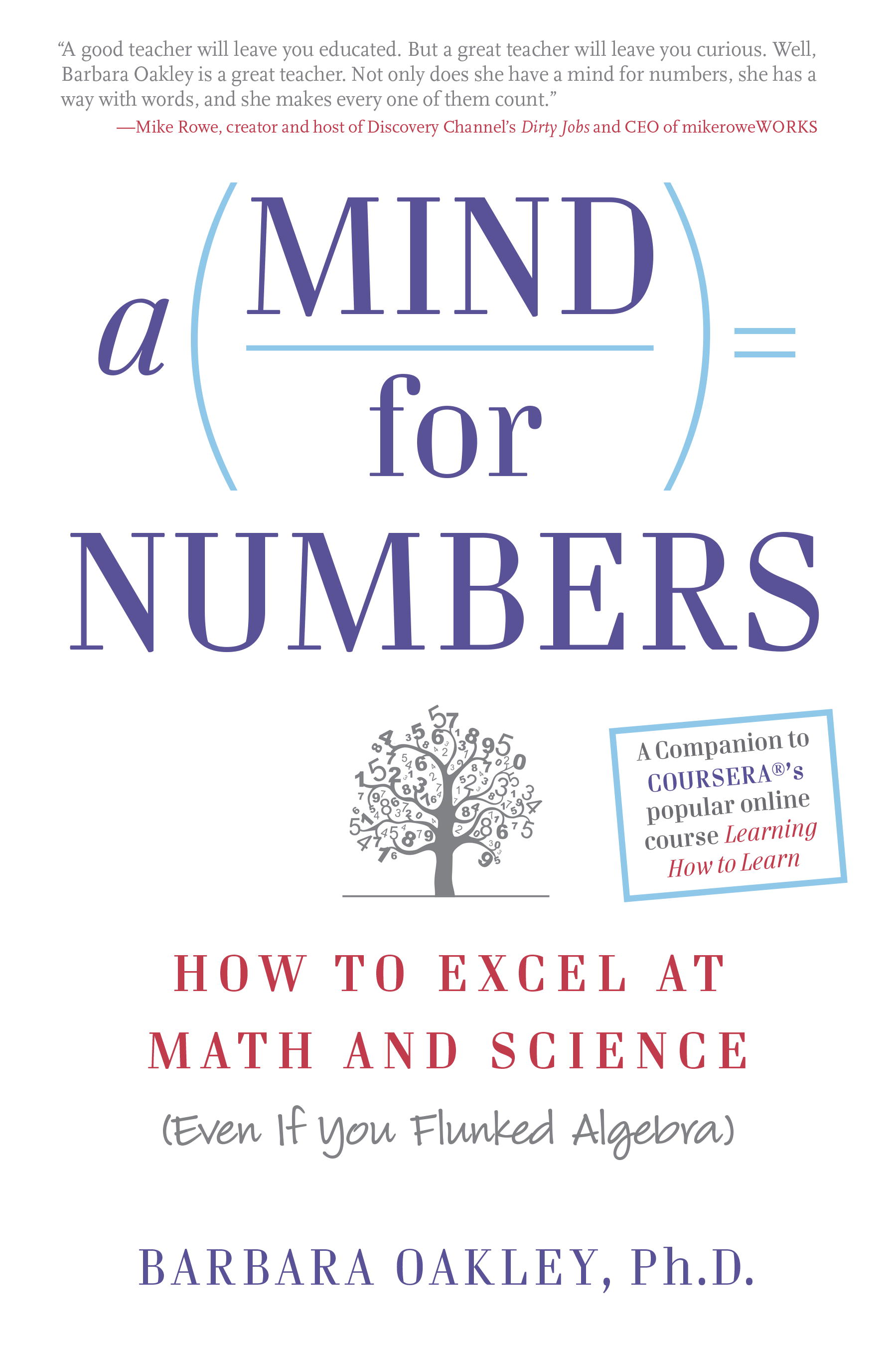
A Mind for Numbers
How to Excel at Math and Science (Even If You Flunked Algebra)
- Language
- English
- Published
- 2014
- Publisher
- Penguin
- Pages
- 336
- ISBN
- 9780399165245
Original edition
Думай как математикOriginally published in 2012 Russian Литрес / Альпина Паблишер
Other editions (37)


No summary for this edition yet.
What readers say
4.19
23K ratings across the web 8 in 10 readers loved it, 1 didn't like it
This book is widely praised as an exceptionally helpful guide for improving learning, often described as transformative for its readers. A key insight is the explanation of two distinct thinking modes - focused and diffuse - and how effectively toggling between them is crucial for understanding and problem-solving. Reviewers appreciate the practical advice on tackling common issues like procrastination, enhancing memory through techniques such as the Memory Palace, and preparing for tests. Many highlight that despite its title, the book's strategies are universally applicable, benefiting students and professionals across various disciplines, not solely math and science. The author's personal journey from struggling with mathematics to excelling in engineering serves as a powerful inspiration, demonstrating that learning is more about method and persistence than innate talent, all presented in a clear, accessible style with engaging anecdotes.
While many found the advice valuable, some reviewers felt the book contained a significant amount of "common sense" study tips that might already be familiar to those who have explored productivity literature or academic resource centers. A recurring criticism is that the book's title, "A Mind for Numbers," is somewhat misleading, as the content primarily focuses on general learning principles rather than specific, advanced strategies for mathematics or science. Some readers found the writing style to be repetitive, with certain arguments or concepts, such as the importance of sleep, being reiterated extensively, which made parts of the book feel "dry" or that it could have been more condensed. The inclusion of numerous testimonials and "success stories" was perceived by a few as giving the book a "kitschy" or self-help seminar feel, potentially detracting from its scientific gravitas, especially when only successes were highlighted.
Overall, the book is considered a highly valuable resource, particularly for individuals who struggle with learning, feel overwhelmed by complex subjects, or wish to develop more effective study habits. It is strongly recommended for high school and university students, as well as anyone embarking on a new learning journey, regardless of their field. The book excels at demystifying the learning process, providing actionable strategies grounded in cognitive science that empower readers to approach challenges with patient persistence and a better understanding of their brain's natural learning mechanisms. While it may not offer groundbreaking revelations for seasoned learners of productivity, its strength lies in presenting a comprehensive, practical toolkit for cultivating a positive and effective relationship with sustained learning.
No reviews yet. Be the first.