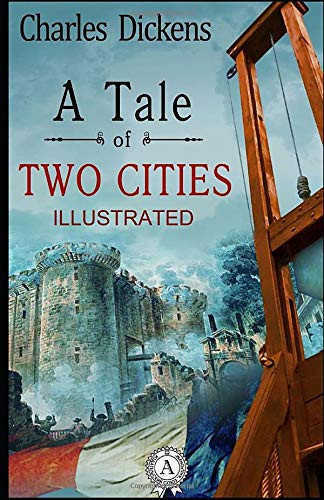
A Tale of Two Cities illustrated
by Unknown
9 / 10 1M ratings
- Language
- English
- Published
- 2020
- Publisher
- Independently published
- Pages
- 476
- ISBN
- 9798663793841
In an age of radical extremes, set between the seeming peace of London and the revolutionary fury of Paris, a family's life is upended by a long-buried secret. After 18 years of unjust imprisonment in the Bastille, Dr. Manette is released, a man broken by his ordeal. Reunited with the daughter he never knew he had, the gentle Lucie Manette, they begin to build a quiet life in England. But the shadows of the past are long, and as the streets of Paris erupt in a violent struggle for freedom, their fragile peace is threatened by forces of history and vengeance they cannot escape.
The story follows a group of unforgettable characters whose fates are intricately bound together: a young French aristocrat who has renounced his heritage, a cynical lawyer who discovers his own capacity for greatness, and the vengeful revolutionaries who see justice only in the blade of the guillotine. Against the backdrop of one of history's most turbulent periods, this novel is a profound exploration of personal sacrifice, the potential for human resurrection, and the relentless clash between tyranny and revolution. It examines whether love and loyalty can survive in a world consumed by chaos and retribution.
The story follows a group of unforgettable characters whose fates are intricately bound together: a young French aristocrat who has renounced his heritage, a cynical lawyer who discovers his own capacity for greatness, and the vengeful revolutionaries who see justice only in the blade of the guillotine. Against the backdrop of one of history's most turbulent periods, this novel is a profound exploration of personal sacrifice, the potential for human resurrection, and the relentless clash between tyranny and revolution. It examines whether love and loyalty can survive in a world consumed by chaos and retribution.
Subjects
- Comics & Graphic Novels
- Kindle Store
- Categories
- Kindle eBooks
- General
- Reference
- Literature & Fiction
- Genre Fiction
- Horror
- Mystery, Thriller & Suspense
- Thrillers & Suspense
- Europe
- Subjects
- Literary
- France
- Self-Help
- Action & Adventure
- Fantasy
- Mythology & Folk Tales
- Folklore
- Science Fiction & Fantasy
- Epic
- Historical
- Self Service
- History
- Custom Stores
- Short Stories & Anthologies
- Anthologies
- Biographies & Memoirs
- Military
- Arborist Merchandising Root
- Children's Books
- Education & Teaching
- Schools & Teaching
- Body, Mind & Spirit
- Non-Classifiable
- Romance
- Computers & Technology
- Political
- CHILDREN'S FICTION
- Poetry
- Law
- Coming of Age
- Family Life
- Religion & Spirituality
- Contemporary
- United States
- Crafts, Hobbies & Home
- Americas
- Study Guides
- Crime
- Essays
- New Age & Spirituality
- Friendship
- Holidays
- English & College Success
- English
- Humor
- FICTION_GENERAL
- World
- Historical Study & Educational Resources
- Study & Teaching
- Education Theory
- Science Fiction
- Psychological
- Politics & Social Sciences
- Philosophy
- Specialty Boutique
- New, Used & Rental Textbooks
- Teen & Young Adult
- Dramas & Plays
- Foreign Language Study & Reference
- Art
- Fiction
- Business & Economics
- Industries
- Biography & Autobiography
- Juvenile Fiction
- Authors
- Examinations
- Classics
- Short Stories
- Other Religions, Practices & Sacred Texts
- London (england), fiction
- Fiction, historical, general
- Education
- Humorous
- American fiction (fictional works by one author)
- Literary Collections
- Folklore & Mythology
- Women
- Fiction, general
- Children's fiction
- Juvenile fiction
- City and town life
- Adaptations
- FICTION_HISTORICAL_GENERAL
- ENGLISH LITERATURE
- Superheroes
- History & Criticism
- Antiques & Collectibles
- Family Saga
- Instruction
- Social Science
- Biographical
- Alternative History
- Linguistics
- Westerns
- England
- English as a Second Language
- Classic Literature
- Teaching
- BUSINESS
- FATHERS AND DAUGHTERS_FICTION
- Banks & Banking
- Ancient & Medieval Literature
- Ancient & Classical
- Words, Language & Grammar
- Fiction - General
- LARGE TYPE BOOKS
- Audio Adult: Books On Tape
- Foreign Language Study
- Italian
- Social Themes
- School & Education
- Historical Fiction
- Regional & Cultural
- Thrillers
- Mystery & Detective
- Anthologies (multiple authors)
- European
- English, Irish, Scottish, Welsh
- Juvenile Nonfiction
- Language Arts & Disciplines
- Language
- German
- Nonfiction - General
- Movements & Periods
- Curriculum & Lesson Plans
- Language Arts
- Sacred Sexuality
- Urban Life
- Mashups
- Genres & Styles
- English language
- Family
- Literary Criticism
- Drama
- Study Aids
- 20th Century
- Literature
- Young Adult Fiction
- Fairy Tales & Folklore
- Dystopian
- FRANCE_FICTION
- Schools
- Levels
- British & Irish
- Urban & Street Lit
- War & Military
- LGBTQ+
- Gay
- Sale Books
- Christian
- Young Adult Nonfiction
- Chinese
- Cats
- FICTION_THRILLERS_GENERAL
- Spanish
- British
- Short Stories (single author)
- French
- Criticism and interpretation
- Children's Books/Ages 9-12 Fiction
- British and irish fiction (fictional works by one author)
- Fiction, historical
- English fiction
- Large type books
- English literature
- Dictionaries
- World Literature
- Books & Reading
- Pets
- Legal
- Art & Politics
- Book Notes
- Fairy Tales, Folk Tales, Legends & Mythology
- Bilingual Education
- Readers
- Chapter Books
- Histoire
- Medieval
- Cultural Heritage
- War
- American literature
- Traditional
- LONDON (ENGLAND)_FICTION
- 19th Century
- Romans, nouvelles
- Parents
- Intermediate
- Americas (North, Central, South, West Indies)
- Reference books
- City Life
- Historical fiction
- Historical - General
- Caribbean & Latin American
- Books & Libraries
- Comparative Literature
- Social History
- Sagas
- Breeds
- Handwriting Analysis
- TV, Movie, Video Game Adaptations
- Topic
- Foreign Language - Dictionaries
- Phrase Books
- FICTION
- Historia
- Bargain Books
- Study guides
- SHORT STORIES
- World War I
- Canadian
- Children's Books/Baby-Preschool
- Historiography
- Ethics & Morality
- Romance - General
- Audiobooks
- Paris (France)
- Artists, Architects, Photographers
- Alternate History
- Specimens
- Language Experience Approach
- Essays & Narratives
- Classic fiction
- Noir
- Historical Geography
- Plays
- Social Classes & Economic Disparity
- Lawyers & Judges
- Military & Wars
- 18th Century
- Secondary
- Men, Women & Relationships
- Unabridged Audio - Fiction/General
- Shakespeare
- Interactive Adventure
- Fathers and daughters
- Novela
- Corporate & Business History
- Government & Business
- Books
- Japanese literature
- Renaissance
- BRITISH AND IRISH FICTION (FICTIONAL WORKS BY ONE AUTHOR)
- Children's Books/All Ages
- Comic books, strips
- Graphic novels
- Russian & Soviet
- Revenge
- Conspiracy Theories
- Children's 9-12
- Revolutions & Wars of Independence
- PARIS (FRANCE)_FICTION
- Roman
- I Ching
- Political refugees
- Audio - Fiction (Unabridged)
- Air & Space
- Privacy
- Working class
- French fiction
- Magazines & Newspapers
- Country & Ethnic
- Classic & Allegory
Original edition
HISTORIA DE DOS CIUDADESOriginally published in 1900 Spanish DEL FONDO EDITO
Other editions (1708)


Listen to the summary Narrated summary
It was the best of times, it was the worst of times, a duality that hung heavy over two great cities in 1775. In London, the peace was uneasy, while across the Channel, in Paris, the seeds of a bloody revolution were being sown in the streets trodden by the suffering poor and the indifferent rich. A venerable banker, Jarvis Lorry, journeys to Dover with a mysterious message, hinting at a life "recalled to life." There, he meets the gentle Lucie Manette, a young woman who believes herself an orphan, and reveals a startling truth: her father, Dr. Alexandre Manette, is alive, after eighteen years of wrongful imprisonment in the dreaded Bastille.
Together, Lorry and Lucie travel to a grim Parisian wine shop, owned by the revolutionary Monsieur Defarge, where they find the doctor. He is a ghost of a man, his mind shattered by his ordeal, endlessly, compulsively making shoes in a dark garret, barely recognizing his own daughter. Yet, through Lucie's steadfast love and unwavering devotion, a golden thread of hope begins to weave, slowly drawing Dr. Manette back from the abyss of his past, restoring his sanity and his place in the world.
Five years later, in 1780, their lives in London become entangled with Charles Darnay, a French émigré on trial for treason, accused of spying for France. The proceedings are tense, but an unexpected twist unfolds when Sydney Carton, a cynical, dissolute lawyer with a striking resemblance to Darnay, helps secure his acquittal. Both Darnay, a man of honor who has renounced his cruel aristocratic French family, the Evrémondes, and Carton, who harbors a secret, self-loathing despair, find themselves drawn to the luminous Lucie. It is Darnay, however, who wins her heart, and they marry, building a life together in London, shadowed by Carton's unspoken, profound love for Lucie and his solemn promise to sacrifice anything for her and those dear to her.
Meanwhile, across the Channel, the tyranny of the French aristocracy continues unabated. The Marquis St. Evrémonde, Darnay's uncle, embodies this cruelty, his carriage callously running over a child in the streets of Paris, a casual act of brutality that ignites a spark of murderous vengeance. This act, coupled with generations of oppression, fuels the simmering rage of the populace. The storm breaks in 1789 with the thunderous fall of the Bastille, an event in which Monsieur Defarge and his implacable wife, Madame Defarge - who endlessly knits a chilling registry of those condemned to die - are at the forefront of the revolution.
A desperate plea arrives from France: Gabelle, Darnay's former servant, is imprisoned, accused of aiding an émigré. Despite the perilous climate, Darnay, driven by a sense of duty and honor, secretly returns to Paris. He is immediately arrested, his aristocratic lineage sealing his fate as an enemy of the people. Lucie, Dr. Manette, and Mr. Lorry follow, hoping to save him. Dr. Manette, revered as a former Bastille prisoner, uses his influence to secure Darnay's acquittal, a brief reprieve. But the tide of vengeance turns swiftly, and Darnay is re-arrested, denounced by the Defarges themselves.
At his second trial, the true depths of the Evrémonde family's depravity are laid bare. A letter penned by Dr. Manette during his imprisonment, discovered by Defarge in the Bastille, reveals how Darnay's father and uncle brutally wronged a peasant family - Madame Defarge's own kin. This chilling testament condemns Charles Darnay to the guillotine, sealing his fate as an heir to a hated name.
In the shadow of the scaffold, Sydney Carton, the once-wasted man, finds his moment of grace. Remembering his pledge to Lucie, he devises a daring plan. With the help of John Barsad, Miss Pross's long-lost brother, he gains access to Darnay in prison. There, he drugs Darnay, switches places with him, and sends the rightful husband and father to freedom with Lucie and Dr. Manette. As the family flees, the vengeful Madame Defarge arrives at Lucie's lodging, only to be met by the fiercely loyal Miss Pross. A desperate struggle ensues, culminating in Madame Defarge's demise, ensuring the family's escape from the clutches of the revolution.
Sydney Carton, disguised as Charles Darnay, faces the guillotine with a serene countenance. His final act is one of profound, self-sacrificing love, giving his life so that those he cherishes might live. He dies with a vision of a peaceful future for Lucie and her family, a future born from his ultimate sacrifice, knowing he has at last imbued his life with meaning and found resurrection through selflessness.
Together, Lorry and Lucie travel to a grim Parisian wine shop, owned by the revolutionary Monsieur Defarge, where they find the doctor. He is a ghost of a man, his mind shattered by his ordeal, endlessly, compulsively making shoes in a dark garret, barely recognizing his own daughter. Yet, through Lucie's steadfast love and unwavering devotion, a golden thread of hope begins to weave, slowly drawing Dr. Manette back from the abyss of his past, restoring his sanity and his place in the world.
Five years later, in 1780, their lives in London become entangled with Charles Darnay, a French émigré on trial for treason, accused of spying for France. The proceedings are tense, but an unexpected twist unfolds when Sydney Carton, a cynical, dissolute lawyer with a striking resemblance to Darnay, helps secure his acquittal. Both Darnay, a man of honor who has renounced his cruel aristocratic French family, the Evrémondes, and Carton, who harbors a secret, self-loathing despair, find themselves drawn to the luminous Lucie. It is Darnay, however, who wins her heart, and they marry, building a life together in London, shadowed by Carton's unspoken, profound love for Lucie and his solemn promise to sacrifice anything for her and those dear to her.
Meanwhile, across the Channel, the tyranny of the French aristocracy continues unabated. The Marquis St. Evrémonde, Darnay's uncle, embodies this cruelty, his carriage callously running over a child in the streets of Paris, a casual act of brutality that ignites a spark of murderous vengeance. This act, coupled with generations of oppression, fuels the simmering rage of the populace. The storm breaks in 1789 with the thunderous fall of the Bastille, an event in which Monsieur Defarge and his implacable wife, Madame Defarge - who endlessly knits a chilling registry of those condemned to die - are at the forefront of the revolution.
A desperate plea arrives from France: Gabelle, Darnay's former servant, is imprisoned, accused of aiding an émigré. Despite the perilous climate, Darnay, driven by a sense of duty and honor, secretly returns to Paris. He is immediately arrested, his aristocratic lineage sealing his fate as an enemy of the people. Lucie, Dr. Manette, and Mr. Lorry follow, hoping to save him. Dr. Manette, revered as a former Bastille prisoner, uses his influence to secure Darnay's acquittal, a brief reprieve. But the tide of vengeance turns swiftly, and Darnay is re-arrested, denounced by the Defarges themselves.
At his second trial, the true depths of the Evrémonde family's depravity are laid bare. A letter penned by Dr. Manette during his imprisonment, discovered by Defarge in the Bastille, reveals how Darnay's father and uncle brutally wronged a peasant family - Madame Defarge's own kin. This chilling testament condemns Charles Darnay to the guillotine, sealing his fate as an heir to a hated name.
In the shadow of the scaffold, Sydney Carton, the once-wasted man, finds his moment of grace. Remembering his pledge to Lucie, he devises a daring plan. With the help of John Barsad, Miss Pross's long-lost brother, he gains access to Darnay in prison. There, he drugs Darnay, switches places with him, and sends the rightful husband and father to freedom with Lucie and Dr. Manette. As the family flees, the vengeful Madame Defarge arrives at Lucie's lodging, only to be met by the fiercely loyal Miss Pross. A desperate struggle ensues, culminating in Madame Defarge's demise, ensuring the family's escape from the clutches of the revolution.
Sydney Carton, disguised as Charles Darnay, faces the guillotine with a serene countenance. His final act is one of profound, self-sacrificing love, giving his life so that those he cherishes might live. He dies with a vision of a peaceful future for Lucie and her family, a future born from his ultimate sacrifice, knowing he has at last imbued his life with meaning and found resurrection through selflessness.
What other readers say
Liked
Readers largely praise "A Tale of Two Cities" as a masterful and intricately plotted work, offering a suspenseful and dramatic narrative that keeps them engaged. Many highlight Dickens's genius in weaving together diverse characters and storylines, set against the tumultuous backdrop of the French Revolution. Reviewers frequently commend the novel for its rich thematic depth, exploring concepts like love, sacrifice, redemption, and social justice with profound impact. The book is lauded for its memorable characters, including compelling heroes and formidable villains, and for its iconic opening and powerful, emotionally resonant ending that provides satisfying closure. Despite a more somber tone than some of his other works, the novel is celebrated as a classic that offers a unique and absorbing historical perspective, filled with vivid descriptions and a strong moral core.
Disliked
However, some readers found the novel challenging and expressed several criticisms. Common complaints include the demanding writing style, characterized by long, complicated sentences and verbosity that can hinder clarity and make the book a chore to read. Critics also point to an oversimplification of historical causes, a perceived lack of realism in character depth, and a tendency towards "black-and-white" characterization, with many protagonists seen as overly virtuous or villains as purely evil. Some felt the plot relied too heavily on coincidence, making it feel constructed rather than organic, and that Dickens recycled themes without sufficient fresh effort. For some, the initial sections were slow and difficult to connect with, leading to a lack of pace and suspense that could induce boredom.
In short
Overall, "A Tale of Two Cities" stands as a perennially popular and impactful classic, though it may not appeal to all readers. Those who appreciate meticulously researched historical fiction, complex plots rich in symbolism, and powerful emotional narratives driven by themes of sacrifice and redemption will likely find it a rewarding experience. However, readers seeking a faster pace, simpler prose, or more nuanced character portrayals typical of modern literature might find its style and structure demanding. It is often recommended for those already familiar with Dickens's work or prepared to invest concentration into a dense, yet ultimately powerful, storytelling experience.
No reviews yet. Be the first.