
Add to library
You don't have any lists yet. Create one in My Library.
Go to My LibraryAdd to library
You don't have any lists yet. Create one in My Library.
Go to My LibraryA Thousand Splendid Suns
- Language
- English
- Published in
- Publisher
- Bloomsbury
- Pages
- 372
- ISBN
- 9780747582977
What begins as a relationship born of necessity and mistrust evolves into an unexpected and profound bond. This alliance becomes their only refuge and the source of their strength to survive the brutalities they face. The story explores the depths of love, sacrifice, and the astonishing resilience of the human heart. It is an account of the unyielding power of friendship and an unforgettable portrait of a country and its people, revealing how love can inspire ordinary individuals to overcome the most daunting obstacles with startling heroism.
Subjects
Original edition details
Other editions (48)
Other editions

A Thousand Splendid Suns
2008 • National Geographic Books
English

A Thousand Splendid Suns
2007 • Penguin
English
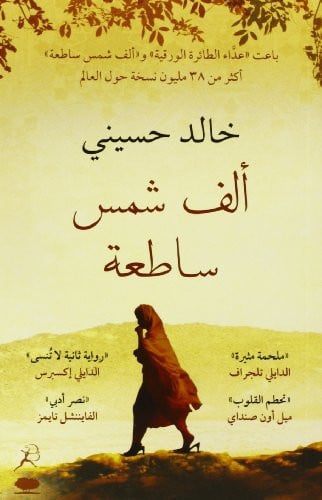
A Thousand Splendid Suns (Arabic edition)
2013 • Bloomsbury Academic
English

Bin muhteşem güneş
2008 • Everest Yayınları
Turkish

A cidade do sol
2007 • Nova Fronteira
Portuguese

Mille soleils splendides (French Edition)
2007 • Belfond (Littératures étrangères)
French

Mil soles espléndidos
2007 • Salamandra
Spanish

Mil sols esplèndids
2014 • Labutxaca
Catalan

Mil sols esplèndids
2009 • Ara Llibres
Catalan

Tusen strålande solar
2009 • Månpocket
Swedish
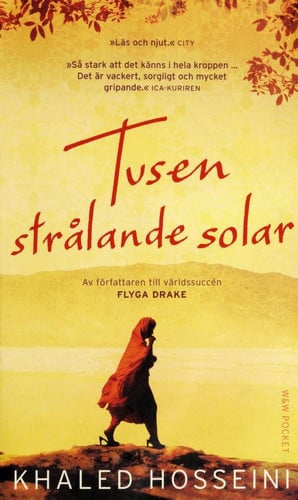
Tusen strålande solar
2008 • Wahlström & Widstrand
Swedish

Under en Stralende Sol (A Thousand Splendid Suns) Danish Language Edition
2009 • Cicero Pocket
Danish

A Thousand Splendid Suns (Chinese Edition)
2007 • Shanghai People's Publishing House
Chinese

A Thousand Splendid Suns: A Novel
2007 • Simon & Schuster Audio
English

A Thousand Splendid Suns
2009 • Bloomsbury Publishing
English
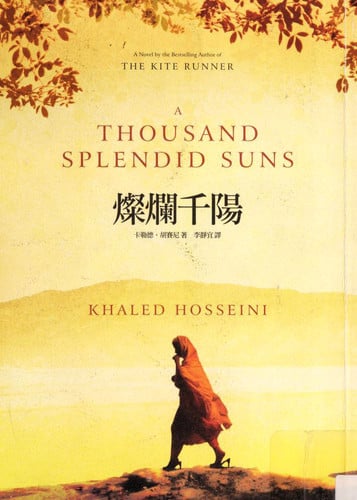
燦爛千陽
2008 • 木馬文化事業股份有限公司
Chinese

A Thousand Splendid Suns: A Novel
2013 • Simon & Schuster Audio
English

A Thousand Splendid Suns
2008 • Penguin Group USA, Inc.
English

A Thousand Splendid Suns Epz Ed
2013 • Bloomsbury Publishing Plc
English

Mille splendidi soli
2010 • Edizioni Piemme
Italian

A Thousand Splendid Suns
2007 • Riverhead Books
English
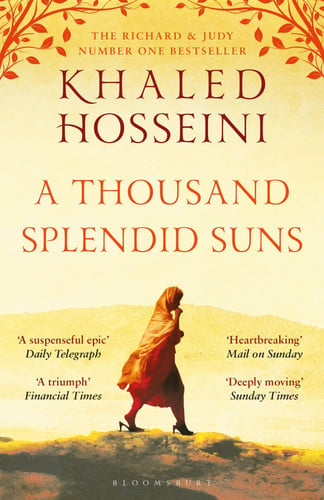
A Thousand Splendid Suns
2018 • Bloomsbury Publishing Plc
English
A Thousand Splendid Suns
2007 • Simon & Schuster Audio
English
A Thousand Splendid Suns
2007 • Riverhead Books
English
A Thousand Splendid Suns
2007 • W F Howes
English

A Thousand Splendid Suns
2009 • Clipper Audio Limited
English
A Thousand Splendid Suns
2007 • Riverhead Books
English

A Thousand Splendid Suns
2018 • Bloomsbury
English

A Thousand Splendid Suns
2007 • Viking Canada
English
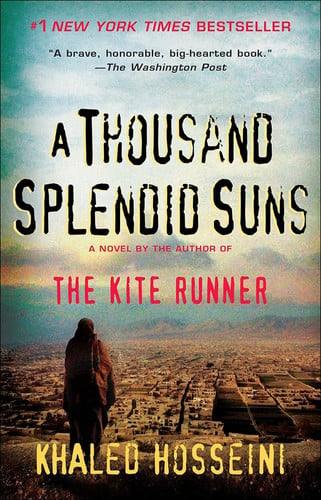
Thousand Splendid Suns
2009 • Perfection Learning
English
A Thousand Splendid Suns
2009 • Penguin Canada
English

千の輝く太陽
2008 • 早川書房
Japanese

A Thousand Splendid Suns
2008 • A&C Black
English

A Thousand Splendid Suns
2008 • National Geographic Books
English
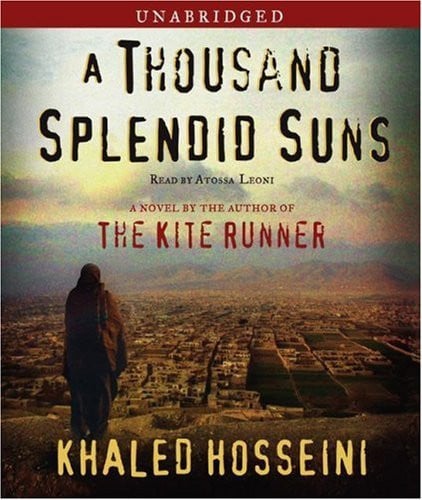
A Thousand Splendid Suns: A Novel
2007 • Simon & Schuster Audio
English

A Thousand Splendid Suns (Korean Edition)
2007 • Bloomsbury Publishing Inc
Korean
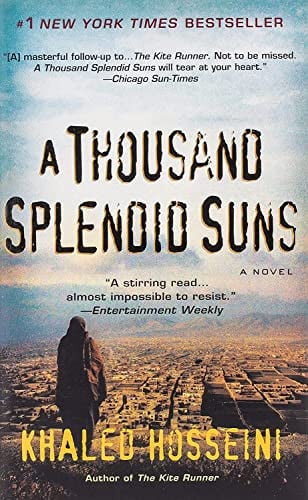
A Thousand Splendid Suns
2008 • Riverhead Books
English
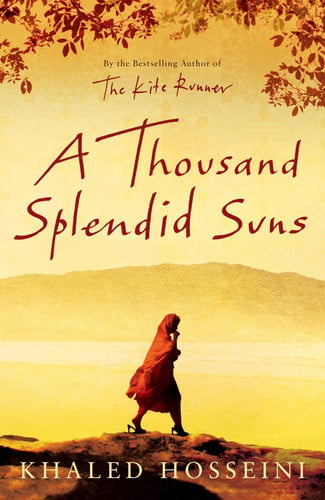
A Thousand Splendid Suns
2007 • Bloomsbury
English

A Thousand Splendid Suns
2007 • Center Point Pub.
English

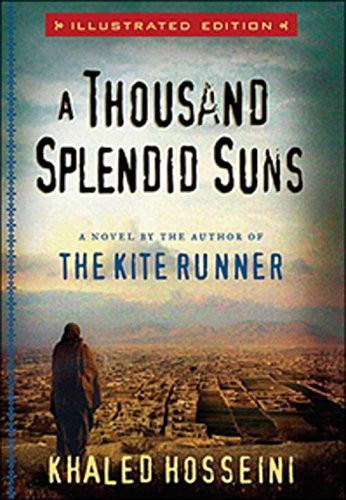
A Thousand Splendid Suns Illustrated Edition
2009 • Penguin Publishing Group
English
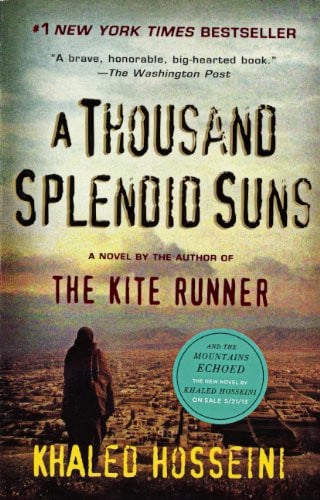
A Thousand Splendid Suns
2008 • Turtleback
English

Tausend strahlende Sonnen Roman
2008 • Berlin Verlag
German
![Mille soleils splendides : [roman]](https://images.isbndb.com/covers/5035523483006.jpg)
Mille soleils splendides : [roman]
2008 • France loisirs
French
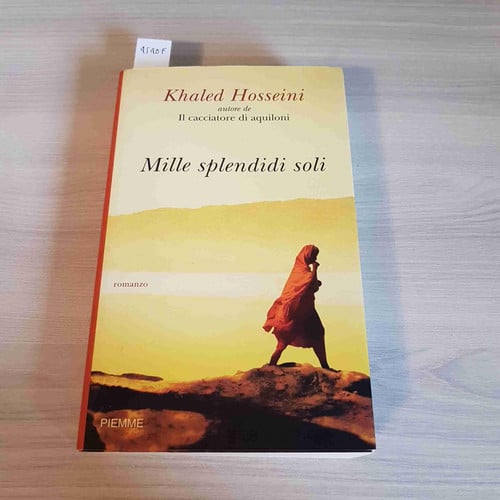
Mille splendidi soli
2007 • Piemme
Italian
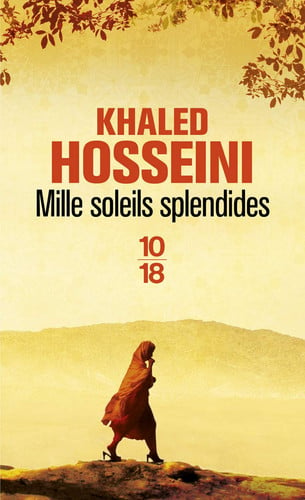
Mille soleils splendides
2009 • Belfond, Editions
French
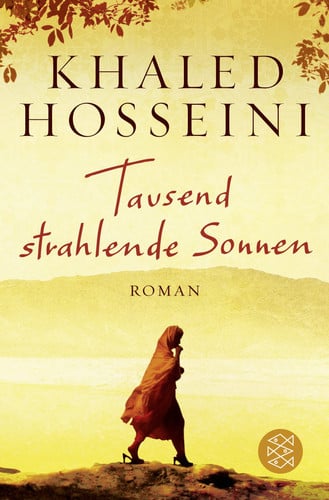
Tausend strahlende Sonnen Roman
2014 • Fischer Taschenbuch
German

Tysiąc wspaniałych słońc
2014 • Wydawnictwo Albatros Andrzej Kuryłowicz
Polish

Tusen strålende soler
2011 • Schibsted
languages.nob
On her fifteenth birthday, Mariam's yearning propelled her down the dirt track to Herat to find the father she adored. She dreamed of being welcomed into his grand house, of meeting her half siblings, of finally belonging. But Jalil did not open the gate. Mariam spent the night on the street, curled up like a stray, until she caught a glimpse of his face in an upstairs window - a flash of panic before the curtains were drawn shut. The betrayal was absolute. When she was driven back to the *kolba*, it was to find Nana's body dangling from the branch of a weeping willow. In the bewildering days that followed, Mariam was taken into Jalil's home not as a daughter, but as a problem to be solved. The solution came in the form of Rasheed, a coarse, widowed shoemaker from Kabul, thirty years her senior. She was married off and sent away, the last trace of Jalil's shame erased.
Years later, in a house down the street from Mariam's, another life unfolds. Laila, born on the night of the 1978 communist coup, is a child of Kabul, cherished by her bookish father, Babi, who believes a society has no chance of success if its women are uneducated. Her world is bright with friendship and the promise of a future. Her days are defined by the easy companionship of her best friend, Tariq, a boy with one leg and a mischievous grin, whose presence is as essential as air. But Laila's home is fractured. Her mother, Mammy, lives in a ghost-haunted state of mourning for her two sons who have gone to fight the Soviets, her love for them a bottomless well that leaves little for the daughter who remains. As the war intensifies, the world Laila knows begins to crumble.
The Mujahideen, once hailed as heroes, turn their guns on each other after driving the Soviets out, and Kabul becomes a battleground of warring factions. The whistling of rockets becomes the city's soundtrack. Laila's world is shattered by one such rocket, which falls from the sky and obliterates her home, killing her parents and leaving her buried in the rubble. She is pulled from the debris by a neighbor - Rasheed. As she slowly heals in his home, she finds herself under the care of his quiet, resentful first wife, Mariam. Orphaned and alone, with Tariq's family having fled to Pakistan, Laila sees her choices dwindle to none. When Rasheed, with his feigned kindness and proprietary glances, asks for her hand, she agrees.
At first, the two women circle each other with suspicion. Mariam, the aging, childless first wife, sees in the young and lovely Laila a rival who has stolen what little she had. Laila sees a grim, bitter woman, another casualty of a life of endurance. But the house is small, and their husband's cruelty is a shared language. Rasheed's initial affection for Laila sours when she gives him a daughter, Aziza, instead of a son. His temper, once reserved for Mariam, now falls on them both. In the suffocating confines of the house, under the weight of daily abuse, an astonishing transformation occurs. A furtive glance, a shared cup of tea, a hand offered in defense - slowly, an alliance is forged. Mariam, who has never known love, finds it in Laila's daughter. Laila, who has lost her mother, finds one in Mariam. They become a family.
When the Taliban roll into Kabul in 1996, the city is cloaked in a new and more severe tyranny. Women are banished from the streets, schools, and workplaces. For Mariam and Laila, the oppression outside is a mere reflection of the despotism within their own home. Rasheed, emboldened by the Taliban's laws, grows more monstrous. The birth of Laila's son, Zalmai, brings him a brief, possessive joy, but the household remains a place of hunger, fear, and routine violence. The women and children endure, bound by their fierce, protective love for one another, dreaming of a life beyond the walls of the house and the suffocating grip of the regime.
Then, one afternoon, the impossible happens. A man with a limp appears at their door. It is Tariq. He is not dead, as Laila had been led to believe by a man Rasheed hired to lie to her. He has been in a Pakistani prison for years and has only now found his way back to her. Their reunion is a moment of breathtaking hope, a glimpse of a life that could have been, and perhaps still could be. Laila knows she must escape with her children and the man she has always loved. But Zalmai, who adores his father, unknowingly reveals Tariq's visit to Rasheed.
The discovery unleashes a fury in Rasheed more terrifying than anything Laila or Mariam have ever witnessed. He beats Laila mercilessly, his hands closing around her throat, squeezing the life from her. Watching Laila's face turn blue, seeing the finality in Rasheed's eyes, Mariam understands that only one of them will survive this moment. In a blur of motion, she runs to the toolshed, grabs a shovel, and brings it down on the man who has been her husband for twenty-seven years. The act is swift, brutal, and absolute.
In the silent, blood-soaked aftermath, Mariam's mind is clear. She knows that if they run, they will be hunted as fugitives. Laila and the children will never be safe. With a love that is both maternal and sacrificial, Mariam makes a decision. She will confess to the murder alone, ensuring Laila, Tariq, and the children can escape. Their farewell is a tearful, whispered promise in the pre-dawn gloom. “For me, it ends here,” Mariam tells Laila. “You and your children have made me so very happy.” Laila looks back one last time and sees Mariam standing in the doorway, a figure of quiet dignity, bathed in the morning sun. Days later, Mariam is taken to Ghazi Stadium and executed before a silent crowd.
Laila, Tariq, and the children find refuge in the cool, green hills of Murree, Pakistan. They build a new life, a peaceful one, but the pull of Afghanistan is relentless. After the fall of the Taliban in 2001, Laila feels the voices of her past calling her home - Babi, Mammy, and most of all, Mariam. She returns to Kabul, a city scarred but not broken, and begins working at the orphanage where she was once forced to leave Aziza. She finds a box Mariam's father left for her, containing a letter of apology, a small inheritance, and a copy of *Pinocchio* - the film Mariam never got to see. Laila's life is now one of purpose, dedicated to the children of Kabul. She is pregnant again. If it is a girl, she will name her Mariam, in honor of the woman whose sacrifice allowed her to live, a woman who shines in her heart with the radiance of a thousand splendid suns.
No discussions yet for this book.
Delete Discussion
Are you sure you want to delete this discussion? This action cannot be undone.
Rating Sources
Readers widely praise this book as a powerful and emotionally resonant masterpiece, often describing it as beautiful, deep, and incredibly impactful. Many found Hosseini's storytelling to be enthralling and immersive, particularly highlighting the compelling character development of Mariam and Laila. Reviewers frequently commend the novel for its ability to shed light on Afghan history and culture from the unique perspective of women, fostering empathy and understanding. The author's direct and engaging writing style is noted for its effectiveness in conveying the story's profound emotional depth and the resilience of the human spirit amidst hardship, making it an eye-opening and memorable experience for many.
However, some readers express reservations, finding certain characters, especially the villain, to be one-dimensional and lacking complexity. Criticisms also include the historical context sometimes feeling like "cut-and-paste" lessons inserted into dialogue, and the repetitive use of foreign words followed by English translations. A few reviewers felt the relationship between the two main women lacked sufficient groundwork to fully justify its intensity. A recurring point of contention is the unrelentingly bleak tone, which some found too depressing or lacking in moments of lightness. One highly critical review also argues that the book presents a pro-imperialist narrative, blaming Islam and Afghan culture for women's suffering, rather than exploring the complexities of war and foreign interference, and uses Orientalist and Islamophobic language.
Overall, the book is largely considered a significant and important read, lauded for its ability to provoke strong emotions and highlight the struggles and incredible resilience of women in Afghanistan. It is highly recommended for readers who appreciate intense, deeply moving historical fiction focused on human connection and endurance in challenging circumstances, and who are prepared for a narrative that is often heartbreaking and difficult. This book is particularly suited for those seeking to understand the human cost of conflict and societal oppression through a compelling, character-driven story.
No reviews yet. Be the first to review this book!
Delete Review
Are you sure you want to delete this review? This action cannot be undone.


