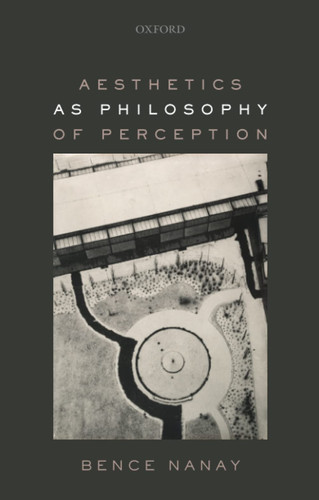
The realm of aesthetics, it is revealed, is deeply intertwined with the intricate workings of perception itself. Many of the profound questions that have long puzzled aestheticians, it turns out, can be illuminated and even resolved by applying the sophisticated conceptual tools of the philosophy of perception. This is not to say that aesthetics is merely a subset of perception studies, but rather that a rich understanding of how we experience the world provides an indispensable foundation for grasping the nature of beauty, art, and aesthetic appreciation.
At the heart of this connection lies the concept of attention, a faculty far more nuanced than often assumed. One particular mode of attending, termed "aesthetic attention," proves crucial. This is a state where one's focus is directed intently upon a single object, yet simultaneously distributed across its myriad properties. Imagine gazing at a painting: your attention is fixed on the canvas, but it also spreads across the brushstrokes, the interplay of colors, the textures, and the composition, taking in the whole without losing sight of the details. This unique form of distributed interest, rather than disinterest, is what often characterizes our most profound aesthetic encounters.
This framework of aesthetic attention offers fresh perspectives on long-standing debates. Consider, for instance, the perception of pictures. When we view an image, our attention is simultaneously engaged with both the depicted scene and the surface qualities of the image itself. It is this dual awareness, a constant oscillation between the representation and the medium, that allows for the rich and complex experience of visual art. Similarly, the concept of formalism, which emphasizes the intrinsic properties of an artwork, finds new grounding when understood through the lens of how our attention is directed towards these formal elements and their intricate relationships.
The very uniqueness attributed to certain artworks or aesthetic experiences can also be understood as arising from this special mode of attention. It is through aesthetic attention that we engage with an object in a way that reveals its particularity, its singular configuration of properties that might otherwise go unnoticed. This intense, distributed focus allows for an appreciation of what makes a specific artwork or natural scene irreplicable in its aesthetic impact.
Even our engagement with fictional characters, a seemingly non-perceptual aesthetic phenomenon, finds its place within this perceptual framework. While perhaps not always involving the same distributed attention to properties, it still involves a focused, immersive attention to narrative and character that shapes our experience. The dynamic interplay between these different modes of attention - sometimes distributed, sometimes intensely focused - is a hallmark of many artistic creations and our responses to them.
Ultimately, by dissecting the mechanisms of perception, particularly the diverse forms and functions of attention, we gain a deeper insight into why certain experiences strike us as aesthetic, why some objects evoke a sense of beauty or profound meaning. It suggests that the aesthetic dimension is not an ethereal, detached judgment, but an embodied, perceptual engagement with the world, a unique way of "taking in" and processing sensory information that enriches our lives and shapes our understanding of art and reality itself.