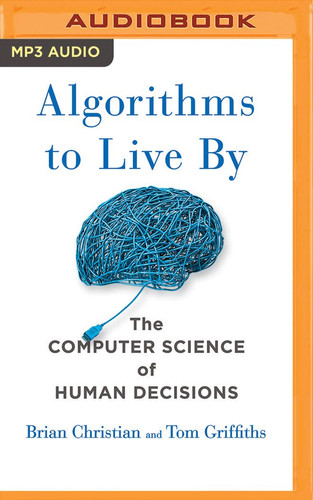
We navigate a world brimming with choices, from the trivial to the profound, often relying on intuition, habit, or sheer guesswork. But what if there was a more elegant way to approach these dilemmas? What if the very principles that govern the digital realm, the algorithms that drive computers, could offer a blueprint for optimizing our human decisions? This journey delves into the surprising parallels between the challenges we face daily and the computational problems that computer scientists have meticulously solved.
Consider the quest for the perfect apartment, the ideal employee, or even a life partner. These are "optimal stopping problems," situations where options appear sequentially, and you must decide when to commit, knowing that passing on a good choice means it's gone forever. The elegant solution, it turns out, often lies in the "37% Rule." This principle suggests that if you have a defined window of opportunity, you should spend the first 37% of that time purely exploring, gathering information without making any commitments. Once that initial period is over, you commit to the very next option that surpasses the best one you observed during your exploratory phase. It's a systematic approach to finding the optimal balance between looking and leaping.
Life, however, isn't always about a single, perfect choice. Often, we're faced with the "explore/exploit" trade-off: should you stick with a known good thing, or venture out to discover something potentially better? Think of choosing a restaurant you've loved versus trying a new one. This is akin to the "multi-armed bandit problem," where a gambler faces a row of slot machines, each with an unknown payout rate. The optimal strategy balances playing the machines you know are good (exploitation) with trying new ones to discover their true potential (exploration). The trick is to explore more when you have a longer horizon to benefit from new knowledge and exploit more when time is running out.
Our minds are constantly sorting, organizing, and prioritizing. The principles of sorting algorithms, like QuickSort or MergeSort, offer insights into managing information efficiently, whether it's your email inbox or your physical belongings. And when it comes to memory, the computer science concept of "caching" illuminates why we remember some things and forget others. Just as a computer's cache holds frequently accessed data, our minds prioritize information we've used most recently or frequently, dropping less important details to make space. The "Least Recently Used" (LRU) algorithm, for instance, provides a powerful model for understanding how to streamline our mental processes.
Scheduling, too, is a pervasive challenge. How do you tackle a daunting to-do list? Algorithms like "Earliest Due Date" or "Shortest Processing Time" offer strategies for prioritizing tasks to minimize lateness or maximize throughput. But sometimes, the sheer complexity of a problem can be overwhelming. This is where the idea of "relaxation" comes in. Just as computer scientists simplify intractable problems to find "good enough" solutions quickly, we too can benefit from deliberately thinking less or dropping certain constraints to make decisions more manageable, even if it means not achieving a perfectly optimal outcome.
Even the unpredictable nature of the future can be approached with algorithmic thinking. Bayes' Rule, a foundational concept in probability, teaches us how to update our beliefs and make better predictions by combining prior knowledge with new evidence. And in situations involving multiple agents, where individual rational choices can lead to collective suboptimal outcomes, game theory provides a framework for understanding and even redesigning the "rules of the game" to foster better collaboration.
Ultimately, these algorithmic principles are not about turning us into machines, but rather about providing a profound understanding of human cognition and behavior. They offer a lens through which to view our everyday struggles with decision-making, offering strategies to minimize mistakes and optimize our choices. By embracing the logic of algorithms, we can gain a powerful toolkit for navigating the inherent complexities of life, making more informed choices, and ultimately, living more effectively.