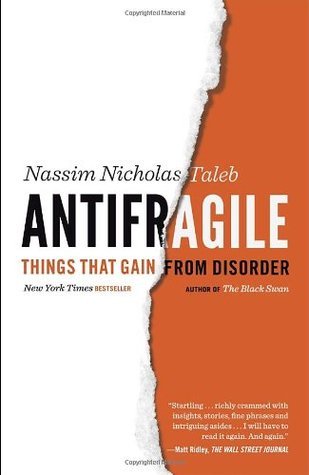
Antifrágil
- First published 2010
- 656 pages
- Spanish
Nassim Nicholas Taleb introduces the concept of antifragility, a quality beyond resilience or robustness, for things that not only withstand shocks, volatility, randomness, and disorder but actively improve and grow stronger because of them. While fragile systems break under stress and robust systems resist without changing, antifragile entities are fundamentally enhanced by chaos. This idea applies across diverse domains, from economic systems and personal health to innovation and decision-making in an unpredictable world.
This work challenges the conventional pursuit of stability and efficiency, arguing that such attempts can inadvertently create fragility in systems and lives. It offers a framework for understanding how to thrive amidst uncertainty, providing insights into constructing strategies and approaches that benefit from the unknown. The book presents a blueprint for navigating a world characterized by unforeseen events, offering a perspective that transforms disorder from a threat into a catalyst for growth.
This work challenges the conventional pursuit of stability and efficiency, arguing that such attempts can inadvertently create fragility in systems and lives. It offers a framework for understanding how to thrive amidst uncertainty, providing insights into constructing strategies and approaches that benefit from the unknown. The book presents a blueprint for navigating a world characterized by unforeseen events, offering a perspective that transforms disorder from a threat into a catalyst for growth.
What readers say
4.09
60K ratings across the web 8 in 10 readers loved it, 1 didn't like it
Reviewers frequently laud the book for introducing the groundbreaking concept of "antifragility," describing it as a phenomenon that thrives and improves when exposed to volatility, stress, and disorder, moving beyond mere resilience. Many found this central idea to be profound, eye-opening, and a valuable new framework for understanding various systems, from natural evolution to economics and personal well-being. The book is praised for challenging conventional wisdom and encouraging readers to reconsider their assumptions about risk and uncertainty. Specific concepts such as "optionality," the "barbell strategy," and the importance of "skin in the game" are highlighted as particularly insightful contributions that offer practical applications for navigating an unpredictable world. Despite its challenging style, some readers acknowledge the author's talent for conveying crucially important and complex ideas.
Conversely, a significant portion of the criticism centers on the author's highly contentious persona and writing style. Many reviewers describe the author as arrogant, pompous, dismissive, and self-important, finding his tone to be off-putting and at times bordering on insulting. The book is frequently criticized for being repetitive, rambling, and poorly edited, with ideas often presented in a disorganized manner that hinders clarity and could be condensed substantially. Concerns are also raised about the lack of rigorous evidence and substantiation for many of the book's assertions, with some arguments perceived as simplistic, hypocritical, or based on flawed reasoning. Reviewers also suggest that some of the core ideas, while presented as novel, are essentially re-packaging existing common-sense concepts or philosophical maxims under new terminology.
Ultimately, the book presents a polarizing reading experience. While many readers find the core concept of antifragility to be immensely valuable and truly thought-provoking, offering a powerful logic for navigating an uncertain world, the challenging style and authorial voice are considerable hurdles. It is recommended for patient readers who are willing to overlook the author's combative tone and repetitive structure to extract the underlying insights. Those who appreciate a contrarian viewpoint and are open to having their established biases questioned will likely find the book rewarding. However, readers seeking a conventionally structured, evidence-based, or less confrontational exploration of ideas may find it a frustrating and difficult read.
Reviews
No reviews yet. Be the first.
Details & editions
- This edition
- Booket, 2016
- ISBN
- 9788408149637
- Language
- Spanish
Original edition Over robuustheid Originally published in 2010 · Dutch · Nieuwezijds b.v., Uitgeverij