
Armas, gérmenes y acero
by (MEI )DAI MENG DE (Diamond J. ) XIE YAN GUANG YI
8.08 / 10 473K ratings
- Language
- Spanish
- Published
- 2007
- Publisher
- Debolsillo
- Pages
- 588
- ISBN
- 9788483463260
For 13,000 years, human history has unfolded on different continents with dramatically different results. This book tackles the fundamental question of why history played out so differently for various peoples, leading to the inequalities of the modern world. It dismisses racially biased explanations and instead presents a compelling argument that the course of civilizations was shaped not by intelligence or ingenuity, but by the raw materials of geography. The availability of domesticable plants and animals, the orientation of the continents, and the microbes that evolved alongside livestock were the critical factors that determined who developed guns, germs, and steel.
By weaving together insights from biology, history, and linguistics, this work offers a comprehensive explanation for the broadest patterns of human history. It explores how environmental advantages led to the rise of agriculture, the development of complex societies, and the technologies of conquest. The narrative moves from the Fertile Crescent to the highlands of New Guinea, demonstrating how geographic luck, rather than inherent superiority, ultimately determined the fates of human societies. Reading this book provides a new framework for understanding the deep roots of global power and wealth.
By weaving together insights from biology, history, and linguistics, this work offers a comprehensive explanation for the broadest patterns of human history. It explores how environmental advantages led to the rise of agriculture, the development of complex societies, and the technologies of conquest. The narrative moves from the Fertile Crescent to the highlands of New Guinea, demonstrating how geographic luck, rather than inherent superiority, ultimately determined the fates of human societies. Reading this book provides a new framework for understanding the deep roots of global power and wealth.
Subjects
- General
- Reference
- Literature & Fiction
- Subjects
- Literary
- History
- Science & Math
- Economic Conditions
- Essays & Correspondence
- World
- Historical Study & Educational Resources
- Nature & Ecology
- Politics & Social Sciences
- Specialty Boutique
- New, Used & Rental Textbooks
- Biological Sciences
- Biology
- Social Sciences
- Business & Economics
- Human Geography
- Literary Collections
- Sociology
- Science
- Human beings
- Nature
- History & Criticism
- Antiques & Collectibles
- Social Science
- Linguistics
- Life Sciences
- Audio Adult: Other
- Audio Adult: Books On Tape
- Environmental Science
- Language Arts & Disciplines
- Movements & Periods
- Literary Criticism
- Civilization & Culture
- Technology & Engineering
- Anthropology
- Cultural & Social
- Cultural
- Historical & Comparative
- Agriculture
- Unabridged Audio - Misc.Nonfiction
- Civilization
- Economic History
- Bibliographies & Indexes
- Ecology
- Evolution
- Historical Geography
- Ethnology
- Crop Science
- Books
- Social Theory
- Essays & Commentary
- Abridged Audio - Misc. Nonfiction
- Social history
- Agronomy
Original edition
Guns, Germs and Steel: The Fate of Human SocietiesOriginally published in 1991 Chinese Shanghai Translation Publishing House Pub. Date :2
Other editions (38)
- Guns, Germs, and Steel The Fates of Human Societies

- Guns, Germs, and Steel The Fates of Human Societies

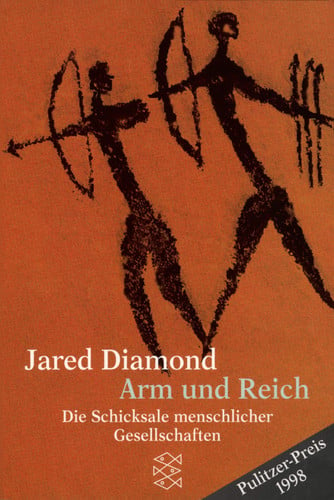
- Arm und reich die Schicksale menschlicher Gesellschaften

- Arm und reich die Schicksale menschlicher Gesellschaften
- Vete, vapen & virus en kort sammanfattning av mänsklighetens historia under de senaste 13 000 åren

Listen to the summary Narrated summary
The question lingers: why did history unfold so differently for peoples on different continents, leading to such vast disparities in wealth, power, and technology? Why, for instance, did Europeans conquer the Americas, rather than Native Americans colonizing Europe? The answer, it turns out, lies not in any inherent biological or intellectual superiority of certain peoples, but in the profound, long-term influence of geography and environment.
Consider the pivotal role of food production, the transition from nomadic hunter-gathering to settled agriculture. This shift, which began around 11,000 years ago, was not a universal phenomenon. It arose independently in only a few fortunate regions, such as the Fertile Crescent, Mesoamerica, and China. These areas were blessed with a crucial advantage: a rich abundance of wild plant and animal species suitable for domestication. Think of wheat and barley, or the ancestors of sheep, goats, pigs, and cattle - species that could be easily tamed, bred in captivity, and provided not just food, but also labor, fertilizer, and even clothing.
The domestication of plants and animals was a profound catalyst. It allowed for settled village life, leading to denser populations and food surpluses. With a stable food supply, not everyone had to farm, freeing some individuals to specialize in other pursuits - crafting tools, developing writing systems, organizing societies, and eventually, innovating technologies. These denser, more complex societies fostered the exchange of ideas and technologies, accelerating their development.
Geography further amplified these initial advantages. Eurasia, with its expansive east-west axis, allowed for the relatively easy spread of domesticated crops, animals, and innovations across vast distances within similar climatic zones. A new crop or farming technique developed in one part of Eurasia could quickly travel thousands of miles, enriching diverse societies. In contrast, continents like the Americas and Africa, with their predominant north-south axes, faced significant ecological barriers - deserts, mountains, and drastic climate changes - that hindered the diffusion of such vital resources and knowledge.
This agricultural head start, nurtured by favorable geography, led directly to the "guns, germs, and steel" that became the proximate agents of conquest. Dense populations living in close proximity to domesticated animals became unwitting laboratories for disease. Over generations, Eurasians developed immunities to a host of pathogens, such as smallpox, measles, and influenza, that originated from their livestock. When Europeans arrived in the Americas, they brought these diseases with them, unleashing devastating epidemics upon indigenous populations who had no prior exposure or immunity, effectively decimating them before battles even began.
Meanwhile, the same factors that fostered agriculture also propelled technological advancement. The availability of metal ores and the leisure time afforded by food surpluses allowed for the development of metallurgy, leading to superior tools and weapons - like steel swords and later, firearms. Organized, centralized states, another byproduct of dense, food-producing societies, could then mobilize these technologies and populations for exploration, conquest, and empire-building.
Thus, the seemingly disparate fates of human societies were not a matter of inherent human difference, but a grand tapestry woven by environmental luck. The distribution of domesticable species, the orientation of continents, and the subsequent chains of cause and effect - from agriculture to population density, to disease immunity, to technological innovation, and finally, to political organization and conquest - ultimately shaped the course of human history. The "cargo" that so puzzled the New Guinean politician was, in the end, a legacy of ecological advantage.
Consider the pivotal role of food production, the transition from nomadic hunter-gathering to settled agriculture. This shift, which began around 11,000 years ago, was not a universal phenomenon. It arose independently in only a few fortunate regions, such as the Fertile Crescent, Mesoamerica, and China. These areas were blessed with a crucial advantage: a rich abundance of wild plant and animal species suitable for domestication. Think of wheat and barley, or the ancestors of sheep, goats, pigs, and cattle - species that could be easily tamed, bred in captivity, and provided not just food, but also labor, fertilizer, and even clothing.
The domestication of plants and animals was a profound catalyst. It allowed for settled village life, leading to denser populations and food surpluses. With a stable food supply, not everyone had to farm, freeing some individuals to specialize in other pursuits - crafting tools, developing writing systems, organizing societies, and eventually, innovating technologies. These denser, more complex societies fostered the exchange of ideas and technologies, accelerating their development.
Geography further amplified these initial advantages. Eurasia, with its expansive east-west axis, allowed for the relatively easy spread of domesticated crops, animals, and innovations across vast distances within similar climatic zones. A new crop or farming technique developed in one part of Eurasia could quickly travel thousands of miles, enriching diverse societies. In contrast, continents like the Americas and Africa, with their predominant north-south axes, faced significant ecological barriers - deserts, mountains, and drastic climate changes - that hindered the diffusion of such vital resources and knowledge.
This agricultural head start, nurtured by favorable geography, led directly to the "guns, germs, and steel" that became the proximate agents of conquest. Dense populations living in close proximity to domesticated animals became unwitting laboratories for disease. Over generations, Eurasians developed immunities to a host of pathogens, such as smallpox, measles, and influenza, that originated from their livestock. When Europeans arrived in the Americas, they brought these diseases with them, unleashing devastating epidemics upon indigenous populations who had no prior exposure or immunity, effectively decimating them before battles even began.
Meanwhile, the same factors that fostered agriculture also propelled technological advancement. The availability of metal ores and the leisure time afforded by food surpluses allowed for the development of metallurgy, leading to superior tools and weapons - like steel swords and later, firearms. Organized, centralized states, another byproduct of dense, food-producing societies, could then mobilize these technologies and populations for exploration, conquest, and empire-building.
Thus, the seemingly disparate fates of human societies were not a matter of inherent human difference, but a grand tapestry woven by environmental luck. The distribution of domesticable species, the orientation of continents, and the subsequent chains of cause and effect - from agriculture to population density, to disease immunity, to technological innovation, and finally, to political organization and conquest - ultimately shaped the course of human history. The "cargo" that so puzzled the New Guinean politician was, in the end, a legacy of ecological advantage.
What other readers say
Liked
The book is widely praised as a fascinating, thought-provoking, and highly insightful work that offers a fresh and compelling perspective on human history. Many reviewers commend its ambitious scope, which seeks to explain the divergent paths of human societies over 13,000 years by challenging traditional, often racist, explanations for historical inequalities. Readers appreciate the author's multidisciplinary approach, drawing on fields such as biology, geography, anthropology, and history, to construct a grand, unified theory. The writing style is frequently described as accessible, engaging, and conversational, making complex ideas understandable for a general audience, often enhanced by diagrams and maps. Its core arguments, focusing on the profound impact of environmental factors like domesticable plants and animals, continental orientation, and the role of disease, are seen as eye-opening and capable of shifting one's entire view of the world. The book's achievement is further underscored by its Pulitzer Prize recognition.
Disliked
Despite its strengths, the book also garners significant criticism, primarily concerning its tendency towards oversimplification and environmental determinism. Reviewers frequently argue that it attributes too much to geographical factors, often at the expense of other crucial elements like cultural idiosyncrasies, individual agency, political decisions, and the evolution of ideas. Some find the argumentation to be unbalanced, with the author selectively emphasizing or downplaying evidence to fit his overarching thesis, and at times neglecting proper citation for his claims. The book is also criticized for being repetitive and overly long, with some chapters perceived as meandering, and for its limited scope, particularly in addressing historical developments over the last two millennia or explaining specific divergences within Eurasia. Certain philosophical underpinnings are questioned, with some suggesting a fatalistic worldview that inadvertently normalizes historical injustices. Specific factual inaccuracies and unsubstantiated claims are also pointed out, leading some to deem it more speculative than factual.
In short
Ultimately, the book emerges as a deeply interesting and worthwhile read that has undeniably sparked extensive debate and offered valuable, albeit incomplete, insights into the broad patterns of human development. While not a definitive or universally accepted explanation for all historical outcomes, its capacity to challenge established thinking and provide an original framework for understanding global disparities is widely acknowledged. It is highly recommended for anyone interested in a comprehensive, albeit controversial, exploration of human history, social science, and the profound, often overlooked, impact of geographical and environmental factors. Readers who appreciate ambitious, multidisciplinary theories and are prepared to engage critically with a bold thesis will find it a particularly enriching experience, especially those in fields like history or anthropology seeking to broaden their theoretical perspectives.
No reviews yet. Be the first.