Add to library
You don't have any lists yet. Create one in My Library.
Go to My LibraryAdd to library
You don't have any lists yet. Create one in My Library.
Go to My LibraryAustere Academy
- Language
- English
- Published in
- Publisher
- HarperCollins Publishers
- ISBN
- 9780060293123
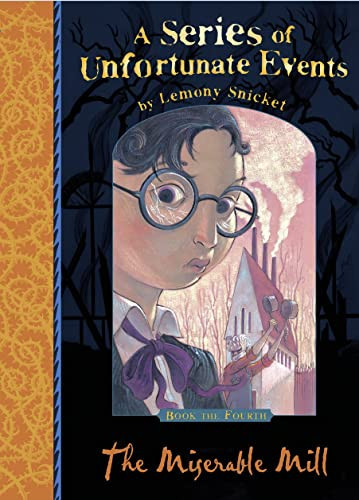
Despite the grim surroundings, a flicker of hope appears when the Baudelaires meet Isadora and Duncan Quagmire, fellow orphans who understand their plight. This newfound friendship provides a brief respite, but the ever-present threat of Count Olaf's schemes looms large, forcing the children to rely on their wits to survive exhausting "Special Orphan Running Exercises" and unfair academic challenges. The story explores themes of adversity and friendship in the face of relentless misfortune, forcing readers to wonder if the children will ever find a safe harbor or if their unfortunate events are destined to continue.
Subjects
Original edition details
Other editions (28)
Other editions

Austere Academy
2009 • HarperCollins Publishers
English

The Austere Academy
2007 • HarperCollins
English

Austere Academy
2009 • HarperCollins Publishers
English

Austere Academy
2000 • HarperCollins Publishers
English

Austere Academy
2009 • HarperCollins Publishers
English

The Austere Academy
2002 • Egmont
English

Academia Muy Austera
2004 • Turtleback Books
English

THE AUSTERE ACADEMY Book the Fifth
2000 • HarperTrophy
English

Academy Muy Austera (the Austere Academy)
2004 • Turtleback Books
English

The Austere Academy
2010 • Egmont
English

The Austere Academy
2018 • HarperCollins Publishers
English

A Series of Unfortunate Events #5: The Austere Academy CD A Series of Unfortunate Events #5: The Austere Academy CD
2003 • HarperCollins
English
The Austere Academy
2012 • Egmont
English

The Austere Academy
2000 • Scholastic Incorporated
English

The Austere Academy
2004 • BBC Audiobooks/Galaxy
English

The Austere Academy (A Series of Unfortunate Events, Book 5)
2001 • HarperCollins
English

A Series of Unfortunate Events #5: The Austere Academy, Netflix Tie-in
2018 • HarperCollins
English
A Series of Unfortunate Events #5: The Austere Academy: Or, Kidnapping!
2008 • HarperTrophy
English

The Austere Academy
2000 • HarperCollins Publishers
English

The Austere Academy (Series of Unfortunate Events, Book 5)
Recorded Books
English

Piège au collège
2009 • Nathan
French
The Austere Academy
2000 • HarperCollins Publishers New Zealand
English

Una Academia Muy Austera
2004 • Penguin Random House Grupo Editorial
Spanish

Piège au collège
2004 • Editions Heritage, Incorporated
French

Изуверский интернат
2004 • Изд-во "Азбука-классика"
Russian

Das Internat des Schreckens
2001 • Distribooks
German

The Austere Academy
2002 • Egmont
English

L'atroce Accademia / the Austere Academy (Una Serie Di Sfortunati Eventi / a Series of Unfortunate Events) (Italian Edition)
2003 • Salani
Italian
Their new home was not a dormitory of finely furnished rooms, but a dismal tin shack infested with tiny, territorial crabs and a dripping, tan-colored fungus. Their new headmaster was not a kind and wise mentor, but the vain and cruel Vice Principal Nero, a man who believed himself a violin genius but produced sounds akin to a shrieking animal. Nero's rules were as nonsensical as they were severe: miss one of his mandatory six-hour nightly concerts and you would be forced to buy him a bag of candy and watch him eat it. Be late for a meal, and your beverage would be served in a puddle on the tray. For Violet and Klaus, school itself was a torment of boredom, with one teacher who did nothing but tell pointless stories while eating bananas, and another obsessed with measuring every mundane object with the metric system. For Sunny, the situation was even more absurd; being a baby, she was deemed unteachable and was instead employed as Nero's secretary, an impossible and thankless job.
Amidst the misery of the Orphans Shack and the drudgery of their classes, a flicker of hope appeared in the form of two fellow orphans, Duncan and Isadora Quagmire. They were triplets, they explained, though their brother Quigley had perished in the same fire that claimed their parents - a tragedy that instantly bonded them to the Baudelaires. Duncan was a journalist who kept meticulous notes in a green notebook, while Isadora was a poet who recorded couplets in a pitch-black one. For the first time in a long while, the Baudelaires had friends who understood their plight, who had also lived in the Orphans Shack, and who shared their intelligence and curiosity. In the quiet refuge of the school library, the five children felt the world become a little smaller and less sneaky, a brief and comforting illusion that was about to be shattered.
The shattering came in the form of a man with a turban wrapped low over his brow and expensive-looking running shoes on his feet. He called himself Coach Genghis, the new gym teacher, but Violet, Klaus, and Sunny knew him at once. Beneath the ridiculous disguise were the unmistakably shiny eyes of Count Olaf. Fearing Nero would never believe them, the children decided to feign ignorance, hoping to uncover his scheme before he could enact it. They did not have to wait long. Genghis announced a new fitness regimen for the three of them alone: Special Orphan Running Exercises, or S.O.R.E.
Every night after dinner, while the rest of the school suffered through Nero's violin recital, the Baudelaires were forced to run endless laps around a large, glowing circle painted on the lawn with luminous paint. As Genghis blew his whistle from the darkness, the children ran until their legs ached and their lungs burned, collapsing into their hay bales just before dawn, too exhausted to think. The Quagmires, loyal to the last, snuck out of the concerts to spy on them, but there was nothing to see but three small figures circling a luminous zero, a symbol of what they knew about Olaf's plan. Night after night, the routine continued, and the Baudelaires' exhaustion grew until their schoolwork suffered, their grades plummeted, and Sunny could no longer perform her secretarial duties.
It was then that Olaf's plan became chillingly clear. Vice Principal Nero, furious at their failing performance, summoned them to his office. He declared that if they did not pass a comprehensive exam the very next morning, they would be expelled and placed in the care of a new guardian: Coach Genghis. The S.O.R.E. program had not been about fitness; it had been a calculated campaign of exhaustion, designed to make them fail so Olaf could legally claim them. With no time to spare, the five children devised a desperate, risky plan. The Quagmires, disguised with Violet's ribbon and Klaus's glasses, would run the laps in their place, dragging a flour sack to stand in for Sunny. Meanwhile, the Baudelaires would spend the night in the shack, studying from the Quagmires' notebooks and frantically inventing a device to make the staples Sunny needed for her own impossible exam.
Using a crab, a potato, and some creamed spinach as glue, Violet fashioned a staple-making machine, and the children worked through the night. By morning, they were prepared. They passed their exams with perfect scores, presenting Nero with a stack of flawlessly stapled papers. But their triumph was fleeting. Coach Genghis strode into the shack, holding Violet's ribbon and Klaus's glasses. He announced that he had discovered the deception, and that for their cheating, the Baudelaires were expelled. Just as Mr. Poe arrived, flustered and useless as ever, Genghis made his move. “I need these shoes for running,” he declared, and fled across the lawn.
The chase was on. Violet tore off his turban, revealing his single eyebrow. Sunny bit through his shoelaces, forcing him to abandon his shoes and reveal the eye tattoo on his ankle. But it was too late. At the edge of the campus, Olaf's powder-faced associates were forcing the struggling Quagmire triplets into a long, black car. Klaus reached them just as the door was closing, grabbing Isadora's hand. “Look in the notebooks!” Duncan screamed from inside the car, his voice muffled by a powdery hand. “V.F.D.!”
It was the last thing they heard. Olaf pried Klaus's fingers from the door, kicked him to the ground, and snatched the Quagmires' precious notebooks before speeding away. The Baudelaires could only watch in horror as the faces of their only friends vanished from the rear window. Left alone on the browning grass, expelled and grieving, the three orphans clung to one another. Their friends were gone, but they had left behind a final, desperate clue. V.F.D. The Baudelaires did not know what it meant, but as they looked up at the school's grim motto, they made a new vow. Before they died, they would solve this mystery, they would find their friends, and they would bring Count Olaf to justice, no matter where his treachery led them next.
No discussions yet for this book.
Delete Discussion
Are you sure you want to delete this discussion? This action cannot be undone.
Rating Sources
Reviews for this book largely highlight it as a significant improvement over the preceding volume, offering a welcome shift in the series' tone. Many readers celebrate the introduction of new young characters who provide the protagonists with much-needed companionship and shared experiences, bringing a refreshing dynamic to the narrative. The author's distinctive literary style, characterized by clever vocabulary, witty asides, and a unique narrative voice, continues to be a strong point, with several reviewers finding the book genuinely humorous despite its often somber themes. The new setting is generally well-received, and for some, the hints of a larger, unfolding mystery add intriguing depth to the overarching story.
However, some common criticisms regarding the series' established formula persist. A number of reviewers felt that the core plot structure remained somewhat repetitive, with familiar patterns of challenges and adult gullibility that could feel predictable or even tiring. The consistent inability of adult characters to recognize obvious deceptions was a frequent point of frustration for those seeking more logical resolutions. While many enjoyed the humor, a few reviewers suggested that the satirical elements and witty prose were less prominent in this installment compared to earlier books, and one felt that the strong camaraderie among the children, while positive, inadvertently reduced the usual comedic impact of their misfortunes.
Ultimately, this book is widely regarded as a pivotal and engaging installment in the series, often cited as a favorite for its introduction of key characters and the expansion of the narrative's scope. It successfully maintains the series' signature blend of misfortune and dark humor, while offering moments of hope and connection that resonate with readers. It is highly recommended for those who appreciate a unique authorial voice, clever wordplay, and a story that explores themes of adversity with a distinctive blend of wit and melancholy, particularly appealing to readers who enjoy following resilient young protagonists through their challenging adventures.
No reviews yet. Be the first to review this book!
Delete Review
Are you sure you want to delete this review? This action cannot be undone.