
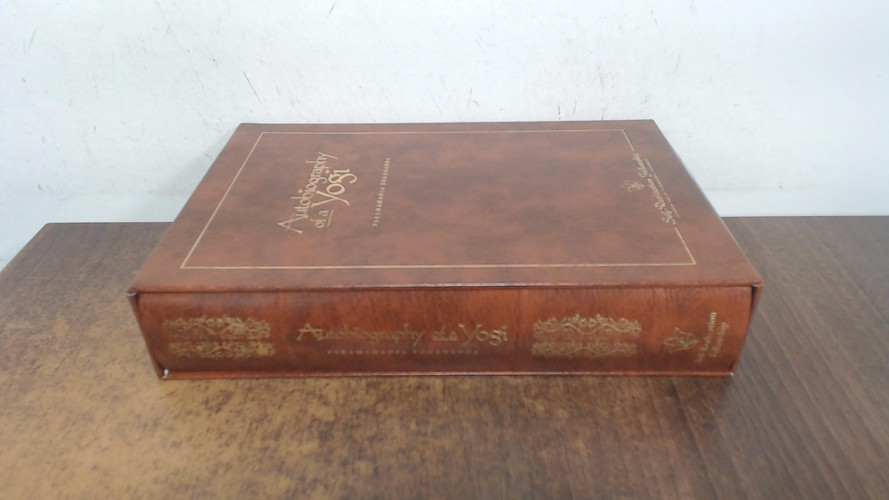
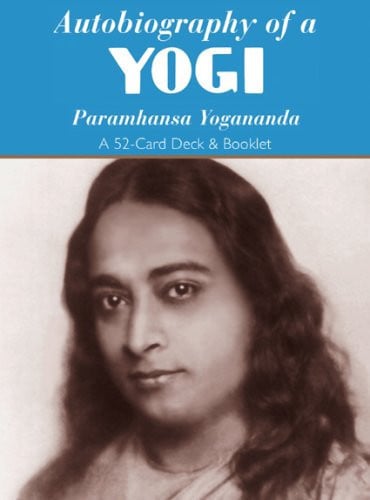
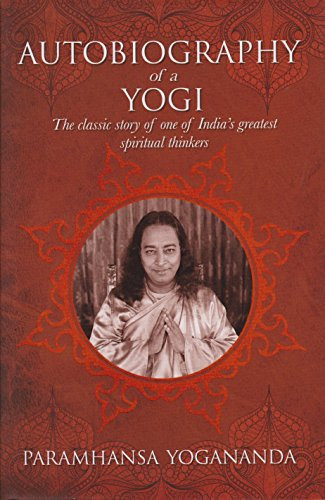
Autobiografía de Un Yogui
8.5 / 10 76K ratings
- Language
- Spanish
- Published
- 2008
- Publisher
- Self-Realization Fellowship Publishers
- Pages
- 744
- ISBN
- 9780876120989
Step into a world where ancient wisdom meets modern inquiry. Paramahansa Yogananda's "Autobiography of a Yogi" invites readers on a journey through a life dedicated to spiritual discovery, from his mystical childhood in India to his pioneering efforts in bringing yoga and meditation to the Western world. This spiritual classic chronicles Yogananda's encounters with enlightened masters, including his guru Sri Yukteswar Giri, and reveals profound insights into the nature of reality, the unity of religions, and the transformative power of Kriya Yoga.
Experience a narrative rich with miraculous events and a deep exploration of self-realization, offering a unique perspective on the potential of human consciousness and the universal quest for divine connection. It is a testament to the enduring relevance of spiritual discipline and the guidance of a guru, promising readers a compelling exploration of Eastern spiritual traditions and a path toward inner peace and understanding.
Experience a narrative rich with miraculous events and a deep exploration of self-realization, offering a unique perspective on the potential of human consciousness and the universal quest for divine connection. It is a testament to the enduring relevance of spiritual discipline and the guidance of a guru, promising readers a compelling exploration of Eastern spiritual traditions and a path toward inner peace and understanding.
Subjects
- General
- Reference
- Literature & Fiction
- Genre Fiction
- Subjects
- Literary
- Self-Help
- Health, Fitness & Dieting
- Historical
- Self Service
- History
- Biographies & Memoirs
- Leaders & Notable People
- Arborist Merchandising Root
- Spiritual
- Body, Mind & Spirit
- New Age
- Memoirs
- Exercise & Fitness
- Religion & Spirituality
- Worship & Devotion
- Inspirational
- Contemporary
- New Age & Spirituality
- Self-Esteem
- SPIRITUALITY
- Personal Transformation
- Politics & Social Sciences
- Philosophy
- Foreign Language Study & Reference
- Community & Culture
- Fiction
- Biography & Autobiography
- Religious
- Theology
- Professionals & Academics
- Alternative Medicine
- Classics
- Mysticism
- Other Religions, Practices & Sacred Texts
- Literary Collections
- Religious Studies
- Psychology
- Social life and customs
- Buddhism
- Meditation
- Spiritualism
- Nonfiction
- Biography
- Religion
- Success
- Biographical
- Educators
- Diaries & Journals
- Health & Fitness
- Foreign Language Study
- Hinduism
- Eastern
- Spirituality
- Cultural, Ethnic & Regional
- Personal Memoirs
- Language
- Inspiration & Personal Growth
- Japanese
- BIOGRAPHY
- History & Schools of Thought
- Mindfulness & Meditation
- French
- Yoga
- Biography/Autobiography
- Autobiography
- Dutch
- Unabridged Audio - Misc.Nonfiction
- Philosophers
- Rituals & Practice
- Other Eastern Religions & Sacred Texts
- Unabridged Audio - Autobiography/Biography
- Popular culture
- Spirituality - General
- YOGA
- Affirmations
- Hindu
- Self-realization
Original edition
Autobiography of a YogiOriginally published in 1959 English Self-Realization Fellowship
Other editions (129)


Listen to the summary Narrated summary
From my earliest days, a deep longing for the divine stirred within me, Mukunda Lal Ghosh, a yearning that overshadowed the ordinary concerns of childhood in Gorakhpur, India. My family, devotees of the revered Lahiri Mahasaya, nurtured this spiritual inclination. Even as a boy, I often prayed and experienced visions, sensing a destiny far beyond the mundane. I sought out saints and yogis, drawn by tales of their extraordinary powers - one able to be in two places at once, another capable of manifesting perfumes, a third who could levitate. These encounters only intensified my quest for a true spiritual master, a quest that sometimes led me to plan escapes to the Himalayas.
My journey took a profound turn when I met my guru, Swami Sri Yukteswar Giri. His presence was both stern and loving, and under his tutelage, my spiritual understanding matured immensely. He initiated me into the ancient science of Kriya Yoga, a powerful technique that uses the breath to unite individual consciousness with subtler spinal energies, electrifying the cells with spiritual elixir. Sri Yukteswar's teachings were not merely intellectual; he demonstrated miraculous powers, predicting the future and healing the sick, yet always emphasizing that such abilities were but by-products of deeper spiritual realization. He guided me through profound experiences, including moments of cosmic consciousness where I perceived the infinite oneness of all things.
My guru also impressed upon me the importance of a formal education, advising that it would make my future mission in the West more accessible. Thus, I attended Calcutta University, balancing my academic pursuits with intense spiritual training. It was during these years that I began to understand the universal truths underlying all religions, a core principle that would later define my life's work. I established my first school in India, the Yogoda Satsanga Brahmacharya Vidyalaya, in 1917, a manifestation of a vision I had received.
A pivotal moment arrived in 1920 when I accepted an invitation to speak at an International Congress of Religious Liberals in Boston, Massachusetts. This marked the beginning of my mission to the West, to introduce the ancient wisdom of India and the transformative power of Kriya Yoga to a new audience. I traveled extensively across the United States, lecturing to thousands and establishing the Self-Realization Fellowship in Los Angeles, which would serve as a vehicle for disseminating these universal teachings.
My time in the West was filled with encounters with notable figures, from the botanist Luther Burbank to the Catholic mystic Therese Neumann. I found that true spirituality transcended all sectarian boundaries, and I advocated for an approach that embraced the essential teachings of love, truth, and wisdom found in all faith traditions. I returned to India for a year-long visit in 1935, a deeply enriching period where I reconnected with my guru, Sri Yukteswar, and met other revered saints such as Mahatma Gandhi and Rabindranath Tagore.
Upon my return to America, my work continued to flourish, and I dedicated myself to writing down my life experiences and the profound spiritual insights I had gained. This was not merely a personal history but an offering, intended to guide others on their own quest for self-realization and union with the divine. My encounters with various saints and the recounting of numerous miraculous events were included not as mere spectacle, but as illustrations of divine grace and the subtle connections between the material and spiritual worlds, encouraging seekers to realize the true nature of the Self, which extends beyond the individual to encompass the universe.
The journey of life, I came to understand, is a testament to the human quest for self-realization, an eternal search for oneness with God. The practice of Kriya Yoga, with its scientific approach to spiritual evolution, offers a direct path to this ultimate goal, allowing one to transcend the limitations of karma and realize the boundless, indestructible nature of the soul. It is a path not of mere belief, but of direct experience, where one can truly know the divine reality. My life, with all its joys, challenges, and mystical revelations, stands as an invitation to embark on this most fulfilling of adventures.
My journey took a profound turn when I met my guru, Swami Sri Yukteswar Giri. His presence was both stern and loving, and under his tutelage, my spiritual understanding matured immensely. He initiated me into the ancient science of Kriya Yoga, a powerful technique that uses the breath to unite individual consciousness with subtler spinal energies, electrifying the cells with spiritual elixir. Sri Yukteswar's teachings were not merely intellectual; he demonstrated miraculous powers, predicting the future and healing the sick, yet always emphasizing that such abilities were but by-products of deeper spiritual realization. He guided me through profound experiences, including moments of cosmic consciousness where I perceived the infinite oneness of all things.
My guru also impressed upon me the importance of a formal education, advising that it would make my future mission in the West more accessible. Thus, I attended Calcutta University, balancing my academic pursuits with intense spiritual training. It was during these years that I began to understand the universal truths underlying all religions, a core principle that would later define my life's work. I established my first school in India, the Yogoda Satsanga Brahmacharya Vidyalaya, in 1917, a manifestation of a vision I had received.
A pivotal moment arrived in 1920 when I accepted an invitation to speak at an International Congress of Religious Liberals in Boston, Massachusetts. This marked the beginning of my mission to the West, to introduce the ancient wisdom of India and the transformative power of Kriya Yoga to a new audience. I traveled extensively across the United States, lecturing to thousands and establishing the Self-Realization Fellowship in Los Angeles, which would serve as a vehicle for disseminating these universal teachings.
My time in the West was filled with encounters with notable figures, from the botanist Luther Burbank to the Catholic mystic Therese Neumann. I found that true spirituality transcended all sectarian boundaries, and I advocated for an approach that embraced the essential teachings of love, truth, and wisdom found in all faith traditions. I returned to India for a year-long visit in 1935, a deeply enriching period where I reconnected with my guru, Sri Yukteswar, and met other revered saints such as Mahatma Gandhi and Rabindranath Tagore.
Upon my return to America, my work continued to flourish, and I dedicated myself to writing down my life experiences and the profound spiritual insights I had gained. This was not merely a personal history but an offering, intended to guide others on their own quest for self-realization and union with the divine. My encounters with various saints and the recounting of numerous miraculous events were included not as mere spectacle, but as illustrations of divine grace and the subtle connections between the material and spiritual worlds, encouraging seekers to realize the true nature of the Self, which extends beyond the individual to encompass the universe.
The journey of life, I came to understand, is a testament to the human quest for self-realization, an eternal search for oneness with God. The practice of Kriya Yoga, with its scientific approach to spiritual evolution, offers a direct path to this ultimate goal, allowing one to transcend the limitations of karma and realize the boundless, indestructible nature of the soul. It is a path not of mere belief, but of direct experience, where one can truly know the divine reality. My life, with all its joys, challenges, and mystical revelations, stands as an invitation to embark on this most fulfilling of adventures.
What other readers say
Liked
The book is widely lauded by many readers as a profound and transformative experience, often described as life-altering and deeply inspiring. Reviewers frequently praise it as a journey into the author's life, filled with insightful stories, wisdom, and reflections on spiritual experiences that encourage an open mind to the wonders of existence and joy. Many found it to be a breath of fresh air, providing alternative perspectives on spirituality and God, particularly for those disillusioned with traditional Western religious interpretations. Readers appreciate its clarity of thought, its ability to transport them to other dimensions, and its potential to foster a sense of peace and understanding. It is seen as a compelling introduction to Indian philosophy and a way to connect diverse religious traditions, with some considering it a spiritual tool that guides readers toward a deeper connection with the divine and self-realization.
Disliked
Despite its strong proponents, the book also garners significant criticism, primarily concerning the extraordinary claims and numerous miraculous anecdotes presented. Many skeptical readers found these accounts to be unbelievable, describing them as "lies," "delusions," or "fantasy" that stretch credulity beyond limits. Critics question how learned individuals can accept stories of people apparating, becoming invisible, or never eating, suggesting that such tales detract from any potential spiritual message. Some reviewers argue that the book misrepresents the true essence of Yoga, which they believe should be rooted in reasoning and intellectual search for truth rather than "fanciful fables" and "magic." There is concern that the book might lead to cynicism about Hinduism and its practices, as it presents a version of Eastern mysticism that some feel bears little resemblance to actual Indian traditions or an authentic understanding of Yoga.
In short
In conclusion, "Autobiography of a Yogi" is a polarizing work that evokes strong reactions, from profound admiration to outright disbelief. While some readers cherish it as a masterpiece that has reshaped their understanding of life and spirituality, others find its fantastical elements to be a significant barrier to engagement. The book is recommended for readers with an open mind, those seeking inspiration beyond conventional scientific or religious frameworks, or individuals interested in exploring Indian philosophy and mystical experiences. It particularly resonates with those on a spiritual quest who are willing to embrace narratives that challenge their preconceived notions of reality. However, readers who prefer empirical evidence, a more traditional approach to spirituality, or a strictly rational account may find the book difficult to accept, though some suggest it can still be enjoyed as an imaginative and engrossing work of fiction.
No reviews yet. Be the first.