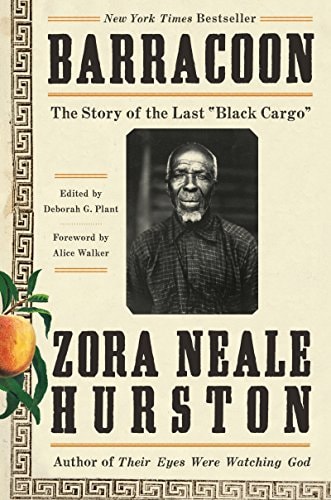
Positives Ibram X. Kendi's adaptation of Zora Neale Hurston's work is widely praised for making a profoundly important and moving historical account accessible to younger readers. Reviewers consistently highlight Kendi's outstanding job in preserving the original's flavor, horror, and heartbreak, while also streamlining the narrative by cutting filler. The book is lauded as a powerful, profound, and essential read, offering a unique first-hand perspective on the transatlantic human trade and its aftermath. The accompanying illustrations by Jazzmen Lee-Johnson are frequently described as beautiful, stunning, and highly effective in capturing the emotional depth and themes of memory and resilience within the text, significantly enhancing the reader's experience.
Negatives The primary concern raised by several reviewers centers on the book's use of dialect, specifically Ebonics, to represent Kossula's speech patterns. While many appreciate this choice for its authenticity and for preserving the character's unique voice, a significant number of readers, both young and adult, found the dialect challenging to understand and follow. Some described it as distracting, potentially hindering comprehension and requiring extra effort from educators to fully engage students. Additionally, a few reviewers expressed a desire for more detail, acknowledging this is often inherent in adaptations for younger audiences, and some felt the narrative, while historically vital, might not be as "astounding" as more fast-paced fiction for certain young readers.
Conclusion Overall, the book is considered an incredibly important and essential read, providing a unique and invaluable first-hand account of a critical period in history. Despite the potential difficulties posed by the dialect, reviewers overwhelmingly recommend it for its powerful narrative, historical significance, and the emotional resonance of Kossula's story of strength, resilience, and enduring hope amidst profound personal hardship. This adaptation is highly recommended for middle school and high school students, as well as mature younger readers aged eight and up, and even adults seeking a more approachable version of Hurston's original. It is deemed a valuable resource for classroom study, institutional purchases, and anyone interested in gaining a deeper, more personal understanding of enslavement in America and its lasting impact.