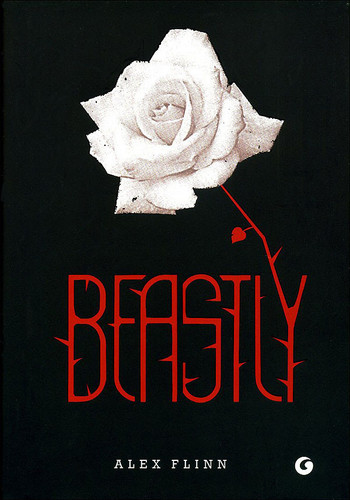
In modern-day New York City, Kyle Kingsbury has it all: wealth, popularity, and god-like looks he uses to torment those he deems inferior. His perfect world is shattered when he humiliates the wrong classmate, a witch who curses him for his cruelty. She transforms his handsome exterior into a monstrous reflection of his own inner ugliness, complete with fangs and fur. Now, hidden from the world by his ashamed father, he is given an ultimatum: find someone who can love him as a beast within two years, or he will remain one forever.
Told from the perspective of the beast himself, this is not just a fairy tale. It is the story of a boy stripped of everything he valued, forced to confront the monster he has always been. As he navigates his new, isolated existence, he must learn that true beauty is not skin deep. This reimagining of a classic tale explores whether love can truly conquer all and see the person hidden beneath a hideous facade, offering a poignant journey of redemption and the discovery of what it means to be human.
I could feel everyone looking at me, and I was used to it. My dad, the news anchor Rob Kingsbury, taught me early that when you're special, you act like nothing moves you. I was Kyle Kingsbury - rich, handsome, and the undisputed prince of Tuttle School. So when a Goth girl with green hair and a chip on her shoulder named Kendra stood up in English class to call our spring dance ballot an “elitist travesty,” I put her in her place. “If someone's so smart,” I told her, making sure everyone could hear, “they'd figure out how to get better-looking.” Her eyes, a strange, boiling green, locked on mine. “You are ugly now, on the inside, where it matters most,” she said, her voice dropping to a whisper that felt like a curse. “Kyle Kingsbury, you are beastly.”
To teach her a lesson, I asked her to the dance, a cruel joke I orchestrated with my real date, Sloane Hagen. I pictured Kendra showing up alone, humiliated, and it felt like justice. But at the dance, when I cornered her and delivered the punchline, she didn't cry. She just looked at me with those knowing, ancient eyes. “You'll see,” she promised, and vanished. Later that night, I found her sitting on my bed, no longer the frumpy girl from school but a radiant, terrifyingly beautiful woman. As the clock struck midnight, she held up a mirror. “I have transformed you to your truer self,” she said, and in the reflection, I saw it. I was no longer Kyle. I was an animal, a monster covered in fur, with fangs and claws. I was a beast.
The life I knew shattered. My father, horrified and ashamed, tried to fix me with doctors and specialists, but no science could touch this magic. When he finally understood I was incurable, he locked me away in a five-story brownstone in Brooklyn, a gilded cage where no one would ever have to see his monstrous son. He left me there with only Magda, the quiet housekeeper, and a new tutor he'd hired - a blind man named Will Fratalli who couldn't see the freak I'd become. The witch had left me one sliver of hope: two years to find someone who could love me despite my appearance, sealed with a kiss of true love. But trapped in that house, my only connection to the world was a magic mirror she'd given me, which showed me my old friends moving on without a second thought. I gave up on Kyle. I was Adrian now, the dark one.
My world became the four walls of my prison and the greenhouse I built in the backyard. The roses became my life; their fragile beauty was the only thing I had left. Then one night, a man broke in, a junkie trying to steal from me. I caught him, and in his terror, he offered me the one thing I couldn't refuse: his daughter. He would trade her for his freedom. I knew it was wrong, but it was my only chance. Her name was Lindy, and when I saw her face in the mirror, I recognized her. She was the quiet, mousy girl from the dance, the one I'd given a cast-off white rose to - the one small act of kindness the witch said had earned me my second chance.
When Lindy arrived, she saw only a monster and a jailer. She locked herself in the beautiful suite I had prepared for her, refusing to speak to me, hating me for tearing her away from a life that, however broken, was her own. Days turned into weeks. I left her alone, respecting her prison within my prison, until one night she crept downstairs. In the dim light of the television, she saw me for the first time, and though she was terrified, she didn't run. We began to talk, first about books and then about our lives, two lonely people abandoned by fathers who could never truly see us. Slowly, the walls between us began to crumble.
I took her away from the city to a secluded house in the mountains, where we could walk outside under the winter sky without anyone staring. We built snowmen and raced down hills on an old sled, and for the first time since the curse, I felt the warmth of another person as I held her in my arms. I was falling in love with her, with her quiet strength and her fierce intelligence. But she missed her father, and seeing him sick and alone in the magic mirror, I knew I couldn't keep her. It was the hardest thing I'd ever done, but I let her go, promising she was free to return in the spring, if she chose.
Months passed in silence. The snow melted, and the deadline for the curse - two years to the day - loomed. I returned to Brooklyn, my heart a hollow space, tending my roses and accepting that I would be a beast forever. On the final night, with only an hour to spare, I heard her voice cry out my name - not from the street, but from inside the mirror. She was in trouble. Forgetting everything else, I ran, bursting from my prison and into the city, a monster loose in the subway, a creature of nightmare exposed to the world.
I found her in a derelict building, cornered by a man with a gun. I fought for her, not as a boy, but as the beast I was, and took a bullet meant for him. As I lay bleeding on the floor, the world fading to black, Lindy rushed to my side. I told her I loved her, and with tears streaming down her face, she told me she loved me too. She had come back for me. It was midnight. It was too late. But she leaned down and kissed my lipless mouth, and in that moment, the world exploded into the scent of roses.
When I opened my eyes, her face was inches from mine, filled with confusion. “Kyle Kingsbury?” she whispered. “But…where's Adrian?” I took her hand - my hand, smooth and human once more - and told her that the beast she had loved was me. The curse was broken. The witch, Kendra, revealed herself one last time - she had been Magda all along, watching over me. And though my face was my own again, I was not the boy I had been. Standing on the roof at sunrise, with Lindy's hand in mine, I knew that whatever magic had made me a beast, a greater magic had made me human.
What other readers say
Liked
The book is largely praised as a charming and engaging modern retelling of the classic Beauty and the Beast fairy tale, set in contemporary New York City. Many readers appreciated the unique perspective of having the story narrated from the Beast's point of view, allowing for a deep dive into his character's internal journey. Reviewers frequently highlighted the protagonist's significant character development, as he transforms from a shallow, arrogant individual into a more empathetic and self-aware person. The narrative effectively explores themes of inner beauty versus superficial appearance, emphasizing the importance of values, friendship, and love. The inclusion of modern elements, such as online chat forums, was seen by some as a delightful and creative twist that added to the book's appeal.
Disliked
Despite its positive aspects, the book garnered significant criticism. A common sentiment among reviewers was that the story, at times, felt slow, dull, and uneventful, with some finding it "cheesy" in its execution, particularly in the internal monologues and the overall message. Several readers found the characters, especially the protagonist, to be shallow and difficult to connect with, suggesting a lack of emotional depth. The romantic relationship between the main characters was occasionally perceived as rushed or underdeveloped, failing to establish a strong connection. Furthermore, some found certain plot elements or character portrayals problematic, such as the handling of a character's disability, which was described as condescending. The book was also criticized for being overly simplistic, with its lessons on inner beauty feeling forced and not resonating with all readers.
In short
Ultimately, the book receives a mixed reception, with opinions ranging from enthusiastic enjoyment to considerable disappointment. It is generally considered a quick and easy read, making it a suitable choice for younger teens, particularly those between 10 and 13, who are fans of fairy tale retellings, coming-of-age stories, and light romance. Readers who appreciate a clear message about personal growth and the triumph of inner character over outward appearance are likely to find this book appealing. However, those seeking more complex narratives, deeper character development, or a less conventional approach to the classic tale might find it falls short of their expectations.