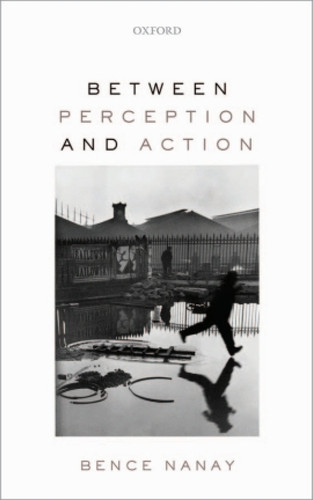
How does sensory input translate into purposeful action? Bence Nanay's Between Perception and Action introduces the concept of "pragmatic representations" to bridge this fundamental gap in understanding the mind. These perceptual states, which represent properties necessary for successful action, are argued to be the essential link between what we sense and what we do.
This work de-intellectualizes the production of human actions, suggesting that a significant portion of our actions, much like those of non-human animals, are guided by these direct perceptual states rather than complex propositional attitudes. By establishing this framework, the book re-evaluates long-standing questions in the philosophy of perception and action, as well as in psychology and cognitive science, offering a new perspective on the intricate mechanisms underlying our mental lives and behavior.
What mediates the fleeting moment between seeing an apple and reaching out to grasp it? This fundamental question, at the very heart of understanding the mind, reveals a profound and often overlooked mechanism. It is argued that the vast majority of our actions, from the simplest to the seemingly complex, are not born from intricate webs of beliefs and desires, but rather spring directly from a more primitive, yet incredibly sophisticated, form of perception.
Imagine tying your shoelaces, or picking up a cup. These everyday acts, often performed without conscious deliberation, are guided by what are called "pragmatic representations." These are not abstract thoughts or reasoned intentions, but immediate perceptual states that actively represent the properties of objects relevant for interaction. When you see the apple, your visual system isn't just registering its redness or roundness; it's simultaneously registering its size relative to your hand, its distance, its graspability - all the "action-properties" crucial for a successful reach. These are the cognitive components that immediately precede and enable our actions.
This perspective suggests a "deintellectualization" of action, proposing that our minds, much like those of infants and non-human animals, are primarily geared towards successful interaction with the world through direct perceptual guidance. The traditional view, which places sophisticated propositional attitudes like beliefs and desires as the default drivers of intentional action, is often inadequate. Instead, many of our actions are rooted in these more basic, action-oriented perceptual states.
Pragmatic representations are genuine perceptual states, arising directly from sensory input. They are not merely an optional addition to perception, but are argued to be necessary antecedents for most "basic" actions - those fundamental movements not composed of other actions. For instance, the buzz of a mosquito isn't just heard; it's pragmatically represented in a way that facilitates the swatting motion, demonstrating their multimodal nature, extending beyond just vision.
The framework then expands beyond immediate perception to consider how our minds bridge the gap even when direct sensory input is absent. This introduces the concept of "pragmatic mental imagery." This quasi-perceptual form of mental imagery, differing from direct perception primarily in the determinacy of its content, allows us to attribute action-relevant properties even when an object is not physically present. It offers compelling explanations for phenomena such as pretend actions or the semi-automatic, often irrational, activities that shape our daily lives.
Further still, the understanding of action-oriented perception extends to how we comprehend the movements and intentions of others through "vicarious perception." Here, one perceives properties pertaining to the possible actions of another agent. This notion offers a powerful lens through which to re-examine long-standing questions about how infants and animals develop an understanding of other minds, suggesting that such complex social cognition might be rooted in these shared, sensorimotor capacities.
Embracing this understanding of pragmatic representations fundamentally reshapes debates in both the philosophy of perception and the philosophy of action. It challenges the dominance of belief-desire psychology and offers a compelling alternative that grounds sophisticated cognitive abilities, such as action-planning and interpersonal understanding, in the immediate, action-guiding functions of perception. It provides a robust, interdisciplinary framework for exploring the intricate dance between what we see, what we imagine, and what we ultimately do in the world.
What other readers say
Liked
The book introduces interesting theoretical concepts, particularly the "pragmatic representation" and its "conative component." A pragmatic representation is presented as a collection of action-related features associated with an object, forming the immediate mental antecedents of action. The conative component is described as the element that motivates an individual to act.
Disliked
However, the reviewer expresses significant reservations regarding the originality and depth of these concepts. The author's arguments distinguishing pragmatic representations from dorsal stream processing are deemed to be based on misunderstandings and contradictions. The reviewer contends that the features comprising pragmatic representations, such as distance, size, and shape, along with task-relevant semantic features, are already well-accounted for within existing dual pathway theories, suggesting the book does not offer novel insights in this area. Furthermore, while the conative component was of particular interest, the book reportedly does not delve into a discussion of this aspect.
In short
Ultimately, the reviewer concludes that the book does not contribute a new perspective to the understanding of sensorimotor interactions. Based on this single review, readers seeking a fresh theoretical framework or groundbreaking insights into perception-action dynamics might find the book lacking. It might be more suitable for those interested in an introduction to the concepts of pragmatic representation and the conative component, even if their novel contribution is questioned.