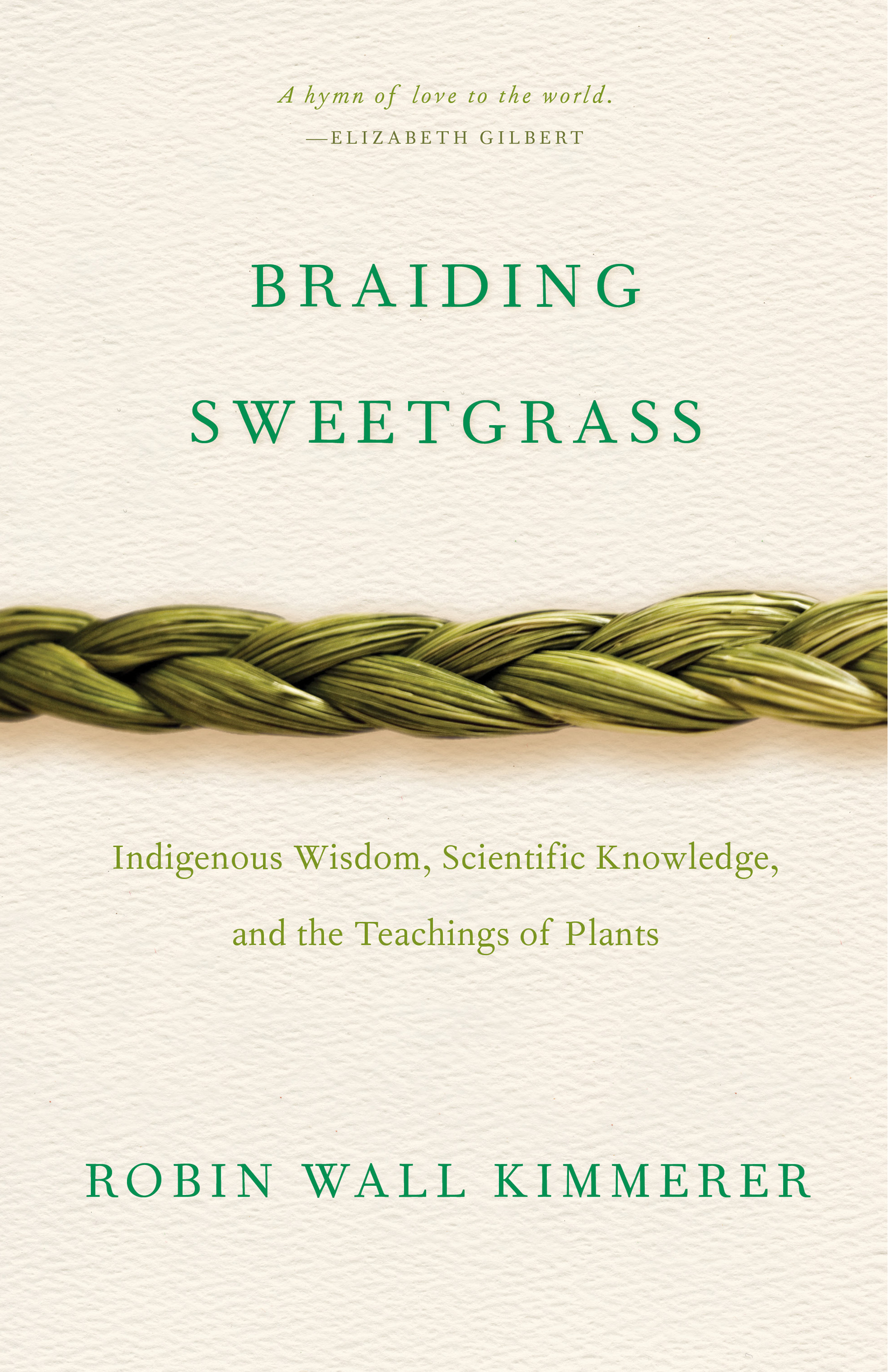
In Braiding Sweetgrass, botanist and Citizen Potawatomi Nation member Robin Wall Kimmerer explores the convergence of Indigenous wisdom and scientific understanding. Drawing from her experiences as a scientist, a mother, and an Indigenous woman, Kimmerer presents a collection of essays that illuminate the natural world. She examines how plants and other living beings offer lessons and gifts, fostering a reciprocal relationship between humanity and the Earth.
Through a blend of ecological science, ancestral teachings, and personal narratives, this book advocates for a deeper ecological consciousness. It encourages readers to recognize the generosity of the Earth and understand their own role in a balanced, interconnected living world.
The world around us speaks in many languages, if only we learn to listen. Sometimes, the whispers come from the rustling leaves of a maple, offering its sweet sap as a gift. Other times, they are the silent lessons of a pecan grove, whose bounty appears in generous cycles, a testament to a different kind of economy, one rooted in reciprocity rather than extraction. Through these stories, a profound kinship with the living world unfolds, revealing that human flourishing is inextricably linked to the well-being of all beings.
Imagine a journey where the ancient wisdom of Indigenous peoples intertwines with the rigorous observations of Western science, not as opposing forces, but as complementary strands of understanding. One lens reveals the intricate biological processes of a plant, its Latin name a key to its scientific identity. The other sees that same plant as a relative, a teacher, its spirit imbued with stories and lessons passed down through generations. This dual vision reveals a richer, more complete tapestry of existence, where the scientific method and traditional ecological knowledge illuminate each other.
The very act of braiding sweetgrass, a sacred plant in many traditions, becomes a metaphor for this intertwining of knowledge. Just as three strands come together to form a stronger whole, so too can scientific inquiry, Indigenous ways of knowing, and personal experience be woven into a deeper ecological consciousness. This is a practice of connection, of recognizing that we are not separate from nature, but an integral part of its vast, interconnected web.
Consider the simple act of harvesting. A scientific approach might focus on sustainable yields and population dynamics. An Indigenous perspective, however, introduces the concept of the Honorable Harvest: never taking the first, never taking the last, taking only what is needed, and always leaving some for others. It is an ethic of gratitude and responsibility, a recognition that every gift from the earth comes with an obligation to give back, to tend, and to ensure continuity for future generations. This deep respect fosters not just survival, but a thriving abundance for all.
Through narratives of tending gardens, restoring damaged lands, and observing the intricate lives of plants and animals, a path toward healing our relationship with the earth emerges. We are invited to remember our role as active participants in the ecosystem, not as its masters, but as members of a larger community. The stories of Skywoman falling from the sky to create the earth, or the diligent work of beavers shaping their watery homes, offer blueprints for a world where humans contribute to the flourishing of life, rather than diminishing it.
There is a profound joy in recognizing that the earth's gifts are showered upon us daily: the breath in our lungs, the food on our tables, the beauty that surrounds us. These are not commodities to be exploited, but offerings to be received with gratitude and reciprocated with care. By listening to the teachings of plants, by understanding their generosity and resilience, we begin to learn how to offer our own gifts in return, fostering a world where both humanity and the natural world can thrive in a continuous dance of giving and receiving.
What other readers say
Liked
Many readers describe this book as a stunning and eloquent work, praising its poetic and lyrical prose that masterfully intertwines scientific understanding, particularly in botany and ecology, with rich indigenous knowledge and traditions. Reviewers consistently highlight the author's deep love for the land and nature, which shines through her writing, fostering a profound sense of gratitude, reciprocity, and connection to the Earth. The book is lauded for bringing essential indigenous perspectives, often overlooked by academia, to the forefront of scientific discussion, offering a more personal and holistic approach that includes emotions like love and heartbreak as valid forms of knowing. Readers found the insights into plants, animals, and natural phenomena fascinating, noting how the book encourages closer observation of the natural world and inspires a desire to protect it. Its powerful message of hope and its exploration of the sad history of Native Americans resonated deeply, leaving many feeling transformed and activated to engage with environmental issues.
Disliked
Despite its many strengths, several reviewers found the book to be excessively long and repetitive, with some chapters blending together due to a similar narrative structure. This led to an experience described as a "feat of endurance" for some, who felt the core points were beautifully made early on but then reiterated too frequently. Critics also pointed to a perceived disorganization in the book's overall structure, suggesting it could benefit from significant editing and shortening. A notable concern for some readers was the author's tone, which occasionally came across as preachy or condescending, making them feel guilty about their environmental impact. Furthermore, some indigenous readers and academics raised questions about the author's representation of indigenous oral traditions and her personal experience, suggesting a potential lack of engagement with issues like poverty, racism, or intergenerational trauma, and a tendency to conflate diverse indigenous cultures. Others critiqued the book for relying heavily on symbolic or spiritual solutions to material environmental problems, offering less in the way of pragmatic, systemic advice.
In short
Ultimately, this book is widely regarded as an important, beautiful, and profoundly impactful work, though its execution may not appeal to all. It is highly recommended for nature enthusiasts, environmental activists, and anyone seeking a deeper connection to the Earth and its wisdom. Readers interested in indigenous worldviews, the intersection of science and spirituality, and lyrical, reflective prose will likely find it a transformative experience. However, those who prefer concise narratives, direct solutions to environmental crises, or a less romanticized approach to nature might find it a challenging read. Despite its structural and tonal criticisms, the book offers a unique and powerful call to re-evaluate humanity's relationship with the natural world, emphasizing gratitude, reciprocity, and the enduring lessons from indigenous cultures.