
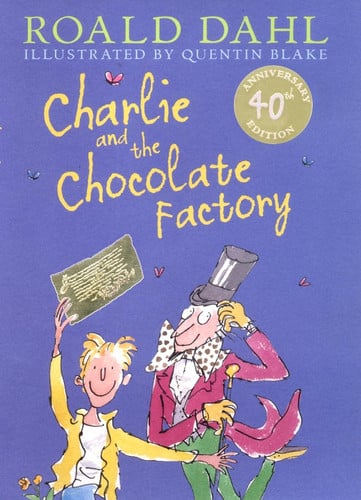
Charlie y la fábrica de chocolate / Charlie and the Chocolate Factory
by Roald Dahl, Eric Idle, Melanie Williams, Michelle Mawer
8.34 / 10 952K ratings
- Language
- Spanish
- Published
- 2018
- Publisher
- National Geographic Books
- Pages
- 200
- ISBN
- 9781947783355
For years, the gates of Willy Wonka's magical chocolate factory have been locked. But now, the eccentric and reclusive chocolatier is finally opening his doors to five lucky children. The winners are Augustus Gloop, a boy whose hobby is eating; Veruca Salt, a spoiled brat who gets everything she wants; Violet Beauregarde, a relentless gum-chewer; Mike Teavee, who is obsessed with television; and Charlie Bucket, a kind and honest boy from a poor family who can only dream of such a wonder.
With a golden ticket in hand, Charlie and his Grandpa Joe join the other winners on a tour of the fantastical factory, a place with chocolate rivers, edible marshmallow pillows, and lickable wallpaper. Guided by Mr. Wonka himself, they discover a world beyond their wildest imagination. But inside the factory, where temptation lurks around every corner, the children find that the tour is more than just a sweet treat. It is a test of character, and only one will understand that the grand prize is far greater than a lifetime supply of chocolate.
With a golden ticket in hand, Charlie and his Grandpa Joe join the other winners on a tour of the fantastical factory, a place with chocolate rivers, edible marshmallow pillows, and lickable wallpaper. Guided by Mr. Wonka himself, they discover a world beyond their wildest imagination. But inside the factory, where temptation lurks around every corner, the children find that the tour is more than just a sweet treat. It is a test of character, and only one will understand that the grand prize is far greater than a lifetime supply of chocolate.
Subjects
- Reference
- Literature & Fiction
- Genre Fiction
- Literary
- Action & Adventure
- Fantasy
- Science Fiction & Fantasy
- Fiction
- Short Stories & Anthologies
- Children's Books
- Language Arts
- Activity Books
- Children's Fiction
- Family
- Contemporary
- Humor
- Study & Teaching
- Teen & Young Adult
- Dramas & Plays
- Foreign Language Study & Reference
- Juvenile Fiction
- Fantasy & Magic
- Classics
- Short Stories
- Performing Arts
- Humor & Satire
- Humorous
- Arts, Music & Photography
- Fiction, fantasy, general
- Conduct of life
- Instruction
- Westerns
- English as a Second Language
- Romans, nouvelles, etc. pour la jeunesse
- Media Tie-In
- Words, Language & Grammar
- Readers
- Foreign Language Study
- Social Themes
- People & Places
- Juvenile Nonfiction
- Language Arts & Disciplines
- Values & Virtues
- Young Adult Fiction
- Fairy Tales & Folklore
- Office Products
- Office & School Supplies
- British & Irish
- Young Adult Nonfiction
- World Literature
- Fantasy Fiction
- Multigenerational
- Humorous Stories
- Behavior
- Intermediate
- Chocolate
- Imagination & Play
- TV, Movie, Video Game Adaptations
- Sticker
- Legends, Myths, Fables
- Plays
- Romans
- Cooking & Food
- Boys & Men
- Ficción juvenil
- Russian & Soviet
- Literary Criticism & Collections
- Children's Audio - 9-12
- Theater & Musicals
- Spanish language materials
- Industrie
- Literatura juvenil
- Science Fiction
- Juvenile Literature
- All Ages
Original edition
Charlie and the Chocolate FactoryOriginally published in 1973 English Alfred F.Knopf
Other editions (224)


Listen to the summary Narrated summary
In a small, dilapidated house on the edge of a great city, young Charlie Bucket lived with his mother, father, and all four of his grandparents. Their existence was a threadbare one, marked by the gnawing ache of hunger and the constant chill that seeped through their meager walls. Each day, Charlie's path to school led him past the towering, mysterious gates of Willy Wonka's Chocolate Factory, a place of impossible delights and closely guarded secrets. The scent of melting chocolate, of caramel and nougat, would waft tantalizingly through the air, a cruel reminder of the single Wonka bar he received each year on his birthday, savored piece by precious piece.
Then came the extraordinary announcement: Mr. Willy Wonka, the world's most inventive and reclusive chocolatier, had hidden five Golden Tickets within the wrappers of his famous Wonka bars. The lucky finders would be granted a once-in-a-lifetime tour of his fantastical factory and a lifetime supply of chocolate. The world erupted in a frantic, chocolate-fueled frenzy. Soon, the first four tickets were discovered: one by Augustus Gloop, a monstrously greedy boy whose life revolved around eating; another by Veruca Salt, a hideously spoiled girl who demanded everything and received it; a third by Violet Beauregarde, a competitive gum-chewing champion with an insatiable need to be first; and the fourth by Mike Teavee, a boy utterly consumed by television and its violent dramas.
Charlie's hopes soared and then plummeted. His birthday Wonka bar yielded no golden gleam. Later, his father, a kind and hardworking man, lost his job, plunging the family further into despair. The dream of a Golden Ticket seemed utterly out of reach, a cruel jest played by fortune. Yet, a flicker of hope remained, nurtured by the stories Grandpa Joe told of Wonka's magical inventions and the secretive Oompa-Loompa workers no one had ever seen.
One bitterly cold day, as snow swirled around him, Charlie found a shining fifty-pence piece buried in the snow. With trembling hands, he bought two Wonka bars. The first was ordinary, but inside the second, a brilliant flash of gold caught his eye. "A Golden Ticket!" he gasped, his heart leaping with disbelief and joy. Rushing home, he presented it to his family, and the sight of it brought an astonishing transformation: Grandpa Joe, who hadn't left his bed in twenty years, suddenly sprang to life, dancing with an energy that belied his ninety-six and a half years. It was decided: Grandpa Joe would accompany Charlie on the wondrous tour.
The day of the tour arrived, crisp and cold. Outside the factory gates, the five children and their accompanying adults shivered with anticipation. Punctually at ten o'clock, the gates creaked open, and out stepped Mr. Willy Wonka himself – a small, sprightly man with a goatee, sparkling eyes, and an air of mischievous brilliance. He led them into his factory, a place far grander and more fantastical than any could have imagined. First, they descended into the Chocolate Room, a vibrant landscape where a river of rich, brown chocolate flowed, and trees and bushes of sugary treats grew from the ground. It was here they met the Oompa-Loompas, tiny men from Loompaland, who were Wonka's diligent and cocoa-bean-loving workforce.
The tour, however, was not merely a display of confectionery wonders; it was a test. The gluttonous Augustus Gloop, unable to resist the allure of the chocolate river, leaned too far over the bank, tumbled in, and was sucked up a giant pipe destined for the Fudge Room. The Oompa-Loompas immediately burst into song, a moralistic ditty about the dangers of greed.
Next, in the Inventing Room, the gum-chewing enthusiast Violet Beauregarde snatched a piece of Wonka's experimental three-course meal chewing gum, despite warnings. Her face turned purple, her body swelled like a giant blueberry, and she had to be rolled away by the Oompa-Loompas to be juiced. Another song, this one about children who chew gum all day.
The spoiled Veruca Salt, in the Nut Room, demanded a trained squirrel. When Wonka refused, she stormed into the room, only for the highly intelligent squirrels to deem her a "bad nut" and toss her down the rubbish chute that led to the garbage incinerator. The Oompa-Loompas sang of spoiled children and their indulgent parents.
Finally, the television-obsessed Mike Teavee, convinced he understood how the "Chocolate Television" worked, insisted on being transmitted by it. He was beamed across the factory, arriving at the other end shrunken to a tiny, pocket-sized version of himself. The Oompa-Loompas' final song warned against excessive television watching.
With only Charlie remaining, Mr. Wonka's true intentions were revealed. The entire tour had been a clever, elaborate search for a worthy successor, someone pure of heart and kind in spirit, to inherit his magnificent factory. Charlie, humble and honest, was the chosen one. They ascended in the Great Glass Elevator, bursting through the roof of the factory, and then flew to Charlie's small home, where Wonka invited the entire Bucket family to come and live with him inside the most marvelous chocolate factory in the world.
Then came the extraordinary announcement: Mr. Willy Wonka, the world's most inventive and reclusive chocolatier, had hidden five Golden Tickets within the wrappers of his famous Wonka bars. The lucky finders would be granted a once-in-a-lifetime tour of his fantastical factory and a lifetime supply of chocolate. The world erupted in a frantic, chocolate-fueled frenzy. Soon, the first four tickets were discovered: one by Augustus Gloop, a monstrously greedy boy whose life revolved around eating; another by Veruca Salt, a hideously spoiled girl who demanded everything and received it; a third by Violet Beauregarde, a competitive gum-chewing champion with an insatiable need to be first; and the fourth by Mike Teavee, a boy utterly consumed by television and its violent dramas.
Charlie's hopes soared and then plummeted. His birthday Wonka bar yielded no golden gleam. Later, his father, a kind and hardworking man, lost his job, plunging the family further into despair. The dream of a Golden Ticket seemed utterly out of reach, a cruel jest played by fortune. Yet, a flicker of hope remained, nurtured by the stories Grandpa Joe told of Wonka's magical inventions and the secretive Oompa-Loompa workers no one had ever seen.
One bitterly cold day, as snow swirled around him, Charlie found a shining fifty-pence piece buried in the snow. With trembling hands, he bought two Wonka bars. The first was ordinary, but inside the second, a brilliant flash of gold caught his eye. "A Golden Ticket!" he gasped, his heart leaping with disbelief and joy. Rushing home, he presented it to his family, and the sight of it brought an astonishing transformation: Grandpa Joe, who hadn't left his bed in twenty years, suddenly sprang to life, dancing with an energy that belied his ninety-six and a half years. It was decided: Grandpa Joe would accompany Charlie on the wondrous tour.
The day of the tour arrived, crisp and cold. Outside the factory gates, the five children and their accompanying adults shivered with anticipation. Punctually at ten o'clock, the gates creaked open, and out stepped Mr. Willy Wonka himself – a small, sprightly man with a goatee, sparkling eyes, and an air of mischievous brilliance. He led them into his factory, a place far grander and more fantastical than any could have imagined. First, they descended into the Chocolate Room, a vibrant landscape where a river of rich, brown chocolate flowed, and trees and bushes of sugary treats grew from the ground. It was here they met the Oompa-Loompas, tiny men from Loompaland, who were Wonka's diligent and cocoa-bean-loving workforce.
The tour, however, was not merely a display of confectionery wonders; it was a test. The gluttonous Augustus Gloop, unable to resist the allure of the chocolate river, leaned too far over the bank, tumbled in, and was sucked up a giant pipe destined for the Fudge Room. The Oompa-Loompas immediately burst into song, a moralistic ditty about the dangers of greed.
Next, in the Inventing Room, the gum-chewing enthusiast Violet Beauregarde snatched a piece of Wonka's experimental three-course meal chewing gum, despite warnings. Her face turned purple, her body swelled like a giant blueberry, and she had to be rolled away by the Oompa-Loompas to be juiced. Another song, this one about children who chew gum all day.
The spoiled Veruca Salt, in the Nut Room, demanded a trained squirrel. When Wonka refused, she stormed into the room, only for the highly intelligent squirrels to deem her a "bad nut" and toss her down the rubbish chute that led to the garbage incinerator. The Oompa-Loompas sang of spoiled children and their indulgent parents.
Finally, the television-obsessed Mike Teavee, convinced he understood how the "Chocolate Television" worked, insisted on being transmitted by it. He was beamed across the factory, arriving at the other end shrunken to a tiny, pocket-sized version of himself. The Oompa-Loompas' final song warned against excessive television watching.
With only Charlie remaining, Mr. Wonka's true intentions were revealed. The entire tour had been a clever, elaborate search for a worthy successor, someone pure of heart and kind in spirit, to inherit his magnificent factory. Charlie, humble and honest, was the chosen one. They ascended in the Great Glass Elevator, bursting through the roof of the factory, and then flew to Charlie's small home, where Wonka invited the entire Bucket family to come and live with him inside the most marvelous chocolate factory in the world.
What other readers say
Liked
Reviewers frequently praise Charlie and the Chocolate Factory as a fun, silly, and delightful read that captivates both children and adults. Many highlight the book's dazzling imagination, memorable characters, and the fantastical world-building within Willy Wonka's factory. Readers find the story whimsical and magical, full of wonder and excitement, making it an engaging experience for read-alouds and fostering a love for reading in younger audiences. The book is lauded for its sharp wit, clever plot, and ability to subvert expectations, often through a blend of lightheartedness and a darker, "Grimm" sensibility that delivers cautionary tales without being overly preachy. It's considered a classic that holds up well over time, offering a unique blend of adventure and heartwarming themes of goodness, kindness, and perseverance.
Disliked
Despite its widespread acclaim, several reviewers express significant criticisms, particularly concerning Willy Wonka's character and the portrayal of the Oompa Loompas. Wonka is often described as a "dark creature," "evil capitalist," or even a "supervillain," whose actions are seen as ruthless, unethical, and contributing to the poverty of the local town, including Charlie's family. The Oompa Loompas are frequently cited as a problematic element, viewed by some as enslaved labor or an exploitative, inferior workforce, raising questions about the story's underlying capitalist themes. Additionally, some readers point out "fat shaming" in the descriptions of certain characters and note that elements like the Oompa Loompas' origins might be interpreted as racially insensitive by modern standards. Other minor criticisms include the story sometimes feeling rushed, being overly preachy about certain behaviors, or the ending feeling somewhat conventional after the book's otherwise unconventional tone.
In short
Ultimately, Charlie and the Chocolate Factory remains a beloved and highly recommended book, celebrated for its enduring appeal and ability to spark imagination across generations. While the story's darker undertones and certain character portrayals have drawn scrutiny from adult readers, its core charm and fantastical elements continue to resonate strongly. This book is best suited for readers who appreciate imaginative fantasy, enjoy stories with a blend of light and dark humor, and are open to discussing the moral lessons embedded within a seemingly simple children's tale. It is particularly recommended for those looking for a classic that encourages vivid imagination and offers a unique, if sometimes unsettling, journey into a world of pure invention.
No reviews yet. Be the first.