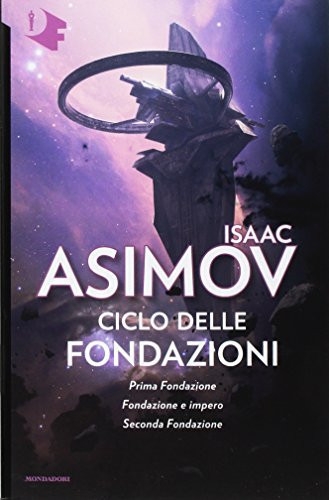
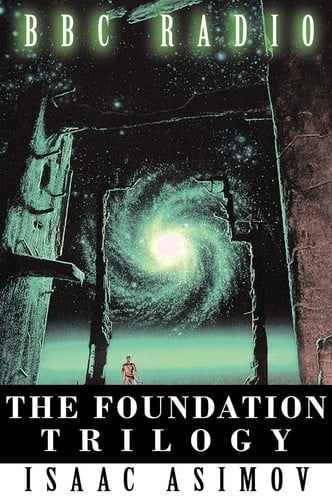
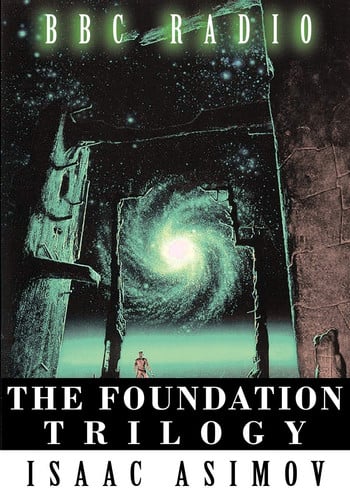
Reviewers widely praise The Foundation Trilogy as a monumental and influential work of science fiction, celebrated for its ambitious scope and groundbreaking ideas. Many found the concept of psychohistory, which uses mathematical principles to predict societal trends, to be remarkably original and thought-provoking, driving an intricate and engaging plot. The series is lauded for its grand-scale world-building, presenting a detailed galactic empire and its eventual decline, and is often described as a compelling "mind game" with surprising twists that keep readers captivated. Its fast pace and readable prose make it an accessible entry point into the genre for many, offering an entertaining space opera experience that explores complex themes like religion, politics, and the evolution of civilization. The trilogy's historical significance within science fiction is undeniable, having won prestigious awards and influencing countless subsequent works.
Disliked
Despite its revered status, the trilogy receives criticism for several aspects, particularly when viewed through a modern lens. A common point of contention is the perceived lack of deep character development; many reviewers describe the characters as flat, interchangeable, or "cardboard cutouts," making it difficult to form emotional connections, especially due to the episodic structure and frequent changes in protagonists. The prose style is often characterized as dry, heavily reliant on expository dialogue, and lacking poetic description. Some readers found the initial sections dense with information, leading to a slow start. Additionally, the limited presence and underdeveloped roles of female characters, especially in the first book, are frequently noted as a significant drawback reflective of the era in which the books were written. The deterministic nature of psychohistory, while central to the plot, occasionally leads to conflicts resolving too easily, reducing narrative tension for some.
In short
In conclusion, The Foundation Trilogy stands as a foundational and indispensable classic in science fiction literature, despite its acknowledged shortcomings. It is highly recommended for readers who appreciate grand-scale narratives, intricate conceptual frameworks, and the exploration of societal evolution over individual character arcs. Those who prioritize "big ideas," intellectual challenges, and the historical context of the genre will likely find this trilogy a rewarding and thought-provoking experience, even if they must overlook some dated elements or a less character-driven approach.