
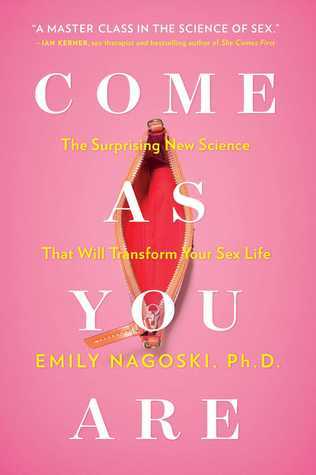
Come as You are The Surprising New Science that Will Transform Your Sex Life
8.54 / 10 92K ratings
- Language
- English
- Published
- 2021
- Publisher
- Simon & Schuster Paperbacks
- Pages
- 382
- ISBN
- 9781982107338
If you have ever questioned if your sexual experiences are normal, or felt that something about your sex life was not quite right, this book offers a new perspective. Emily Nagoski, Ph.D., draws on scientific research and evidence to explain the complexities of human sexuality, particularly for women.
The book introduces the "dual control model," illustrating how sexual desire is influenced by both "accelerators" that increase arousal and "brakes" that inhibit it, and emphasizes that context plays a significant role in sexual response. It addresses common myths and societal narratives that often lead to feelings of shame or inadequacy, instead affirming the wide, healthy variation in women's bodies and sexual experiences. Understanding these scientific principles can lead to a more confident and joyful approach to your own sexuality.
The book introduces the "dual control model," illustrating how sexual desire is influenced by both "accelerators" that increase arousal and "brakes" that inhibit it, and emphasizes that context plays a significant role in sexual response. It addresses common myths and societal narratives that often lead to feelings of shame or inadequacy, instead affirming the wide, healthy variation in women's bodies and sexual experiences. Understanding these scientific principles can lead to a more confident and joyful approach to your own sexuality.
- Genres
- Fiction › Erotica
- Themes
- Gender › Feminism
Original edition
Come as You AreOriginally published in 2015 English Simon and Schuster
Other editions (60)



No summary for this edition yet.
What other readers say
Liked
This book is widely praised for its empowering and validating message regarding female sexuality. Many readers found it to be a crucial resource that debunks common myths and challenges the male-as-default view of sexual response, reassuring women that their bodies and desires are normal and not "broken." The author introduces important scientific concepts, such as the distinction between responsive and spontaneous desire, and the Dual Control Model of Arousal (accelerators and brakes), which help readers understand their own sexual responses and identify personal turn-ons and turn-offs. The book is lauded for explaining complex psychological and physiological processes in an accessible, easy-to-read manner, making it beneficial for those seeking to improve their sexual well-being, build confidence, and untangle cultural misinformation.
Disliked
However, the book also drew significant criticism, primarily regarding its tone and writing style. Some reviewers found the approach overly chatty, colloquial, and even patronizing, likening it to a self-help guide or a magazine article rather than a serious scientific text. The frequent use of metaphors was often described as overworked, clunky, or infantilizing. Critics also pointed to the book's highly selective presentation of research, its repetitive nature, and the use of fictionalized case studies instead of genuine clinical transcripts. Additionally, while the book aims for inclusivity, some felt it primarily catered to cisgender, heterosexual women in long-term monogamous relationships, with limited or no specific discussion of diverse sexual orientations or relationship structures, such as asexuality, bisexuality, or polyamory.
In short
Despite these mixed reactions, the general consensus is that the book's core message is valuable and sex-positive. It is particularly recommended for women who have felt insecure or misunderstood about their sexuality, or those seeking a therapeutic and affirming perspective on their bodies and desires. It also serves as a helpful guide for partners of women who wish to better understand female sexual physiology and psychology. Readers who appreciate an encouraging, accessible style and prioritize personal validation over rigorous academic detail or comprehensive inclusivity are most likely to find this book transformative. However, those expecting a purely scientific survey with exhaustive research and a formal tone may find it disappointing.
No reviews yet. Be the first.