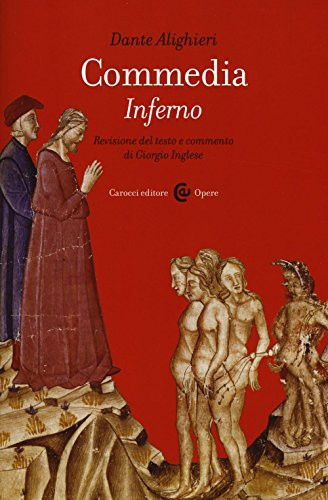
Commedia. Inferno
8.06 / 10 213K ratings
- Language
- Italian
- Published
- 2016
- Publisher
- Carocci
- Pages
- 428
- ISBN
- 9788843085156
Midway through his life's journey, a man named Dante finds himself lost and alone in a dark wood, his path to salvation blocked by menacing beasts. Just as he despairs, a guide appears: the ancient Roman poet Virgil, sent to lead him on a different path. This new route does not go around the darkness but directly through its heart, descending into the nine circles of Hell. To find his way back to the light, Dante must first witness the full depth of damnation, a realm populated by figures from history and myth, each suffering a punishment perfectly suited to their earthly sins.
This journey is an allegorical exploration of the consequences of human choices and the unwavering nature of divine justice. As Dante travels deeper, from the circles of incontinence to the pits of violence and fraud, he must confront not only the sins of others but the nature of evil itself. Inferno is the first part of an epic trilogy that chronicles a soul's passage from damnation to redemption. It presents a detailed and imaginative vision of the afterlife that has shaped Western literature and thought, offering a profound examination of morality, faith, and the eternal struggle between sin and salvation.
This journey is an allegorical exploration of the consequences of human choices and the unwavering nature of divine justice. As Dante travels deeper, from the circles of incontinence to the pits of violence and fraud, he must confront not only the sins of others but the nature of evil itself. Inferno is the first part of an epic trilogy that chronicles a soul's passage from damnation to redemption. It presents a detailed and imaginative vision of the afterlife that has shaped Western literature and thought, offering a profound examination of morality, faith, and the eternal struggle between sin and salvation.
Subjects
- Kindle Store
- Categories
- Kindle eBooks
- General
- Reference
- Literature & Fiction
- Genre Fiction
- Europe
- Arts & Photography
- Subjects
- Literary
- Italy
- Fantasy
- Epic
- Historical
- Self Service
- History
- Anthologies
- Arborist Merchandising Root
- Children's Books
- Non-Classifiable
- Poetry
- EDUCATION
- Religion & Spirituality
- Christian Books & Bibles
- Essays
- New Age & Spirituality
- Reincarnation
- English & College Success
- English
- Humor
- FICTION_GENERAL
- Bibliography
- World
- Politics & Social Sciences
- Philosophy
- POETRY (POETIC WORKS BY ONE AUTHOR)
- Foreign Language Study & Reference
- Art
- Humor & Entertainment
- Fiction
- Christianity
- Religious
- Judaism
- Theology
- Examinations
- Music
- Classics
- Education
- Performing Arts
- Humorous
- Literary Collections
- Religious Studies
- Fiction, general
- Pictorial works
- Adaptations
- History & Criticism
- Instruction
- Religion
- Politics and government
- Humanities
- COMICS & GRAPHIC NOVELS_GENERAL
- Classic Literature
- Ancient & Medieval Literature
- Ancient & Classical
- Political Science
- Audio Adult: Books On Tape
- Foreign Language Study
- Italian
- Special Topics
- Regional & Cultural
- Comedy
- European
- Juvenile Nonfiction
- Nonfiction - General
- Criticism & Theory
- Movements & Periods
- Themes & Styles
- Churches & Church Leadership
- Church History
- Genres & Styles
- Literary Criticism
- Sources
- Study Aids
- Subjects & Themes
- Literature
- Dystopian
- War & Military
- Genealogy
- Christian
- Poetry texts & anthologies
- POETRY_COLLECTIONS
- LITERATURE_COLLECTIONS
- Dictionaries
- World Literature
- Book Notes
- History and criticism
- Medieval
- Morphology
- Poetry (poetic works by one author)
- Commentaries
- Death, Grief, Loss
- FICTION
- Christian Theology
- Study guides
- Ethics & Moral Philosophy
- Fiction, religious
- Audiobooks
- Comics & graphic novels, general
- POETRY
- CHILDREN'S POETRY
- Catholic
- Eschatology
- Comparative Politics
- Italian language
- Classics & Allegories
- Dialects
- Illustrations
- Texts
- Portraits
- Inspirational & Religious
- Translations
- Ancient, Classical & Medieval
- Translations into English
- Knowledge
- Comic books, strips
- Phonology
- ROMANCE LITERATURE
- POETRY_HISTORY AND CRITICISM
- Romance literature
- Textual Criticism
- Facsimiles
- Literature, history and criticism
- Manuscripts
- Church and state
- Italian literature
- Classic & Allegory
Original edition
InfernoOriginally published in 1918 English Harvard University Press
Other editions (249)
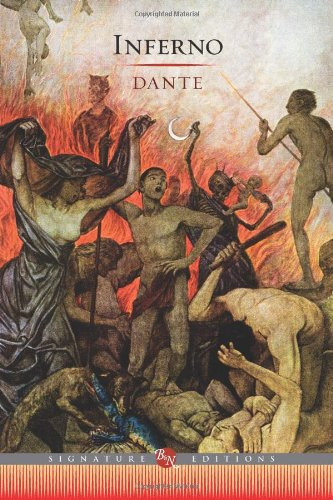
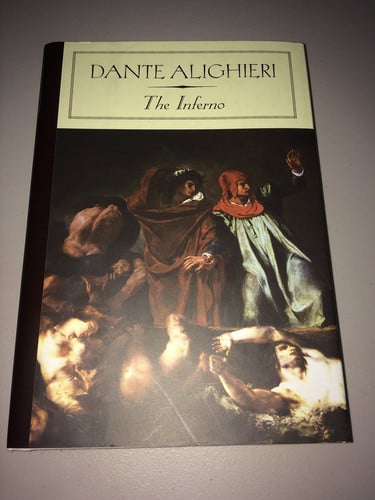


Listen to the summary Narrated summary
Midway upon the journey of our life, I found myself within a forest dark, for the straightforward path had been lost. Fear gripped me as I stumbled through the shadowed wood, until the first rays of the sun illuminated a mountain, offering a glimmer of hope. But my ascent was swiftly blocked by three beasts: a leopard, a lion, and a she-wolf, each driving me back into the deepening gloom. Just as despair threatened to consume me, a figure appeared, faint at first, then solidifying into the shade of Virgil, the great Roman poet. He spoke of a different path, a journey through the eternal realms, commanded by my beloved Beatrice, that would lead me back to the light.
Together, we approached the gate of Hell, an ominous arch bearing the chilling inscription, "Abandon all hope, ye who enter here." Beyond it lay the Vestibule, where the indifferent souls, those who lived without praise or infamy, pursued a wavering banner, stung by wasps and flies. Their laments mingled with the cries of the unbaptized infants, a mournful prelude to the true torments within. Soon, we reached the river Acheron, where the ancient ferryman Charon, with eyes of burning coal, reluctantly took us across the murky waters after Virgil assured him of my divinely sanctioned journey.
Our descent truly began in Limbo, the First Circle, a place not of torment but of longing, where virtuous pagans and unbaptized souls dwelled without hope of God's light. Here, I saw the great poets of antiquity - Homer, Horace, Ovid, Lucan - and felt a profound honor to walk among them. Moving deeper, the air grew thick with lamentations, and the Second Circle revealed the carnal sinners, swept ceaselessly by a furious, dark wind, forever denied peace, just as their passions had denied them reason in life. Among them, I spoke with Francesca da Rimini, whose tragic tale of forbidden love and violent death moved me to pity, causing me to swoon.
We plunged further, through the Third Circle, where gluttons lay prostrate in icy, filthy rain, gnawed by the three-headed dog Cerberus. Then came the Fourth, a realm of ceaseless jousting for the avaricious and the prodigal, forever pushing enormous weights against each other, their faces obscured by grime. The Fifth Circle presented the wrathful, tearing at each other in the muddy waters of the Styx, while the sullen lay submerged beneath. We crossed the Styx and approached the fiery City of Dis, its walls guarded by demons who initially denied us passage until an angelic messenger forced the gates open. Within, the Sixth Circle held the heretics, entombed in flaming sepulchers, their eternal resting place a burning mockery of their denial of immortality.
The journey pressed on to the Seventh Circle, reserved for the violent, divided into three rings. First, those violent against neighbors writhed in a river of boiling blood, guarded by centaurs. Next, the suicides, twisted into gnarled trees, were fed upon by Harpies, their only speech through their broken branches. Finally, the violent against God, nature, and art suffered on a desert of burning sand, beneath a perpetual rain of fire. Our guide, Virgil, then summoned the monstrous Geryon, a creature with the face of an honest man, the body of a serpent, and a scorpion's tail, who carried us across a vast chasm to the Eighth Circle, Malebolge - the "evil pouches."
Malebolge was a horrifying landscape of ten concentric ditches, each a unique torment for those who committed fraud. I witnessed panderers and seducers lashed by demons, flatterers steeped in excrement, simoniacs buried headfirst with burning feet, and sorcerers with their heads twisted backward. Further on, corrupt politicians swam in boiling pitch, hypocrites wore gilded leaden cloaks, and thieves were tormented by serpents, their bodies transforming into ash and reforming. Schismatics were perpetually hacked apart by a demon, their wounds healing only to be reopened, and falsifiers suffered from gruesome diseases.
At last, we reached the lowest, Ninth Circle, a frozen lake named Cocytus, where the treacherous were entombed in ice. This circle was divided into four concentric rings, each for a different degree of treachery: Caina for betrayers of kin, Antenora for betrayers of country, Ptolomea for betrayers of guests, and Judecca for betrayers of their lords. Here, frozen solid, sometimes with only their faces exposed, were the souls of those who had committed the most heinous betrayals. In the very center, waist-deep in the ice, stood the three-headed giant Lucifer himself, a grotesque parody of divine power. From each of his three mouths, he ceaselessly chewed on the three greatest traitors: Judas Iscariot, Brutus, and Cassius. With Virgil leading the way, we climbed down Lucifer's hairy flanks, passing through the very center of the Earth, until we emerged, on Easter morning, to behold the stars once more.
Together, we approached the gate of Hell, an ominous arch bearing the chilling inscription, "Abandon all hope, ye who enter here." Beyond it lay the Vestibule, where the indifferent souls, those who lived without praise or infamy, pursued a wavering banner, stung by wasps and flies. Their laments mingled with the cries of the unbaptized infants, a mournful prelude to the true torments within. Soon, we reached the river Acheron, where the ancient ferryman Charon, with eyes of burning coal, reluctantly took us across the murky waters after Virgil assured him of my divinely sanctioned journey.
Our descent truly began in Limbo, the First Circle, a place not of torment but of longing, where virtuous pagans and unbaptized souls dwelled without hope of God's light. Here, I saw the great poets of antiquity - Homer, Horace, Ovid, Lucan - and felt a profound honor to walk among them. Moving deeper, the air grew thick with lamentations, and the Second Circle revealed the carnal sinners, swept ceaselessly by a furious, dark wind, forever denied peace, just as their passions had denied them reason in life. Among them, I spoke with Francesca da Rimini, whose tragic tale of forbidden love and violent death moved me to pity, causing me to swoon.
We plunged further, through the Third Circle, where gluttons lay prostrate in icy, filthy rain, gnawed by the three-headed dog Cerberus. Then came the Fourth, a realm of ceaseless jousting for the avaricious and the prodigal, forever pushing enormous weights against each other, their faces obscured by grime. The Fifth Circle presented the wrathful, tearing at each other in the muddy waters of the Styx, while the sullen lay submerged beneath. We crossed the Styx and approached the fiery City of Dis, its walls guarded by demons who initially denied us passage until an angelic messenger forced the gates open. Within, the Sixth Circle held the heretics, entombed in flaming sepulchers, their eternal resting place a burning mockery of their denial of immortality.
The journey pressed on to the Seventh Circle, reserved for the violent, divided into three rings. First, those violent against neighbors writhed in a river of boiling blood, guarded by centaurs. Next, the suicides, twisted into gnarled trees, were fed upon by Harpies, their only speech through their broken branches. Finally, the violent against God, nature, and art suffered on a desert of burning sand, beneath a perpetual rain of fire. Our guide, Virgil, then summoned the monstrous Geryon, a creature with the face of an honest man, the body of a serpent, and a scorpion's tail, who carried us across a vast chasm to the Eighth Circle, Malebolge - the "evil pouches."
Malebolge was a horrifying landscape of ten concentric ditches, each a unique torment for those who committed fraud. I witnessed panderers and seducers lashed by demons, flatterers steeped in excrement, simoniacs buried headfirst with burning feet, and sorcerers with their heads twisted backward. Further on, corrupt politicians swam in boiling pitch, hypocrites wore gilded leaden cloaks, and thieves were tormented by serpents, their bodies transforming into ash and reforming. Schismatics were perpetually hacked apart by a demon, their wounds healing only to be reopened, and falsifiers suffered from gruesome diseases.
At last, we reached the lowest, Ninth Circle, a frozen lake named Cocytus, where the treacherous were entombed in ice. This circle was divided into four concentric rings, each for a different degree of treachery: Caina for betrayers of kin, Antenora for betrayers of country, Ptolomea for betrayers of guests, and Judecca for betrayers of their lords. Here, frozen solid, sometimes with only their faces exposed, were the souls of those who had committed the most heinous betrayals. In the very center, waist-deep in the ice, stood the three-headed giant Lucifer himself, a grotesque parody of divine power. From each of his three mouths, he ceaselessly chewed on the three greatest traitors: Judas Iscariot, Brutus, and Cassius. With Virgil leading the way, we climbed down Lucifer's hairy flanks, passing through the very center of the Earth, until we emerged, on Easter morning, to behold the stars once more.
What other readers say
Liked
Readers generally praise Dante Alighieri's "Inferno" for its profound impact, unparalleled imagination, and enduring literary significance. Many highlight the author's extraordinary creativity in crafting a detailed and structured vision of the afterlife, where punishments are ingeniously designed to reflect the sins committed. The poem is celebrated for its rich tapestry of mythological, historical, and theological references, offering layers of meaning that deeply engage the intellect. Reviewers often commend the vivid, sometimes graphic, descriptions conveyed through beautiful and powerful lyrical verses, which manage to be both melodious and deeply evocative. The narrative is frequently described as compelling and surprisingly accessible for a classical work, with many finding it an addictive and thought-provoking read that explores timeless themes of sin, justice, and the human condition.
Disliked
Despite its acclaimed status, "Inferno" presents several challenges that some readers find difficult. A common point of contention is the extensive background knowledge required to understand the numerous historical, political, religious, and mythological figures referenced. This often necessitates frequent consultation of footnotes or secondary sources, which can disrupt the reading flow. Some readers are also put off by Dante's perceived bias in placing his contemporaries and adversaries in various circles, viewing it as a presumptuous or overly judgmental aspect of the work. Furthermore, the quality of translation is crucial, as some versions are criticized for losing the original poem's lyrical beauty, employing overly modern language, or being generally difficult to comprehend, thereby diminishing the overall reading experience. The intense and graphic depictions of suffering, while imaginative, can also be disturbing for some.
In short
Ultimately, "Inferno" is considered an undisputed masterpiece and an essential read that continues to captivate and challenge audiences centuries after its creation. It is highly recommended for those interested in foundational works of Western literature, rich allegorical narratives, and profound philosophical inquiries into morality and the human spirit. Readers who appreciate intricate world-building, vivid imagery, and a compelling blend of history, mythology, and theology will find much to explore. While demanding, the journey through "Inferno" is deeply rewarding for those willing to engage with its complexities, offering a unique and lasting perspective on good, evil, sin, and redemption. It is a work for anyone ready to embark on a significant literary adventure that promises both intellectual stimulation and a profound, sometimes unsettling, emotional experience.
No reviews yet. Be the first.