
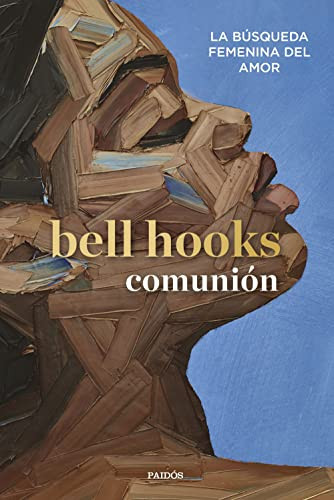
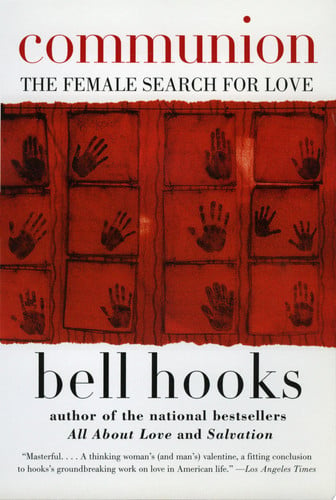
Communion
by bell hooks
8.66 / 10 13K ratings
- Language
- English
- Published
- 2002
- ISBN
- 9780641519192
In "Communion: The Female Search for Love," bell hooks examines the complex landscape of love through a feminist lens, specifically for women. She challenges the patriarchal notions that have traditionally shaped women's experiences with love, often leading to a devaluation of emotional vulnerability and a prioritization of external validation. Hooks argues that true love, for women, must be redefined through mutuality, equality, respect, and trust, moving beyond the confines of societal expectations.
This work emphasizes the foundational role of self-love, including the love of one's body, as essential for all other forms of loving relationships. It explores how the feminist movement, women's roles in the workforce, and self-help culture have influenced perceptions of love and encourages women to courageously embark on a journey of self-discovery to achieve emotional growth and integrate love into every aspect of their lives.
This work emphasizes the foundational role of self-love, including the love of one's body, as essential for all other forms of loving relationships. It explores how the feminist movement, women's roles in the workforce, and self-help culture have influenced perceptions of love and encourages women to courageously embark on a journey of self-discovery to achieve emotional growth and integrate love into every aspect of their lives.
Subjects
- Self-Help
- History
- Essays
- Psychology
- Emotions
- Women
- Interpersonal relations
- Sociology
- Family & Relationships
- Social Science
- Man-Woman Relationships
- Gender Studies
- Marriage & Family
- Popular Culture
- Love & Romance
- Women's Studies
- Feminism
- Feminism & Feminist Theory
- Race & Ethnic Relations
- Human Sexuality
- Social Conditions
Original edition
CommunionOriginally published in 2002 English William Morrow
Other editions (6)

Listen to the summary Narrated summary
The soul yearns for communion, a deep connection that transcends the superficial, and for women, this journey into the heart of love is a quest for liberation. From childhood, we are often conditioned to seek validation and affection, to measure our worth by our ability to attract and please, particularly men. This patriarchal framework subtly teaches us to prioritize winning external love over nurturing the love within, leading many to confuse genuine connection with painful attachment or to lose themselves entirely in the pursuit of another's approval.
Yet, the true path to love, we discover, begins not with another, but within the sacred space of self. Self-love is not a luxury or a retreat, but a foundational, deeply political act, allowing us to tend to the needs of our souls and see ourselves clearly, as we truly are. It is a conscious choice, an active pursuit that requires work and commitment, challenging the societal norms that profit from women doubting their own worth. Without this bedrock of self-love, any intimate relationship, romantic or otherwise, is built on shifting sands.
As we navigate the intricate landscape of relationships, we come to understand that love, in its purest form, cannot thrive under the shadow of patriarchy. True love demands mutuality, equality, respect, responsibility, and unwavering trust. It requires open communication and deep understanding, qualities often discouraged by systems that favor dominance and control. To experience authentic love, women must bravely extricate it from patriarchal constraints, redefining it on terms of shared power and equitable partnership.
This redefinition extends beyond romantic pairings, embracing the profound significance of female friendships and communities. We are invited to cultivate "circles of love," intimate relationships among women that serve as spaces for healing, support, and the practice of love in its most expansive forms. These bonds, unbound by conventional romantic scripts, become vital arenas for fostering self-love and collective strength, reminding us that intimacy and community are essential, even if traditional partnership remains elusive.
The journey of love is a lifelong endeavor, one that challenges the notion that love is solely for the young. Women in midlife, especially, find newfound freedom and the realization that love can be discovered and nurtured at every age. This ongoing exploration calls for us to embrace vulnerability and mutual understanding, recognizing love as a powerful, transformative force. It is an invitation to reclaim the narrative of love, to define our worth beyond being loved, and to establish communion with ourselves, others, and the world on our own terms, expanding rather than contracting our capacity for connection.
Ultimately, this heroic journey to claim love as our own is a path to profound freedom. It requires us to interrupt societal scripts, to challenge the idea that women must "love better" or wait for a partner to complete them. Instead, we are called to love ourselves, our bodies, other women, and our communities in ways that are expansive and just. This brave, honest path, though not always easy, is necessary for deep intimacy, honest connection, creative partnership, fulfillment, and the realization that love devoid of justice is not love at all.
Yet, the true path to love, we discover, begins not with another, but within the sacred space of self. Self-love is not a luxury or a retreat, but a foundational, deeply political act, allowing us to tend to the needs of our souls and see ourselves clearly, as we truly are. It is a conscious choice, an active pursuit that requires work and commitment, challenging the societal norms that profit from women doubting their own worth. Without this bedrock of self-love, any intimate relationship, romantic or otherwise, is built on shifting sands.
As we navigate the intricate landscape of relationships, we come to understand that love, in its purest form, cannot thrive under the shadow of patriarchy. True love demands mutuality, equality, respect, responsibility, and unwavering trust. It requires open communication and deep understanding, qualities often discouraged by systems that favor dominance and control. To experience authentic love, women must bravely extricate it from patriarchal constraints, redefining it on terms of shared power and equitable partnership.
This redefinition extends beyond romantic pairings, embracing the profound significance of female friendships and communities. We are invited to cultivate "circles of love," intimate relationships among women that serve as spaces for healing, support, and the practice of love in its most expansive forms. These bonds, unbound by conventional romantic scripts, become vital arenas for fostering self-love and collective strength, reminding us that intimacy and community are essential, even if traditional partnership remains elusive.
The journey of love is a lifelong endeavor, one that challenges the notion that love is solely for the young. Women in midlife, especially, find newfound freedom and the realization that love can be discovered and nurtured at every age. This ongoing exploration calls for us to embrace vulnerability and mutual understanding, recognizing love as a powerful, transformative force. It is an invitation to reclaim the narrative of love, to define our worth beyond being loved, and to establish communion with ourselves, others, and the world on our own terms, expanding rather than contracting our capacity for connection.
Ultimately, this heroic journey to claim love as our own is a path to profound freedom. It requires us to interrupt societal scripts, to challenge the idea that women must "love better" or wait for a partner to complete them. Instead, we are called to love ourselves, our bodies, other women, and our communities in ways that are expansive and just. This brave, honest path, though not always easy, is necessary for deep intimacy, honest connection, creative partnership, fulfillment, and the realization that love devoid of justice is not love at all.
What other readers say
Liked
Communion is widely lauded as a profound and transformative work that deeply resonates with many readers, particularly women navigating their personal journeys of self-discovery and love. Reviewers consistently praise the book for its articulate grace in laying out a philosophy of love as an art form, emphasizing care, respect, knowledge, and responsibility, and the impossibility of love coexisting with domination. Many found it empowering, affirming the importance of self-love and encouraging women to find fulfillment through community, friendship, and spiritual practice rather than solely through romantic partnership. The book is celebrated for its clarity, accessibility, and ability to inspire deep reflection and personal change, challenging patriarchal norms, toxic gender roles, and societal devaluation of platonic relationships. Its insights into "romantic friendships" are frequently highlighted as particularly groundbreaking and relevant, offering a nuanced and hopeful perspective on intimacy.
Disliked
However, the book also faces several criticisms. A recurring point is bell hooks' tendency towards overgeneralization, often using phrases like "most women" or "we" without providing sufficient empirical evidence or diverse perspectives, which some readers found alienating or inaccurate. Reviewers noted a strong heteronormative bias, with LGBTQ+ experiences often feeling like an afterthought or being discussed superficially. Some found the arguments less tightly structured or groundbreaking compared to the author's other works, with occasional repetition of ideas and a reliance on quotes from self-help literature. The book is also criticized for not explicitly defining key concepts like "love" early on, and for making some claims that felt cliched or lacked contemporary relevance, leading to a sense of being somewhat dated for certain younger readers.
In short
Despite these identified flaws, Communion is largely considered a valuable and thought-provoking read that offers profound insights into self-love and relationships. Many reviewers found it to be a transformative and personally resonant experience, particularly when read at a pivotal moment in their lives, leading them to highlight and revisit its pages repeatedly. This book is highly recommended for women of all ages, though it is particularly targeted at those in midlife, and is also seen as crucial for younger women seeking to cultivate self-love and challenge patriarchal notions of love early on. It will appeal to readers interested in feminist perspectives on love, personal growth, and understanding the complexities of intimacy, community, and self-actualization, especially those who appreciate bell hooks' compassionate and uplifting approach.
No reviews yet. Be the first.