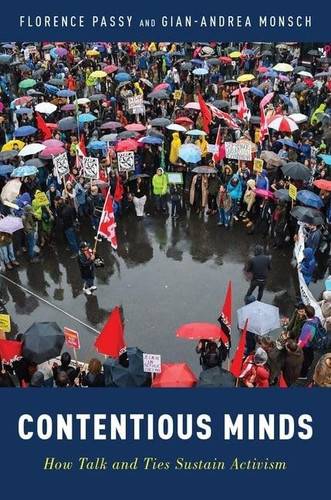
The enduring flame of activism, it seems, is not merely fueled by grand ideals or singular moments of passion, but by a subtle, intricate dance between individual minds and the bonds that tie them together. It is within the vibrant crucible of commitment communities – be they groups dedicated to contentious politics, institutional change, or voluntary service – that individuals find the sustenance to persist in their efforts. Here, the very fabric of thought, perception, and purpose becomes woven into a shared tapestry.
Consider the activist mind: it is not an isolated entity, but one deeply shaped by the currents of interaction. A profound synchronization of minds unfolds within these communities, where participants begin to perceive the aims and means of their activism through remarkably similar cognitive lenses. They come to understand the common good and the very nature of politics with a shared clarity, a collective interpretation that underpins their joint action. This alignment isn't accidental; it is meticulously built and maintained.
The secret lies in the ceaseless flow of conversation and the strength of interpersonal ties. Direct, ongoing dialogue acts as the lifeblood of these communities, a constant exchange that molds individual worldviews and intentions. Through workshops, seminars, and countless informal discussions, the cultural scripts of the group are internalized, becoming an integral part of each member's thinking. These conversations are not just about exchanging information; they are the very mechanism by which shared values, identities, and meanings are constructed and continually reinforced.
As activists engage in this relational process, their understanding of social problems deepens, often framed through a prism of injustice. They develop a shared moral compass, judging as immoral those situations where basic rights are denied or environmental devastations unfold. This collective sense of what is right and wrong, of what constitutes the common good, is not static; it is dynamically co-constructed through the very act of talking and connecting.
Indeed, the journey of an activist is often one of profound personal transformation. Participation in these communities alters relationships, modifies behaviors, and can lead to a deeper consciousness, such as a heightened awareness of working-class struggles or the plight of refugees. Individuals are not passive recipients of group ideology; rather, they actively draw upon and organize these cultural resources, adapting them to make sense of their surroundings and to guide their actions in ever-evolving situations.
This intricate interplay of mind, action, and interaction forms a "cognitive funnel," where intertwined cognitions shape the possibilities for engagement. A particular understanding of politics, for instance, can delineate specific forms of action deemed legitimate or effective within a given community. This shared cognitive framework is vital, for it is the sustained reinforcement of these shared meanings that stabilizes commitment over time.
Without this synchronization, without the continuous reinforcement of shared worldviews through talk and ties, the probability of an activist disengaging from their commitment community significantly increases. The enduring power of activism, therefore, rests not just on the initial spark of conviction, but on the sustained, dynamic processes of communication and connection that bind minds together, enabling them to perceive, believe, and act as one.