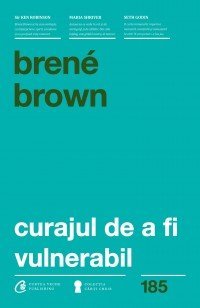
Daring Greatly
by Brené Brown
- First published 2012
- 287 pages
- English
In "Daring Greatly," Brené Brown challenges the widely held belief that vulnerability is a weakness, instead presenting it as a powerful measure of courage. Drawing on twelve years of research, Brown explores how embracing uncertainty, risk, and emotional exposure is essential for a life of purpose and meaningful connection. She delves into the ways shame and fear prevent us from fully engaging with life, offering insights into cultivating worthiness and self-acceptance.
This book provides a roadmap for living wholeheartedly, urging readers to step into the "arena" of their lives, even in the face of potential failure or criticism. Brown demonstrates how vulnerability is the birthplace of love, belonging, joy, empathy, innovation, and creativity. Discover how shedding the armor of perfectionism can transform your relationships, parenting, leadership, and overall well-being, leading to a more authentic and fulfilling existence.
This book provides a roadmap for living wholeheartedly, urging readers to step into the "arena" of their lives, even in the face of potential failure or criticism. Brown demonstrates how vulnerability is the birthplace of love, belonging, joy, empathy, innovation, and creativity. Discover how shedding the armor of perfectionism can transform your relationships, parenting, leadership, and overall well-being, leading to a more authentic and fulfilling existence.
What readers say
4.29
250K ratings across the web 8 in 10 readers loved it, 1 didn't like it
Many readers found this book to be a profoundly impactful and even life-changing experience, praising its ability to resonate deeply with personal struggles. Reviewers highlight the book's success in shedding light on core human experiences such as vulnerability, shame, connection, and courage. The author is commended for her candid and humorous style, often weaving in relatable personal anecdotes that make complex research concepts accessible and meaningful. For many, the book served as a powerful tool for self-awareness, helping them to name and understand emotional habits and harmful tactics that hinder true connection. It is seen as inspiring readers to embrace their authentic selves, take risks, and cultivate a more wholehearted way of living, ultimately fostering stronger relationships and a greater sense of self-worth.
Conversely, a significant portion of the reviews expressed strong reservations, particularly concerning the book's perceived scientific rigor and methodology. Critics describe the underlying research as "goofy" or "sappy psychobabble," arguing that it lacks the systematic testing of hypotheses and sometimes ignores existing scientific literature. There are concerns that the author's broad redefinition of "shame" dilutes its meaning, potentially downplaying its healthy role in society or personal accountability. Some readers found the book to be overly general, lacking concrete advice or specific "how-to" guidance, and wished for more detailed research data and facts rather than extensive personal narratives. Other criticisms include the author's frequent references to her credentials, a perceived "over-sharing" of personal stories, and issues with the book's organization or distracting font formatting in the physical copy. For those already well-versed in these topics, the content sometimes felt like "common sense" rather than offering new insights.
Ultimately, this book appears to be quite polarizing, with its impact largely depending on the reader's expectations and existing familiarity with its themes. It is highly recommended for individuals who are new to exploring concepts of vulnerability and shame, those seeking inspiration to embrace courage, or anyone looking to foster deeper connections in their personal and professional lives. Readers who appreciate a relatable, anecdotal approach and a broad conceptual framework, rather than a strictly academic or step-by-step guide, are likely to find it transformative. However, it may not satisfy those seeking rigorous scientific analysis, detailed practical tools, or a more objective, less autobiographical style. Readers who prefer established evidence-based practices or find the core message to be self-evident might consider other resources.
Reviews
No reviews yet. Be the first.
Details & editions
- This edition
- Penguin Life, 2015
- ISBN
- 9780241257401
- Language
- English
Original edition Daring Greatly Originally published in 2012 · English · Hay House UK