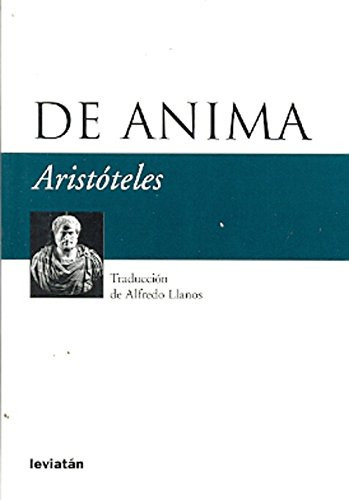
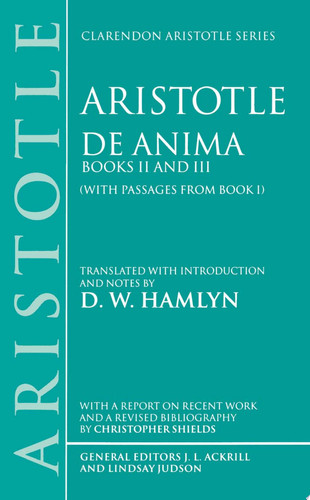
Positives Aristotle's De Anima is widely praised as a groundbreaking and foundational work, offering a unique and often attractive perspective on the nature of living things. Reviewers highlight Aristotle's strength in biology, presenting a systematic treatise on the fundamentals of life that avoids dualistic notions of a 'ghost in the machine.' His definition of the soul as the 'form of the body' or 'principle of life' is seen as a balanced metaphysical approach, integrating matter and form, and occupying an interesting middle ground between idealism and materialism. The book is lauded for its combination of careful empirical observation with philosophical speculation, laying some groundwork for the scientific method. It contains many striking ideas and engaging similes, making it a surprisingly readable and rewarding text for an ancient work, and is considered by some to represent Aristotle at his best.
Negatives Despite its many merits, the reviews acknowledge that De Anima has, in some ways, seriously dated. Aristotle's scientific views, particularly in areas like physics and physiology, are naturally outdated and contain theories now considered incorrect or irrelevant. This means that certain sections of the treatise may become less engaging or contain arguments that hold little scientific value today. Furthermore, the text can be dense, wordy, and challenging for readers not well-versed in classical philosophy, sometimes requiring prior knowledge of complex concepts. Some reviewers also note that the work occasionally lacks a unified theory of the soul or provides incomplete examinations of certain faculties like memory or the interaction between desire and thought. The book's 'third-personal' or biological/functional approach may also disappoint those seeking a more phenomenological or spiritual exploration of the mind.
Conclusion Ultimately, De Anima is recognized as an immensely historically significant and foundational text in Western thought, offering profound insights into the origins of philosophy, biology, and psychology. While its scientific content is largely superseded, its philosophical framework and systematic inquiry into the nature of life remain highly valuable. This book is particularly recommended for students of ancient philosophy, those interested in the history of science, and readers curious about Aristotle's metaphysical approach and his immense influence on subsequent intellectual traditions. It appeals to individuals seeking a non-dualistic, observational theory of life and the soul, and those prepared to engage with a challenging yet ultimately rewarding classical work that inspires deep reflection on what it means to be alive.