
Der Dschungel.
8.48 / 10 155K ratings
- Language
- German
- Published
- 1985
- Publisher
- Rowohlt Tb.
- ISBN
- 9783499154911
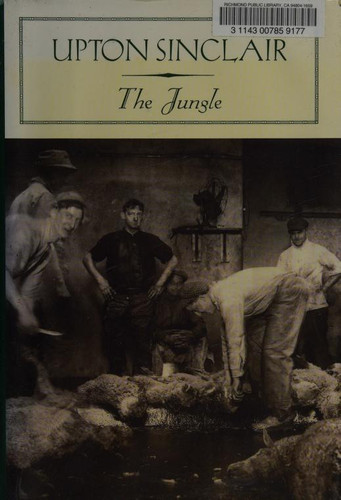
Step into the raw, unvarnished reality of early 20th-century industrial America with Upton Sinclair's *The Jungle: The Uncensored Original Edition*. This restored text presents Sinclair's complete vision, offering the full, uncompromising narrative as it first appeared in serial form in 1905, before being shortened for commercial publication. It plunges readers into the brutal world of Jurgis Rudkus, a Lithuanian immigrant who arrives in Chicago's "Packingtown" with dreams of the American ideal, only to find himself and his family trapped in a relentless struggle against dehumanizing labor, poverty, and corruption in the meatpacking industry.
This edition restores the vivid "ethnic flavor," graphic descriptions of the meat-packing processes, and Sinclair's incisive social and political commentary, much of which was toned down in later versions. Experience the full force of Sinclair's exposé, intended to stir public sympathy for exploited workers and advocate for systemic change, a message that resonated powerfully enough to inadvertently spark widespread outrage over food safety and lead to federal legislation. Discover the complete, powerful testament to the harsh realities faced by immigrants and the dehumanizing effects of unchecked capitalism.
This edition restores the vivid "ethnic flavor," graphic descriptions of the meat-packing processes, and Sinclair's incisive social and political commentary, much of which was toned down in later versions. Experience the full force of Sinclair's exposé, intended to stir public sympathy for exploited workers and advocate for systemic change, a message that resonated powerfully enough to inadvertently spark widespread outrage over food safety and lead to federal legislation. Discover the complete, powerful testament to the harsh realities faced by immigrants and the dehumanizing effects of unchecked capitalism.
Subjects
- Comics & Graphic Novels
- Travel
- General
- Reference
- Literature & Fiction
- Genre Fiction
- Mystery, Thriller & Suspense
- Thrillers & Suspense
- Literary
- Health, Fitness & Dieting
- Action & Adventure
- Fantasy
- Science Fiction & Fantasy
- Historical
- UNITED STATES_FICTION
- History
- Short Stories & Anthologies
- Anthologies
- Biographies & Memoirs
- Business & Money
- Children's Books
- Science & Math
- Non-Classifiable
- Novelty
- Political
- Family Life
- Contemporary
- United States
- Americas
- Test Preparation
- Study Guides
- Crime
- Medical Books
- English & College Success
- English
- FICTION_GENERAL
- Science Fiction
- Psychological
- Engineering & Transportation
- Politics & Social Sciences
- Philosophy
- Specialty Boutique
- New, Used & Rental Textbooks
- Law and legislation
- Social Sciences
- Fiction
- Hospitality, Travel & Tourism
- Business & Economics
- Industries
- Juvenile Fiction
- Engineering
- Travel Writing
- Classics
- Short Stories
- Politics & Government
- Fiction, historical, general
- Psychology & Counseling
- Criticism
- Education
- Humor & Satire
- American fiction (fictional works by one author)
- Political corruption
- Literary Collections
- Fiction, general
- Sociology
- Children's fiction
- Psychology
- Adaptations
- FICTION_HISTORICAL_GENERAL
- AMERICAN FICTION (FICTIONAL WORKS BY ONE AUTHOR)
- Agricultural Sciences
- Nonfiction
- Politics
- Emigration and immigration
- History & Criticism
- Satire
- Social Science
- Biographical
- Alternative History
- Emigration & Immigration
- COMICS & GRAPHIC NOVELS_GENERAL
- Physiology
- Classic Literature
- Teaching
- FICTION_PSYCHOLOGICAL
- Media Tie-In
- Immigrants
- Political Science
- Audio Adult: Books On Tape
- History & Theory
- Foreign Language Study
- Social Themes
- Historical Fiction
- Regional & Cultural
- People & Places
- Thrillers
- Political Ideologies
- Language Arts & Disciplines
- Language
- German
- Urban Life
- English language
- American
- Literary Criticism
- Drama
- Study Aids
- 20th Century
- Subjects & Themes
- Literature
- American Government
- Young Adult Fiction
- Dystopian
- Social conditions
- Schools
- Levels
- Technology & Engineering
- Labor & Industrial Relations
- Urban & Street Lit
- Chinese
- Spanish
- Short Stories (single author)
- French
- Spanish language
- Large type books
- Dictionaries
- FICTION_POLITICAL
- Book Notes
- African American & Black
- Human Rights
- Bilingual Education
- Journalism
- Readers
- Chapter Books
- Black & African American
- American literature
- Romans, nouvelles
- Agriculture
- Human Resources
- City Life
- Labor supply
- Historical - General
- Food Science
- Social History
- Ideologies & Doctrines
- Foreign Language - Dictionaries
- Phrase Books
- Communism, Post-Communism & Socialism
- Corrupt practices
- Alternate History
- Literature - Classics
- Comic books, strips, etc
- Secondary
- Restaurant & Food
- Brain
- Comic books, strips
- COMICS & GRAPHIC NOVELS
- Graphic novels
- Capitalism
- Poverty & Homelessness
- Children's Audio - 9-12
- Korean
- Labor laws and legislation
- Business, Careers, Occupations
- Working class
- Historical Events
- Social problems
Original edition
The JungleOriginally published in 1906 English Doubleday, Page & Company
Other editions (555)




Listen to the summary Narrated summary
The air in Packingtown hung thick with the stench of blood, offal, and chemicals, a miasma that clung to the very souls of those who toiled within its grasp. Here, amidst the ceaseless bellowing of cattle and the squeal of pigs, Jurgis Rudkus arrived with his young bride, Ona, and their extended family, their hearts swelling with the naive hope of the American Dream. They had journeyed from Lithuania, drawn by the promise of prosperity, only to find themselves ensnared in a brutal, unforgiving labyrinth of exploitation. Their first act, a joyous wedding feast, plunged them immediately into debt, a harbinger of the relentless financial burdens that would dog their every step.
Jurgis, a man of immense physical strength and an unshakeable optimism, found work in the slaughterhouses, his hands quickly growing accustomed to the grim, bloody tasks. He cleaned entrails, shoveled guts, and learned the gruesome efficiency with which life was extinguished and rendered into product. Ona, too, was forced into the factories, her delicate frame enduring the harsh, unsanitary conditions, while her cousin Marija found herself painting cans in a cannery. The family pooled their meager earnings, clinging to the dream of owning a small home, a sanctuary from the squalor of their rented rooms. But even this aspiration was tainted by deceit, as they were tricked into an exploitative lease, their payments devoured by hidden fees and interest.
The relentless machinery of Packingtown ground down their spirits and their bodies. Dede Antanas, Jurgis's elderly father, succumbed to the harsh demands of his job, having paid a third of his wages as a finder's fee for the privilege of working until he was utterly spent. Ona, pregnant and vulnerable, endured the predatory advances of her foreman, Phil Connor, her silence bought by fear and the desperate need to keep her job. The winter brought with it a cruel intensification of their suffering; factories closed, wages were slashed, and illness swept through their cramped tenement, claiming Elzbieta's crippled son, Kristoforas.
Jurgis's own body, once his greatest asset, betrayed him after a work accident, leaving him bedridden and penniless for months. When he finally recovered, his strength diminished, he was cast aside, deemed unfit for the demanding work. He descended further into the abyss, finding employment in the noxious fertilizer plant, where the fumes seared his lungs and the chemicals permeated his very skin, a job known to kill men within a few years. The world seemed to conspire against them, each glimmer of hope extinguished by a fresh wave of misfortune. Ona, broken by her secret torment, went into premature labor and died an agonizing death, leaving Jurgis with their infant son, Antanas.
The loss of Ona shattered Jurgis, driving him to the depths of despair and alcoholism. He wandered, a vagrant in the countryside, before returning to Chicago, where he found temporary solace in crime, befriending a safecracker and navigating the corrupt underworld of the city. He witnessed firsthand the intricate web of political graft and bribery that permeated every level of society, from the police to the politicians, all intertwined with the very industry that had devoured his family. He even found himself working for the Democrats, strategically campaigning in Packingtown to elect a Republican, a pawn in a cynical game of power.
A strike erupted, and Jurgis, hardened and cynical, crossed the picket line, benefiting from the chaos, even earning a promotion. Yet, a chance encounter with Phil Connor ignited his fury anew, leading to a violent confrontation and another stint in jail. Stripped of his savings to avoid further prosecution, he found Marija, once vibrant and full of life, now a morphine-addicted prostitute, a stark testament to the ruin wrought upon them all. Just as he stood at the precipice of utter annihilation, a socialist rally drew him in. The speaker's words, a fiery indictment of the capitalist system that had so cruelly exploited him and his kind, resonated deep within his ravaged soul.
He listened, captivated, as the vision of a unified working class, of democratically owned industry, offered a profound counter-narrative to the savage "jungle" he had known. The message of socialism became his salvation, a new purpose in a life that had been utterly devoid of hope. He embraced the cause with the same fierce intensity he once applied to physical labor, becoming a tireless advocate for the movement, finding work as a porter in a socialist-run hotel. Though Marija, scarred by her experiences, believed herself beyond redemption, Jurgis, now imbued with a revolutionary fervor, dedicated himself to the fight for a better world, for a system where no one would suffer the horrors he and his family had endured.
Jurgis, a man of immense physical strength and an unshakeable optimism, found work in the slaughterhouses, his hands quickly growing accustomed to the grim, bloody tasks. He cleaned entrails, shoveled guts, and learned the gruesome efficiency with which life was extinguished and rendered into product. Ona, too, was forced into the factories, her delicate frame enduring the harsh, unsanitary conditions, while her cousin Marija found herself painting cans in a cannery. The family pooled their meager earnings, clinging to the dream of owning a small home, a sanctuary from the squalor of their rented rooms. But even this aspiration was tainted by deceit, as they were tricked into an exploitative lease, their payments devoured by hidden fees and interest.
The relentless machinery of Packingtown ground down their spirits and their bodies. Dede Antanas, Jurgis's elderly father, succumbed to the harsh demands of his job, having paid a third of his wages as a finder's fee for the privilege of working until he was utterly spent. Ona, pregnant and vulnerable, endured the predatory advances of her foreman, Phil Connor, her silence bought by fear and the desperate need to keep her job. The winter brought with it a cruel intensification of their suffering; factories closed, wages were slashed, and illness swept through their cramped tenement, claiming Elzbieta's crippled son, Kristoforas.
Jurgis's own body, once his greatest asset, betrayed him after a work accident, leaving him bedridden and penniless for months. When he finally recovered, his strength diminished, he was cast aside, deemed unfit for the demanding work. He descended further into the abyss, finding employment in the noxious fertilizer plant, where the fumes seared his lungs and the chemicals permeated his very skin, a job known to kill men within a few years. The world seemed to conspire against them, each glimmer of hope extinguished by a fresh wave of misfortune. Ona, broken by her secret torment, went into premature labor and died an agonizing death, leaving Jurgis with their infant son, Antanas.
The loss of Ona shattered Jurgis, driving him to the depths of despair and alcoholism. He wandered, a vagrant in the countryside, before returning to Chicago, where he found temporary solace in crime, befriending a safecracker and navigating the corrupt underworld of the city. He witnessed firsthand the intricate web of political graft and bribery that permeated every level of society, from the police to the politicians, all intertwined with the very industry that had devoured his family. He even found himself working for the Democrats, strategically campaigning in Packingtown to elect a Republican, a pawn in a cynical game of power.
A strike erupted, and Jurgis, hardened and cynical, crossed the picket line, benefiting from the chaos, even earning a promotion. Yet, a chance encounter with Phil Connor ignited his fury anew, leading to a violent confrontation and another stint in jail. Stripped of his savings to avoid further prosecution, he found Marija, once vibrant and full of life, now a morphine-addicted prostitute, a stark testament to the ruin wrought upon them all. Just as he stood at the precipice of utter annihilation, a socialist rally drew him in. The speaker's words, a fiery indictment of the capitalist system that had so cruelly exploited him and his kind, resonated deep within his ravaged soul.
He listened, captivated, as the vision of a unified working class, of democratically owned industry, offered a profound counter-narrative to the savage "jungle" he had known. The message of socialism became his salvation, a new purpose in a life that had been utterly devoid of hope. He embraced the cause with the same fierce intensity he once applied to physical labor, becoming a tireless advocate for the movement, finding work as a porter in a socialist-run hotel. Though Marija, scarred by her experiences, believed herself beyond redemption, Jurgis, now imbued with a revolutionary fervor, dedicated himself to the fight for a better world, for a system where no one would suffer the horrors he and his family had endured.
What other readers say
Liked
Reviewers widely acknowledge this book's profound historical significance and lasting impact on American society. It is celebrated as a powerful work of social protest that vividly exposed the brutal realities faced by immigrant working-class families in early 20th-century Chicago. Many praise its ability to shock and outrage readers, effectively highlighting the systemic exploitation, dire poverty, and horrific living and working conditions endured by these individuals. Sinclair's writing is often described as expert and precise, creating unforgettable and visceral descriptions, particularly in its unflinching portrayal of the meatpacking industry. The book is lauded for its role in sparking public outcry that led to significant legislative reforms, especially in food safety, and is considered a monumental classic for its capacity to drive real-world change.
Disliked
Despite its impactful subject matter, the book receives considerable criticism regarding its literary quality and narrative execution. Many reviewers find the latter half, in particular, devolves into heavy-handed political commentary, with characters becoming mere vehicles for the author's agenda rather than fully developed individuals. The plot is often described as poorly structured, lacking a satisfying narrative arc, and presenting a relentless, repetitive cycle of misfortune that can be emotionally exhausting. Some find the vivid descriptions, while powerful, occasionally detract from the core message, and one review notes the use of problematic characterizations. Overall, while acknowledging its historical importance, several readers conclude that it functions more as a piece of investigative journalism or a political diatribe than a finely crafted novel.
In short
Ultimately, this book is recognized as a historically crucial and profoundly influential work, indispensable for understanding a pivotal period in American history and the origins of social and labor reforms. While its effectiveness as a novel is debated due to perceived narrative flaws and its overt didacticism, its power to provoke thought and inspire action remains undeniable. It is highly recommended for readers interested in social protest literature, investigative fiction, early 20th-century American history, and the evolution of worker rights and food safety regulations. Those who appreciate books that confront harsh realities and systemic injustice, and who have the emotional fortitude for a challenging and often bleak narrative, will find it a compelling and essential read.
No reviews yet. Be the first.