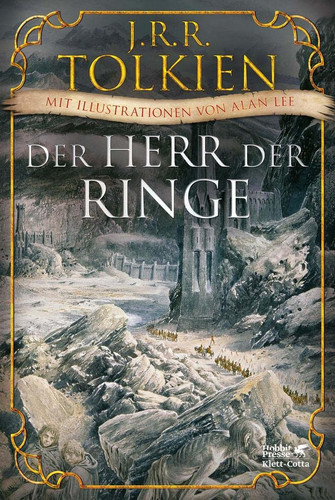
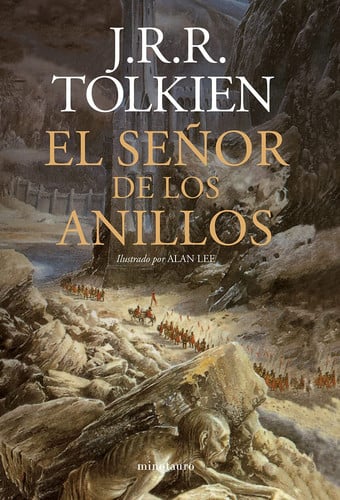
In the tranquil Shire, a modest hobbit named Frodo Baggins inherits a seemingly simple ring that holds immense, dark power. This artifact, forged by the Dark Lord Sauron, is a tool for dominion over all of Middle-earth. To prevent its return to its master and save their world from encroaching shadow, Frodo must embark on a perilous quest to destroy the One Ring in the fiery depths where it was created.
This journey draws him into a grand conflict alongside a diverse fellowship of companions, including wizards, elves, dwarves, and men, each facing their own trials and temptations. As their paths diverge, the fate of Middle-earth rests on courage, loyalty, and the resilience of unexpected heroes against overwhelming evil. This tale explores themes of power's corrupting influence, the strength of friendship, and the enduring hope found in the smallest deeds. Immerse yourself in a meticulously crafted world where ancient histories, diverse cultures, and epic battles unfold, inviting readers to discover a story that has shaped the landscape of fantasy literature.
The tranquility of the Shire, a haven of simple hobbit folk, is shattered with the revelation of a dark secret: a plain gold ring, long an heirloom of Bilbo Baggins, is in fact the One Ring, forged by the Dark Lord Sauron in the fires of Mount Doom. This Ring holds a portion of Sauron's very being, and with it, he seeks to dominate all of Middle-earth. The wise wizard Gandalf uncovers its true, terrifying nature and charges Bilbo's nephew, Frodo Baggins, with the perilous task of carrying it away from the Shire. Thus begins a journey of immense consequence, as Frodo, accompanied by his loyal gardener Samwise Gamgee and their friends Merry Brandybuck and Pippin Took, flees the encroaching shadow of Sauron's Black Riders, the Nazgûl, who tirelessly hunt for their master's lost treasure.
Their quest leads them to the Elven sanctuary of Rivendell, where a council of the Free Peoples convenes. It is here that the impossible decision is made: the Ring must be destroyed in the very fires where it was forged, deep within Mordor. A Fellowship is formed, a company of nine to stand against the nine Ringwraiths: Frodo, Sam, Merry, Pippin, Gandalf, the Elf Legolas, the Dwarf Gimli, Boromir of Gondor, and Aragorn, a Ranger and the hidden heir to the ancient throne of Men. Their path is fraught with peril, from the treacherous passes of the Misty Mountains to the dark, abandoned mines of Moria, where Gandalf confronts a terrifying Balrog and seemingly falls into the abyss.
The Fellowship shatters. Frodo, increasingly burdened by the Ring's corrupting influence, decides to press on to Mordor alone, accompanied only by Sam. Meanwhile, Aragorn, Legolas, and Gimli embark on a desperate pursuit of Merry and Pippin, who have been captured by Saruman's Uruk-hai. Their chase leads them across the plains of Rohan, a land of horse-lords, where they encounter the newly resurrected Gandalf the White, now imbued with greater power and clarity. He guides them to Edoras, freeing King Théoden from Saruman's insidious spell. The forces of Rohan, led by Théoden and Aragorn, prepare for war, making their stand at the ancient fortress of Helm's Deep against Saruman's vast army.
While the war for the West rages, Frodo and Sam, guided by the twisted creature Gollum - a former Ring-bearer whose mind has been warped by its power - continue their arduous journey through the desolate landscapes towards Mordor. Gollum, promising a secret path, leads them into the perilous lair of Shelob, a monstrous spider of ancient evil. Frodo falls prey to her venomous sting, and Sam, believing his master dead, takes up the Ring, his loyalty and courage shining through the despair. Simultaneously, Merry and Pippin, having escaped their captors, find refuge in Fangorn Forest and awaken the ancient, tree-like Ents to war against Saruman, leading to the destruction of Isengard.
The final act of the great drama unfolds as the armies of Sauron march upon Minas Tirith, the capital of Gondor. Gandalf and Pippin arrive to find the city under siege, its Steward, Denethor, consumed by despair. Aragorn, embracing his destiny, leads the forces of Men, summoning the spectral Army of the Dead to fulfill an ancient oath and turn the tide of battle. On the blood-soaked fields of Pelennor, the combined might of Gondor and Rohan, with Éowyn, Théoden's niece, striking a decisive blow against the Witch-king of Angmar, defeats Sauron's legions.
Yet, the true hope of Middle-earth rests with the two small hobbits in Mordor. Frodo, weakened and almost completely under the Ring's sway, reaches the Cracks of Doom. In a final, desperate struggle, he succumbs to its power, claiming it for his own. But fate, in the form of Gollum, intervenes. Gollum attacks Frodo, biting off his finger to reclaim his "precious," and in his mad joy, tumbles into the fiery chasm, destroying the One Ring forever. Sauron's power crumbles, and his dark tower collapses.
With the shadow lifted, Aragorn is crowned King of Gondor, ushering in a new age of peace and renewal. The hobbits, though forever changed by their ordeal, return to the Shire, only to find it ravaged by Saruman, who had escaped Isengard. They lead their own rebellion, scouring their homeland clean. Though Middle-earth begins to heal, the wounds of the Ring-quest linger within Frodo. Eventually, he, along with Gandalf, Bilbo, and the remaining Elves, sails from the Grey Havens to the Undying Lands, seeking a final peace beyond the shores of the mortal world, leaving Samwise Gamgee to return to a life of quiet heroism and the promise of a new dawn.
What other readers say
Liked
Readers found the book to be an enjoyable experience overall, with one reviewer specifically stating they liked it. There was also an appreciation for the translator's dedication and effort, recognizing the inherent difficulty of translating such a complex work.
Disliked
However, a consistent negative point raised by both reviewers was the quality of the translation. One noted that the translation needed repairs in certain sections, while another described it as "awful," finding the original language version easier to read and intending to revisit the book in that format. This indicates that the translation significantly detracted from the reading experience for some.
In short
In conclusion, while the underlying story or content of the book appears to have merit and can be appreciated, the current translated edition seems to suffer from notable quality issues. This book would likely appeal to readers who are very patient with imperfect translations, or ideally, those who are able to read it in its original language to fully appreciate its content without linguistic hindrance.