
Die Bücherdiebin
by Markus Zusak
8.78 / 10 3M ratings
- Language
- German
- Published
- 2015
- Publisher
- cbj
- Pages
- 587
- ISBN
- 9783570403235
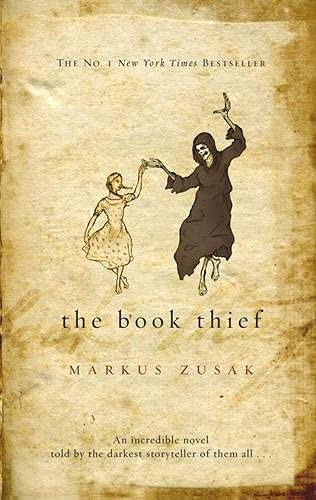
Narrated by Death itself, this story unfolds in Nazi Germany during World War II, a time when the narrator is busier than ever. It follows Liesel Meminger, a young girl sent to live with foster parents in a small German town after the loss of her brother and the disappearance of her mother. At her brother's graveside, Liesel steals her first book, an act of defiance and a prelude to a life shaped by stolen words, even though she cannot yet read.
As the war intensifies and fear grips the nation, Liesel learns to read with the help of her accordion-playing foster father, Hans Hubermann, and discovers the profound power of words. Her hunger for books leads her to pilfer them from Nazi book burnings and the mayor's wife's library, forging unexpected connections. When her foster family takes the perilous step of hiding a Jewish man in their basement, Liesel's world expands further, revealing both the cruelty and the extraordinary kindness of humanity. This is a narrative about resilience, the dual nature of language, and the enduring strength of human connection in the face of overwhelming darkness.
As the war intensifies and fear grips the nation, Liesel learns to read with the help of her accordion-playing foster father, Hans Hubermann, and discovers the profound power of words. Her hunger for books leads her to pilfer them from Nazi book burnings and the mayor's wife's library, forging unexpected connections. When her foster family takes the perilous step of hiding a Jewish man in their basement, Liesel's world expands further, revealing both the cruelty and the extraordinary kindness of humanity. This is a narrative about resilience, the dual nature of language, and the enduring strength of human connection in the face of overwhelming darkness.
Subjects
- Reference
- Literature & Fiction
- Genre Fiction
- Mystery, Thriller & Suspense
- Thrillers & Suspense
- Suspense
- Europe
- Germany
- Subjects
- Literary
- Action & Adventure
- Fantasy
- Science Fiction & Fantasy
- Historical
- History
- Military
- World War II
- Children's Books
- Growing Up & Facts of Life
- Romance
- CHILDREN'S FICTION
- Coming of Age
- Family Life
- Contemporary
- English & College Success
- English
- Politics & Social Sciences
- Teen & Young Adult
- Foreign Language Study & Reference
- Fiction
- Juvenile Fiction
- Religious
- Judaism
- Fantasy & Magic
- Politics & Government
- Literary Collections
- Children's fiction
- Juvenile fiction
- Storytelling
- Reading
- Romans, nouvelles, etc. pour la jeunesse
- Ancient & Medieval Literature
- World War, 1939-1945
- Difficult Discussions
- Social Themes
- Social & Family Issues
- Mysteries & Thrillers
- Historical Fiction
- People & Places
- Juvenile Nonfiction
- Emotions & Feelings
- Specific Topics
- Family
- 20th Century
- Modern
- Literature
- Young Adult Fiction
- War & Military
- Chang pian xiao shuo
- Jewish
- Spanish language
- Large type books
- Death
- World Literature
- JEWS_FICTION
- Histoire
- WORLD WAR, 1939-1945_FICTION
- War
- Romans, nouvelles
- Death, Grief, Bereavement
- Parents
- Historical fiction
- Books & Libraries
- Australia & Oceania
- Ideologies & Doctrines
- Social Issues
- Historia
- Jews
- New York Times bestseller
- Holocaust
- Military & Wars
- Books and reading
- New York Times reviewed
- Law & Crime
- Novela
- Ficción
- Books
- Ficción juvenil
- Memory
- Mothers
- Orphans & Foster Homes
- Epistolary
- Roman
- Spanish language materials
- 1933-1945
- World War (1939-1945) fast (OCoLC)fst01180924
Original edition
Book ThiefOriginally published in 1998 English Penguin Random House
Other editions (91)



Listen to the summary Narrated summary
Ah, a small story, amongst the millions I have witnessed. This one, I remember, with a girl, a few words, and a sky the color of bruised plums. It began, as many things do, with a train, and a small boy's last breath in the snow. I was there, of course, for Werner Meminger. And that is where I first saw her, Liesel, a shadow of a girl, clutching her dead brother, a stolen book, The Gravedigger's Handbook, already a testament to her future, though she couldn't yet read its stark black letters.
Molching, that was the place. Himmel Street, a name that always made me smile, for it meant Heaven, and believe me, it was anything but. There, she found Hans and Rosa Hubermann, her foster parents. Hans, with his silver accordion and eyes like warm soup, became her Papa, teaching her the alphabet in the quiet of the basement, each letter a whispered secret. Rosa, a woman with a voice like sandpaper but a heart, I observed, that beat with a fierce, protective rhythm, became her Mama. Liesel's nights were haunted by the image of her brother, but Hans would sit with her, comforting her until the nightmares receded.
Life on Himmel Street unfolded in shades of gray, under the ever-present shadow of the swastika. Liesel found a fast friend in Rudy Steiner, the boy with hair the color of lemons, who yearned to be Jesse Owens and constantly, playfully, begged for a kiss. There were book burnings, monumental infernos of words and history, where Liesel, with a defiance that warmed my cold heart, snatched another book from the dying embers, The Shoulder Shrug. This act of rebellion, this hunger for stories, caught the eye of Ilsa Hermann, the mayor's wife, who later, in her vast and silent library, would become an unwitting accomplice to Liesel's literary thievery.
Then came the man from the basement, Max Vandenburg, a Jewish fist-fighter, hidden away by Hans Hubermann, who remembered a promise made decades ago. Max, with his haunted eyes and the smell of fear, found a kindred spirit in Liesel. They shared nightmares, painted stories over the pages of Mein Kampf, and understood the power of words, both to destroy and to heal. He wrote her a story, "The Standover Man," a gift born of shared confinement and whispers in the dark.
The war intensified, a symphony of sirens and falling bombs. Air raids became a grim routine, forcing the Hubermanns to leave Max alone in the cold basement. Liesel, through it all, continued her quiet rebellion, stealing words, devouring them, and sharing them with those around her, a small beacon in the encroaching darkness. She would read aloud in the shelters, her voice a balm against the terror.
I saw her, too, on that terrible day when the parade of Jews was marched through Molching, skeletal figures clinging to life. Liesel found Max among them, reaching out, offering a moment of recognition, a dangerous act of humanity that brought down the wrath of the soldiers. It was a stark reminder of the duality of humans, their capacity for both immense cruelty and profound kindness.
And then, the night came. The bombs fell on Himmel Street, swift and merciless. I was busy that night, collecting souls, an endless harvest. When I returned to Molching, the street was rubble, and beneath it lay Hans, Rosa, and Rudy. Liesel, miraculously, survived, protected by the words she had been writing in her own book, "The Book Thief," in the safety of the basement. She found Rudy, lifeless, and finally, in her grief, gave him the kiss he had always asked for.
I carried her story with me for a long time, the words she had written, the life she had lived. She moved away, found a new family, and lived a long life in Australia. When it was finally her time, a very old woman, I collected her soul. I showed her the book she had written, her story, a testament to the enduring power of words and the resilience of the human spirit, even amidst the most brutal of times. And as I carried her away, I was, as always, haunted by humans.
Molching, that was the place. Himmel Street, a name that always made me smile, for it meant Heaven, and believe me, it was anything but. There, she found Hans and Rosa Hubermann, her foster parents. Hans, with his silver accordion and eyes like warm soup, became her Papa, teaching her the alphabet in the quiet of the basement, each letter a whispered secret. Rosa, a woman with a voice like sandpaper but a heart, I observed, that beat with a fierce, protective rhythm, became her Mama. Liesel's nights were haunted by the image of her brother, but Hans would sit with her, comforting her until the nightmares receded.
Life on Himmel Street unfolded in shades of gray, under the ever-present shadow of the swastika. Liesel found a fast friend in Rudy Steiner, the boy with hair the color of lemons, who yearned to be Jesse Owens and constantly, playfully, begged for a kiss. There were book burnings, monumental infernos of words and history, where Liesel, with a defiance that warmed my cold heart, snatched another book from the dying embers, The Shoulder Shrug. This act of rebellion, this hunger for stories, caught the eye of Ilsa Hermann, the mayor's wife, who later, in her vast and silent library, would become an unwitting accomplice to Liesel's literary thievery.
Then came the man from the basement, Max Vandenburg, a Jewish fist-fighter, hidden away by Hans Hubermann, who remembered a promise made decades ago. Max, with his haunted eyes and the smell of fear, found a kindred spirit in Liesel. They shared nightmares, painted stories over the pages of Mein Kampf, and understood the power of words, both to destroy and to heal. He wrote her a story, "The Standover Man," a gift born of shared confinement and whispers in the dark.
The war intensified, a symphony of sirens and falling bombs. Air raids became a grim routine, forcing the Hubermanns to leave Max alone in the cold basement. Liesel, through it all, continued her quiet rebellion, stealing words, devouring them, and sharing them with those around her, a small beacon in the encroaching darkness. She would read aloud in the shelters, her voice a balm against the terror.
I saw her, too, on that terrible day when the parade of Jews was marched through Molching, skeletal figures clinging to life. Liesel found Max among them, reaching out, offering a moment of recognition, a dangerous act of humanity that brought down the wrath of the soldiers. It was a stark reminder of the duality of humans, their capacity for both immense cruelty and profound kindness.
And then, the night came. The bombs fell on Himmel Street, swift and merciless. I was busy that night, collecting souls, an endless harvest. When I returned to Molching, the street was rubble, and beneath it lay Hans, Rosa, and Rudy. Liesel, miraculously, survived, protected by the words she had been writing in her own book, "The Book Thief," in the safety of the basement. She found Rudy, lifeless, and finally, in her grief, gave him the kiss he had always asked for.
I carried her story with me for a long time, the words she had written, the life she had lived. She moved away, found a new family, and lived a long life in Australia. When it was finally her time, a very old woman, I collected her soul. I showed her the book she had written, her story, a testament to the enduring power of words and the resilience of the human spirit, even amidst the most brutal of times. And as I carried her away, I was, as always, haunted by humans.
What other readers say
Liked
Many reviewers praise The Book Thief as a poignant and powerful narrative, often describing it as a modern classic. Its unique choice of Death as the narrator is frequently highlighted as a standout feature, offering an insightful, often darkly humorous, and compelling perspective on human nature during a devastating historical period. The writing style itself receives accolades for being lyrical, poetic, and profound, with many finding the prose beautiful and impactful, capable of painting vivid emotional and visual landscapes. Readers often commend the story for its deeply moving and heartbreaking quality, emphasizing its ability to evoke strong emotions and inspire critical thought. The characters, particularly Liesel and her foster parents, are consistently lauded for their depth, realism, and the genuine connections they forge, allowing readers to invest deeply in their struggles and triumphs amidst the backdrop of war-torn Germany. The book is also seen as a powerful exploration of the importance of words and kindness in the face of immense cruelty.
Disliked
Despite widespread acclaim, a notable segment of readers found significant flaws in the book. The unique narrative by Death, while praised by many, was criticized by others as a gimmick that felt distracting, unnecessary, or even irritating. Some felt Death's constant interjections and foreshadowing spoiled events and prevented deeper emotional engagement, while others found the narrator's personality to be grating or overly detached. The writing style, too, drew fire for being overly sentimental, heavy-handed with symbolism, or at times stilted and uneven, with critics citing awkward metaphors and repetitive stylistic choices. Pacing was another common complaint, with some finding the story to be slow, plodding, or episodic, particularly in its middle sections. A few reviewers also suggested that the book, despite its setting, felt like a cliched or even trivialized portrayal of the historical context, with some characters lacking true dimension and the plot relying on emotional manipulation.
In short
Ultimately, The Book Thief elicits a deeply polarized response, with readers either loving its unique approach and emotional resonance or being frustrated by its stylistic choices and pacing. Those who connect with the distinctive voice of Death and appreciate a lyrical, reflective narrative often find it to be a profound and unforgettable experience that inspires tears and contemplation. However, readers who prefer a more straightforward plot, less overt symbolism, or a narrator who doesn't frequently interject or foreshadow may find it a challenging or even disappointing read. It is highly recommended for those who enjoy character-driven stories that offer a fresh perspective on historical events and are willing to immerse themselves in a rich, albeit often melancholic, literary style, making it a compelling choice for readers seeking an emotionally resonant and thought-provoking journey.
No reviews yet. Be the first.