
Disputed memory
8 / 10 1 rating
Free- Language
- English
- Published
- 2016
- Publisher
- De Gruyter
- Pages
- 383
- ISBN
- 9783110453348
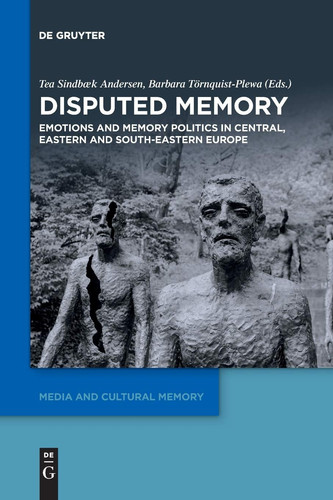
Across Central, Eastern, and South-Eastern Europe, the 20th century's tumultuous events, including world wars, genocides, and extremist ideologies, are remembered with significant divergence, often leading to intense disputes. This book investigates the intricate layers of memory from this troubled period, examining how these contested pasts manifest and are negotiated. It emphasizes the profound interconnectedness of memory with emotions, mediation, and politics in shaping regional narratives.
An international collective of scholars, drawing from various disciplines, explores representations of these disputed histories through diverse media such as monuments, museum exhibitions, political discourse, and social media. The analysis extends across local, national, and transnational contexts, illustrating the political power and societal impact of these painful and contested memories. The book offers insights into current memory conflicts and enhances understanding of how memory is transmitted and negotiated across European borders and cultures.
An international collective of scholars, drawing from various disciplines, explores representations of these disputed histories through diverse media such as monuments, museum exhibitions, political discourse, and social media. The analysis extends across local, national, and transnational contexts, illustrating the political power and societal impact of these painful and contested memories. The book offers insights into current memory conflicts and enhances understanding of how memory is transmitted and negotiated across European borders and cultures.
Subjects
- History
- World War II
- Psychology
- Emotions
- English & College Success
- English
- World
- Social Sciences
- Politics & Government
- Sociology
- Social Science
- Linguistics
- Political science
- Social Aspects
- Political Aspects
- European
- Cognitive Psychology & Cognition
- Language Arts & Disciplines
- Literary Criticism
- Anthropology
- Wars & Conflicts
- Cultural & Social
- Historical & Comparative
- Historiography
- Influence
- Collective memory
- Europe, Eastern
- 1989-
Other editions (3)

Listen to the summary Narrated summary
Across the lands of Central, Eastern, and South-Eastern Europe, the echoes of the 20th century reverberate with a profound disquiet, for the past remains fiercely contested. The cataclysms of world wars, the shadows of genocides, and the lingering specters of extremist ideologies are not held in a singular, unifying memory, but rather splinter into diverse, often clashing, narratives. This fractured remembrance ignites vivid memory disputes, a complex tapestry woven from differing perspectives on shared, yet deeply divisive, histories.
One delves into the intricate layers of these troubled pasts, discovering how they are not merely historical facts but living forces, constantly being reshaped and reinterpreted. The contention stems from the very fabric of how societies choose to recall, commemorate, and sometimes, forget. These are not quiet academic debates, but often passionate struggles played out in the public sphere, reflecting deep-seated national traumas and identities.
The ways in which these memories are articulated and contested are remarkably varied. One might witness the solemn grandeur of monuments, each stone imbued with a specific interpretation of history, standing in stark contrast to another, perhaps just a city away. Museum exhibitions become stages where narratives are carefully constructed, sometimes provoking public outcry or quiet dissent. Beyond these tangible forms, the discourse flows through individual recollections, political speeches that sway public opinion, and the rapidly evolving currents of electronic social media, where past wounds are often reopened and re-examined in real-time.
At the heart of these memory politics lie powerful emotions. Grief, anger, pride, shame, and resentment are not peripheral feelings but central actors, shaping how events are remembered and how those memories are then transmitted. The mediation of these emotions, whether through state-sponsored narratives or grassroots movements, profoundly influences the collective understanding. Indeed, memory is inextricably linked to the political landscape, becoming a tool for national cohesion or, conversely, a source of ongoing division and conflict.
Exploring these disputes across various local, national, and even transnational contexts reveals the immense social impact and political power held by these painful memories. They dictate how communities relate to one another, how nations define themselves on the international stage, and how individuals reconcile their personal histories with broader historical narratives. The echoes of a century past continue to shape present-day identities and future aspirations, making the struggle over memory a vital, ongoing battle for meaning.
Ultimately, understanding these processes of memory transmission and negotiation across borders and cultures is paramount. It is a journey into the interconnectedness of memory with the raw force of human emotion, the shaping influence of various mediating platforms, and the inescapable currents of political agendas. The insights gleaned illuminate not just the specific disputes of Central, Eastern, and South-Eastern Europe, but offer a deeper comprehension of how societies everywhere grapple with their most difficult inheritances.
One delves into the intricate layers of these troubled pasts, discovering how they are not merely historical facts but living forces, constantly being reshaped and reinterpreted. The contention stems from the very fabric of how societies choose to recall, commemorate, and sometimes, forget. These are not quiet academic debates, but often passionate struggles played out in the public sphere, reflecting deep-seated national traumas and identities.
The ways in which these memories are articulated and contested are remarkably varied. One might witness the solemn grandeur of monuments, each stone imbued with a specific interpretation of history, standing in stark contrast to another, perhaps just a city away. Museum exhibitions become stages where narratives are carefully constructed, sometimes provoking public outcry or quiet dissent. Beyond these tangible forms, the discourse flows through individual recollections, political speeches that sway public opinion, and the rapidly evolving currents of electronic social media, where past wounds are often reopened and re-examined in real-time.
At the heart of these memory politics lie powerful emotions. Grief, anger, pride, shame, and resentment are not peripheral feelings but central actors, shaping how events are remembered and how those memories are then transmitted. The mediation of these emotions, whether through state-sponsored narratives or grassroots movements, profoundly influences the collective understanding. Indeed, memory is inextricably linked to the political landscape, becoming a tool for national cohesion or, conversely, a source of ongoing division and conflict.
Exploring these disputes across various local, national, and even transnational contexts reveals the immense social impact and political power held by these painful memories. They dictate how communities relate to one another, how nations define themselves on the international stage, and how individuals reconcile their personal histories with broader historical narratives. The echoes of a century past continue to shape present-day identities and future aspirations, making the struggle over memory a vital, ongoing battle for meaning.
Ultimately, understanding these processes of memory transmission and negotiation across borders and cultures is paramount. It is a journey into the interconnectedness of memory with the raw force of human emotion, the shaping influence of various mediating platforms, and the inescapable currents of political agendas. The insights gleaned illuminate not just the specific disputes of Central, Eastern, and South-Eastern Europe, but offer a deeper comprehension of how societies everywhere grapple with their most difficult inheritances.
Opening the reader…
No reviews yet. Be the first.