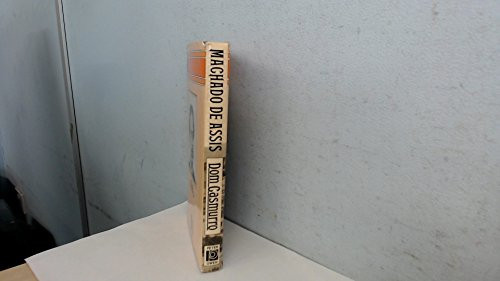
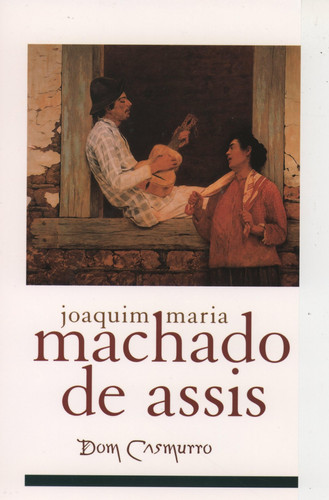
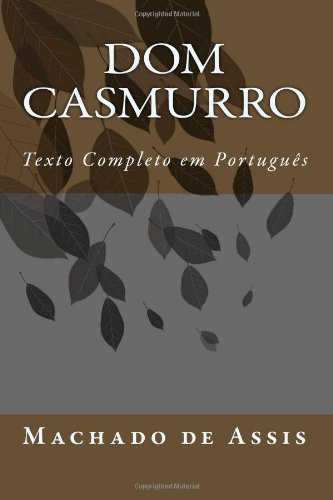
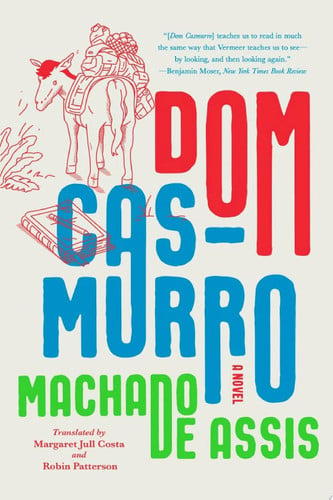
Dom Casmurro is a novel by Brazilian author Machado de Assis, presented as the memoir of Bento Santiago, an aging man nicknamed "Dom Casmurro" for his reclusive nature. He endeavors to reconnect the two ends of his life, recounting his youth in 19th-century Rio de Janeiro and his passionate love for his childhood neighbor, Capitu. Their deep connection leads to marriage, but Bento's narrative soon introduces a growing, consuming jealousy, fueled by his suspicions about Capitu's fidelity and her enigmatic "oblique and sly" eyes.
Through Bento's first-person account, readers are drawn into a complex exploration of memory, truth, and perception. The story challenges the reader to discern reality from the narrator's biased recollections, making the question of Capitu's innocence or guilt a central, unresolved mystery. This work delves into the psychological depths of love, trust, and corrosive doubt, inviting reflection on how individual perspectives shape understanding and ultimately determine a life's course.
I, Bento Santiago, now an old man, known to my neighbors as Dom Casmurro for my reclusive nature, sit in my meticulously reconstructed childhood home, a monument to a past I desperately wish to re-tie to my present. It is here, amidst the echoes of a bygone era in old Rio de Janeiro, that I endeavor to write my memoirs, to unravel the tangled skeins of a life consumed by a love, a friendship, and a gnawing suspicion that left me utterly alone.
My story begins in the innocent days of youth, in the house on Matacavalos Street, where my heart was irrevocably captured by Capitu, the girl next door. Her eyes, those "gypsy eyes" with their dark, undulating currents, held a captivating power, promising depths I longed to explore. Yet, a shadow loomed over our burgeoning affection: my mother, Dona Glória, had made a vow that I, her only remaining son, would enter the seminary and become a priest. This divine destiny clashed fiercely with my earthly desire for Capitu, a conflict that stirred a profound restlessness within me.
The struggle to escape the seminary was a tumultuous period, aided by the cunning suggestions of José Dias, a dependent in our household, and the steadfast companionship of Ezequiel Escobar, a friend I made within the seminary walls. Escobar, with his robust spirit and clear-headed ambition, became my confidant, the brother of my soul. Together, we plotted my release from the priesthood, a plan that eventually succeeded, allowing me to pursue law and, more importantly, to marry my beloved Capitu.
Our life together, interwoven with that of Escobar and his wife Sancha, Capitu's dear friend, flourished for a time in a tableau of domestic bliss. We shared meals, laughter, and the intimate details of our lives. The birth of our son, Ezequiel, named in honor of my closest friend, seemed to solidify this perfect quartet. Yet, beneath the surface of this idyllic existence, a serpent of doubt began to coil within my breast, a subtle shift in my perception of Capitu, whose once defiant spirit seemed to bend to a more accommodating demeanor, perhaps too accommodating.
The serpent struck with venomous force upon the tragic death of Escobar, who drowned while swimming. It was at his funeral, amidst the shared grief, that I observed Capitu's gaze fixed upon the deceased, a lingering, profound look that ignited the first spark of my unbearable suspicion. A seed of infidelity, once planted, began to sprout, watered by my own obsessive thoughts.
As our son Ezequiel grew, the resemblance I perceived between him and Escobar became an undeniable, tormenting truth in my mind, each passing year deepening my conviction of Capitu's betrayal. Every gesture, every feature, every innocent word from the boy became a damning piece of evidence, confirming the treachery I believed had been committed. My jealousy, a relentless tormentor, consumed me, distorting my reality and poisoning the very air I breathed.
The weight of this perceived deceit became unbearable. I confronted Capitu, her denials only fueling my rage and despair. Our marriage, once the cornerstone of my existence, crumbled under the relentless pressure of my suspicions. In a desperate, self-destructive moment, I nearly poisoned myself, and then, in a terrifying instant, almost my own son. The outcome was a bitter separation: I banished Capitu and Ezequiel to Europe, choosing a solitary life in Brazil, convinced of her guilt.
Years later, after Capitu's death, Ezequiel, a young man now, returned to visit me. Despite the haunting resemblance to Escobar that still pricked at my soul, I maintained the facade of a father. But his visit was fleeting, and soon after, he too died, succumbing to typhoid fever abroad. His death, by then, stirred little within my hardened heart. And so, I remain, Dom Casmurro, "Lord Solitaire," forever fixed on Capitu's alleged infidelity, forever questioning, forever writing this narrative in an attempt to tie together the two ends of my life, yet finding only the bitter taste of isolation and an unresolved truth.
What other readers say
Liked
Dom Casmurro is widely celebrated for its innovative and masterful writing, which many reviewers find remarkably fresh and contemporary despite its 1899 publication date. Readers praise the author's linguistic and structural inventiveness, often highlighting the use of numerous short, engaging chapters and the narrator's direct, humorous, and philosophical address to the "dear reader." This unique narrative voice is frequently described as captivating, witty, and even charming, drawing readers intimately into the protagonist's world. The novel is lauded as a Brazilian literary masterpiece, showcasing brilliant prose, compelling characterization, and a masterful dramatization of first love. Its ability to create a gripping and often profound experience, while inviting readers to question and interpret, is consistently cited as a major strength.
Disliked
However, the book is not without its challenging aspects. Some reviewers describe elements of the narrative as possessing "amateurish theatricality" or "grotesque pathos." A significant point of contention and a source of reader antipathy is the protagonist, Bentinho, who is frequently characterized as a "simple-minded," "egocentric," or even "psychopathic" figure lacking in affection, leading some to a "bitter taste" or a desire for him to seek therapy. Structurally, a few readers found the middle section of the book to be "arduous and tiresome," suggesting that the pacing might test patience before reaching a highly rewarding conclusion. Furthermore, the novel's central ambiguity, particularly regarding the key mystery, can be frustrating for those who seek definitive answers, leaving them with "loose ends."
In short
Ultimately, Dom Casmurro emerges as a complex and highly regarded classic that continues to provoke strong reactions and diverse interpretations. It is a profound character study, featuring one of the most memorable unreliable narrators in literature, whose perspective shapes and often distorts the events of the story. This book is highly recommended for readers who appreciate literary experimentation, psychological depth, and engaging with narratives that challenge their perceptions of truth and memory. It will particularly appeal to those who enjoy open-ended mysteries, exploring the complexities of human nature, jealousy, and rationalization, rather than a straightforward plot with clear resolutions.