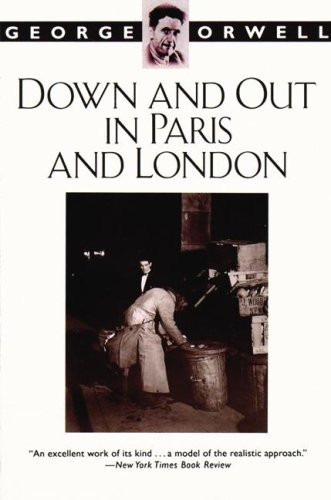
Down and Out in Paris and London
8.18 / 10 106K ratings
- Language
- English
- Published
- 1997
- Publisher
- Blackstone Pub
- ISBN
- 9780786103027
Immerse yourself in the stark realities of destitution as George Orwell recounts his firsthand experiences living on the margins of society in Paris and London. This semi-autobiographical account, Orwell's first full-length work, plunges into the hidden world of poverty, revealing the daily struggles for survival.
Journey with Orwell as he navigates the unforgiving environment of Parisian slums, enduring long hours as a "plongeur" in luxury hotel kitchens, where he witnesses the harsh conditions and abysmal pay of the working poor. Transitioning to London, he adopts the life of a tramp, exploring the network of lodging houses and casual wards, exposing the bureaucratic systems that perpetuate cycles of hardship. Through vivid, direct observation, the book challenges preconceived notions about poverty, illustrating its profound impact on human dignity and identity. This unflinching examination offers an intimate glimpse into the lives of those rendered invisible by society, urging readers to confront the pervasive issues of social inequality.
Journey with Orwell as he navigates the unforgiving environment of Parisian slums, enduring long hours as a "plongeur" in luxury hotel kitchens, where he witnesses the harsh conditions and abysmal pay of the working poor. Transitioning to London, he adopts the life of a tramp, exploring the network of lodging houses and casual wards, exposing the bureaucratic systems that perpetuate cycles of hardship. Through vivid, direct observation, the book challenges preconceived notions about poverty, illustrating its profound impact on human dignity and identity. This unflinching examination offers an intimate glimpse into the lives of those rendered invisible by society, urging readers to confront the pervasive issues of social inequality.
Subjects
- Travel
- Literature & Fiction
- Genre Fiction
- Europe
- Great Britain
- Subjects
- Literary
- France
- Historical
- Self Service
- History
- Biographies & Memoirs
- Arborist Merchandising Root
- Romance
- Memoirs
- Contemporary
- World
- Historical Study & Educational Resources
- Politics & Social Sciences
- Specialty Boutique
- New, Used & Rental Textbooks
- Travelers & Explorers
- Social Sciences
- Fiction
- Biography & Autobiography
- Classics
- Politics & Government
- Public Affairs & Policy
- Literary Collections
- Women
- Sociology
- History & Criticism
- Social Science
- Biographical
- SOCIOLOGY
- Audio Adult: Books On Tape
- Regional & Cultural
- European
- Personal Memoirs
- Movements & Periods
- Genres & Styles
- American
- Essays & Travelogues
- Literature
- Social conditions
- British & Irish
- English literature
- World Literature
- Social History
- Philosophers
- Social Classes & Economic Disparity
- Unabridged Audio - Fiction/General
- BRITISH AND IRISH FICTION (FICTIONAL WORKS BY ONE AUTHOR)
- Poverty
- Class
- Authors, biography
- Poverty & Homelessness
Original edition
Down And Out In Paris And LondonOriginally published in 1940 English Penguin UK
Other editions (34)



Listen to the summary Narrated summary
The stench of poverty clung to everything, a pervasive, inescapable dampness that seeped into the very soul. One found oneself adrift in the labyrinthine streets of Paris, a stranger to comfort, with dwindling francs and a growing gnawing in the belly. It began innocently enough, a descent into a world where the grand boulevards and glittering lights of the city were merely a backdrop to the squalid reality of its underbelly. A stolen purse, a sudden illness, and suddenly the thin veneer of respectability crumbled, leaving one exposed to the raw, indifferent gaze of destitution.
Lodged in a bug-infested hotel, surrounded by a cast of eccentric, desperate characters, the days stretched into a monotonous cycle of hunger and the futile search for work. There was Boris, the boisterous Russian waiter, full of grand schemes and fleeting optimism, a constant companion in shared misery and the quest for a meal. The desperation grew, pushing one to pawn the last vestiges of decent clothing, trading dignity for a few francs to stave off starvation. The hunger was not merely an emptiness; it became an obsession, dulling the mind to all else, reducing existence to the primal need for food.
Eventually, a break came, a plunge into the inferno of a Parisian hotel kitchen as a plongeur, a dishwasher. The work was brutal, seventeen-hour days of relentless heat, steam, and grime, scrubbing mountains of dishes for the unseen, opulent diners above. The kitchen was a microcosm of society's forgotten, a chaotic symphony of sweating cooks, frantic waiters, and the constant, dehumanizing clatter. The air was thick with the smell of grease, stale food, and unwashed bodies, a stark contrast to the perfumed elegance of the dining rooms upstairs. One learned the intricate, unspoken rules of this underworld, the constant pressure, the fleeting camaraderie, and the profound exhaustion that left no room for thought beyond the next moment of rest.
The Parisian chapter eventually closed, but the shadow of poverty followed across the Channel to London. A promised job vanished into thin air, leaving one stranded and penniless in a city no less indifferent to the plight of the poor. Here, the world of the tramp opened up, a nomadic existence dictated by the harsh rules of casual wards and Salvation Army shelters. Each night brought a new, often squalid, communal sleeping space, each day a journey across the city to find a handout, a crust of bread, or the vague hope of work.
One walked the roads with fellow vagrants, men like Paddy, the perpetually self-pitying Irishman, or Bozo, the artist and amateur astronomer, each with his own tale of misfortune and resignation. The constant movement was not freedom, but a necessity, a bureaucratic imposition designed to prevent any single individual from settling and becoming a burden. The indignity of charity, the forced gratitude, the humiliating inspections – all chipped away at the spirit, revealing how deeply economic status intertwined with personal identity.
The experiences hammered home a bitter truth: beggars and tramps were not inherently criminals or lazy, but victims of a system that offered little escape. Poverty was not romantic or terrible in the dramatic sense; it was merely squalid and boring, a complicated meanness that stripped away dignity and made life an endless, tiresome struggle for basic survival. The grand test of virtue, it seemed, had become money, and by that measure, the poor always failed, earning only contempt. Yet, amidst the grime and the hunger, there was a peculiar freedom, a detachment from the stifling demands of conventional respectability, a stripping away of illusions that revealed the stark realities of society.
Lodged in a bug-infested hotel, surrounded by a cast of eccentric, desperate characters, the days stretched into a monotonous cycle of hunger and the futile search for work. There was Boris, the boisterous Russian waiter, full of grand schemes and fleeting optimism, a constant companion in shared misery and the quest for a meal. The desperation grew, pushing one to pawn the last vestiges of decent clothing, trading dignity for a few francs to stave off starvation. The hunger was not merely an emptiness; it became an obsession, dulling the mind to all else, reducing existence to the primal need for food.
Eventually, a break came, a plunge into the inferno of a Parisian hotel kitchen as a plongeur, a dishwasher. The work was brutal, seventeen-hour days of relentless heat, steam, and grime, scrubbing mountains of dishes for the unseen, opulent diners above. The kitchen was a microcosm of society's forgotten, a chaotic symphony of sweating cooks, frantic waiters, and the constant, dehumanizing clatter. The air was thick with the smell of grease, stale food, and unwashed bodies, a stark contrast to the perfumed elegance of the dining rooms upstairs. One learned the intricate, unspoken rules of this underworld, the constant pressure, the fleeting camaraderie, and the profound exhaustion that left no room for thought beyond the next moment of rest.
The Parisian chapter eventually closed, but the shadow of poverty followed across the Channel to London. A promised job vanished into thin air, leaving one stranded and penniless in a city no less indifferent to the plight of the poor. Here, the world of the tramp opened up, a nomadic existence dictated by the harsh rules of casual wards and Salvation Army shelters. Each night brought a new, often squalid, communal sleeping space, each day a journey across the city to find a handout, a crust of bread, or the vague hope of work.
One walked the roads with fellow vagrants, men like Paddy, the perpetually self-pitying Irishman, or Bozo, the artist and amateur astronomer, each with his own tale of misfortune and resignation. The constant movement was not freedom, but a necessity, a bureaucratic imposition designed to prevent any single individual from settling and becoming a burden. The indignity of charity, the forced gratitude, the humiliating inspections – all chipped away at the spirit, revealing how deeply economic status intertwined with personal identity.
The experiences hammered home a bitter truth: beggars and tramps were not inherently criminals or lazy, but victims of a system that offered little escape. Poverty was not romantic or terrible in the dramatic sense; it was merely squalid and boring, a complicated meanness that stripped away dignity and made life an endless, tiresome struggle for basic survival. The grand test of virtue, it seemed, had become money, and by that measure, the poor always failed, earning only contempt. Yet, amidst the grime and the hunger, there was a peculiar freedom, a detachment from the stifling demands of conventional respectability, a stripping away of illusions that revealed the stark realities of society.
What other readers say
Liked
Reviewers widely praise the book for George Orwell's masterful writing, which vividly describes squalid conditions and the harsh realities of poverty without ever demeaning the individuals experiencing them. His ability to evoke a strong sense of place and atmosphere, particularly in the detailed accounts of Parisian restaurant kitchens and the lives of the working poor, is consistently highlighted as a strength. Many commend Orwell's profound empathy and social conscience, noting how he humanizes those on the margins of society and attributes their suffering to systemic economic issues rather than personal failings. The book is seen as insightful, bringing to life the resourcefulness and resilience of people in dire circumstances, and offering a compelling, often humorous, look at individual stories within a bleak landscape. Readers found it a fascinating and important read that challenges misconceptions about poverty and remains relevant today.
Disliked
Despite its strengths, some reviewers found the book's content to be quite challenging and disturbing. The unsparing descriptions of filth, foul odors, bug infestations, and the general squalor of living and working conditions were noted as being gruesome, sickening, and difficult to read. The portrayal of a bleak and often monotonous existence, particularly in the London section for some readers, contributed to a sense of grimness and depression. A few reviewers felt that the book, while valuable, might not reach the literary heights of Orwell's later, more famous works, suggesting it was more of an ordinary or less intensely political narrative. There were also observations that, being a semi-autobiographical account, the author's ability to withdraw from his circumstances might limit the full depth of his experience of inescapable destitution, though this point was not universally shared.
In short
Ultimately, the book is considered a significant and impactful work that offers a powerful, honest portrayal of hardship and social inequality. It serves as an enriching glimpse into the lives of the impoverished in Paris and London during a specific historical period, prompting readers to reflect on societal structures and human dignity. While its raw realism may not appeal to all, particularly those sensitive to graphic descriptions of unpleasant conditions or those currently facing similar struggles, it is highly recommended for readers interested in social commentary, journalistic narratives, and the development of Orwell's distinctive voice. It is especially suitable for those seeking to cultivate a deeper understanding and empathy for marginalized communities, and for anyone who appreciates a meticulously observed and thought-provoking exploration of human resilience in the face of adversity.
No reviews yet. Be the first.