Add to library
You don't have any lists yet. Create one in My Library.
Go to My LibraryAdd to library
You don't have any lists yet. Create one in My Library.
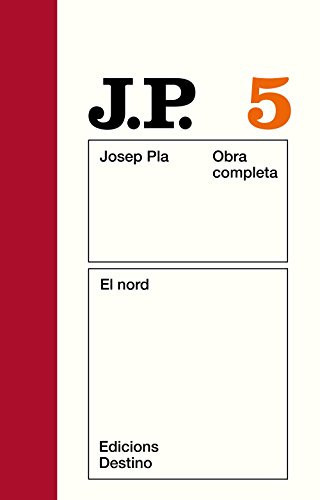
Go to My LibraryEl Nord
- Language
- Catalan
- Published in
- Publisher
- Destino
- Pages
- 639
- ISBN
- 9788423304646
Experience a direct and clear journalistic style as Pla captures the essence of the places and their people. His writing provides a window into the political and cultural landscapes of the era, offering a unique perspective on a continent in transformation. This collection invites readers to encounter history through the eyes of a keen observer.
Subjects
As the path lengthens, the letters become "Letters from Further Afar," deepening the engagement with Central Europe. Here, the traveler delves into the heart of the continent, recording impressions of its bustling centers and quiet corners. The prose, sharp and unembellished, seeks to capture the precise essence of each place, the particular light of an afternoon, the murmur of a conversation, the character etched into the faces of strangers. There is a persistent effort to name things as they are, to strip away grandiosity and present the lived reality with an almost journalistic fidelity, yet imbued with a deeply personal, often ironic, lens.
The journey culminates in the gripping account of a "Journey to Russia in 1925," a profound plunge into the heart of the nascent Soviet Union. From the moment the train crosses the border, traversing the endless forests between Riga and Moscow, a sense of stark difference permeates the air. Moscow itself appears as a city of contradictions, a place where the grand pronouncements of a new order clash with the persistent realities of everyday existence. The observer notes the earnest attempts at economic equality, yet cannot ignore the burgeoning political inequalities that define the new regime.
The Soviet, the Party, the elections - these institutional pillars are examined with a keen, analytical eye, yet always through the filter of individual observation. One witnesses the efforts to reshape society, from the redistribution of land and the organization of industry to the intricacies of the trade unions and the fluctuating value of money. The new economic policy, NEP, casts its long shadow, shaping the daily lives of both peasants and factory workers. There are visits to places like Nizhny Novgorod and the Sormovo factory, revealing the industrial pulse of a nation in transformation, and the distinct, often challenging, politics of its working class.
Beyond the grand political structures, the narrative delves into the fabric of daily life under the new order. The observer notes the state's control over the press, the ambitious pedagogical reforms, and the evolving cultural landscape. Bureaucracy, the class tribunal, and even the conditions within a prison in Sokolniki are laid bare, offering a glimpse into the mechanisms of control and the lives they govern. The pervasive presence of vodka, the redefinition of family structures, and the stern discipline imposed by the state all contribute to a vivid, if often disquieting, portrait.
As the journey continues to Leningrad, the former imperial capital, the contrasts become even more pronounced. The dramatic undertones of a society undergoing radical change are palpable. The very concept of freedom is interrogated, not through abstract ideology, but through the tangible experiences of the people encountered. Even the Red Army and the burgeoning world of spectacles are scrutinized, revealing the intricate ways in which a new identity is being forged. The faint whispers of opposition, the shadow of figures like Trotsky, hint at the profound ideological struggles simmering beneath the surface of this vast, ambitious experiment.
Throughout these travels, a consistent voice emerges - one marked by simplicity and clarity, yet capable of profound irony and subjective insight. It is a voice that eschews rhetorical flourish in favor of direct observation, striving always for the precise adjective, the telling detail that illuminates a broader truth. The northern journeys are, in essence, a testament to the power of careful witness, an enduring record of a world in flux, captured with an unwavering gaze and an inimitable literary sensibility.
No discussions yet for this book.
Delete Discussion
Are you sure you want to delete this discussion? This action cannot be undone.
Rating Sources
The collection is widely praised for its engaging and pleasant reading experience, largely due to the author's abundant and precise descriptions of the various European countries visited. Reviewers highlight his characteristic common sense and sense of humor, which infuse the travelogues with an agreeable tone. Particular commendation is given to the author's use of irony, especially in observations related to travel and landscapes, which provides some of the most amusing passages. The final volume, a report on the USSR in 1925, stands out as a "sensational" and "magnificent" historical document. It showcases the author at his most journalistic, delivering an engaging, didactic, and deeply interesting account of a pivotal historical moment.
While generally positive, one review subtly notes that the author's distinctive and most captivating irony is primarily concentrated in the initial chapters of the second book, "Cartes de mes lluny." This suggests that some readers might find the consistent level of engaging humor and unique perspective to be somewhat uneven across this particular volume.
Overall, this compilation is considered an excellent and valuable work, offering readers a unique window into early 20th-century Europe and Russia through the eyes of a skilled observer. It is highly recommended for those who appreciate detailed travel writing, historical reportage, and an authorial voice marked by keen observation, wit, and a subtle sense of humor. Readers interested in the social and political landscape of Europe and the nascent Soviet Union during the 1920s, presented with an objective and often optimistic journalistic lens, will find this book particularly rewarding.
No reviews yet. Be the first to review this book!
Delete Review
Are you sure you want to delete this review? This action cannot be undone.