
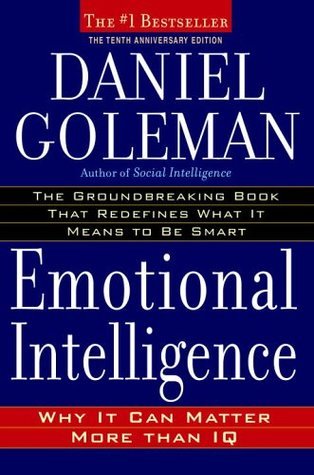
Emotional Intelligence
8.12 / 10 141K ratings
- Language
- English
- Published
- 2006
- Publisher
- Bloomsbury Publishing Plc
- Pages
- 358
- ISBN
- 9789382563792
For decades, conventional wisdom held that IQ was the primary determinant of success. Daniel Goleman challenges this notion, presenting a compelling argument that emotional intelligence, the ability to recognize, understand, and manage emotions in ourselves and others, plays an equally, if not more, crucial role in navigating life's complexities and achieving fulfillment.
Drawing on groundbreaking research in psychology and neuroscience, this book introduces five key domains of emotional intelligence: self-awareness, self-regulation, motivation, empathy, and social skills. It explains how these capacities influence our decisions, relationships, and overall well-being. Far from being fixed traits, these emotional competencies can be learned and developed throughout life, offering a pathway to improved personal and professional outcomes, better stress management, and enhanced leadership abilities. Discover how harmonizing your head and heart can lead to a more effective and satisfying life.
Drawing on groundbreaking research in psychology and neuroscience, this book introduces five key domains of emotional intelligence: self-awareness, self-regulation, motivation, empathy, and social skills. It explains how these capacities influence our decisions, relationships, and overall well-being. Far from being fixed traits, these emotional competencies can be learned and developed throughout life, offering a pathway to improved personal and professional outcomes, better stress management, and enhanced leadership abilities. Discover how harmonizing your head and heart can lead to a more effective and satisfying life.
Original edition
Emotional IntelligenceOriginally published in 1995 English Bantam
Other editions (163)



Listen to the summary Narrated summary
Humanity, often priding itself on the power of reason, possesses a deeper, more ancient intelligence that profoundly shapes destiny: the emotional mind. This primal force, rooted in the very architecture of the brain, acts in concert with - and often overrides - the rational intellect, dictating how effectively one navigates the currents of life. It is not merely about being clever or having a high IQ; indeed, academic brilliance alone proves a poor predictor of success and fulfillment. Instead, it is the mastery of one's inner world and the skillful engagement with others' feelings that truly distinguishes those who thrive.
The journey begins with self-awareness, the bedrock of all emotional intelligence. This is the capacity to recognize a feeling as it happens, understanding the subtle shifts in mood and thought, and discerning the impact these inner states have on behavior. It involves an honest assessment of one's own strengths and weaknesses, a clear understanding of personal values, and a robust sense of self-confidence. Without this fundamental attunement to one's emotional landscape, the subsequent steps toward emotional mastery remain elusive, leaving one susceptible to the whims of unexamined impulses.
Building upon self-awareness comes self-regulation, the ability to manage one's internal states, impulses, and resources. This means keeping disruptive emotions and urges in check, maintaining integrity even under pressure, and demonstrating adaptability in the face of change. It is the capacity to pause between impulse and action, preventing the amygdala from "hijacking" the rational mind and leading to regrettable outbursts. Instead, one cultivates transparency, strives for excellence, takes initiative, and persists with optimism, even when obstacles loom large.
Beyond the personal realm, emotional intelligence extends outward through empathy, the profound ability to understand and share the feelings of another. It involves accurately reading the emotions in others' faces, voices, and gestures, sensing their perspectives, and attuning oneself to their needs and wants. This is more than mere sympathy; it is the cognitive and emotional process that binds people together, allowing for shared experiences and a deep comprehension of others' inner worlds. Empathy forms the crucial bridge that connects individual emotional landscapes to the broader social fabric.
Finally, the pinnacle of emotional intelligence manifests in social skills, the art of navigating complex social environments and building strong, meaningful relationships. This encompasses a wide array of competencies: the ability to influence others, inspire leadership, develop those around you, manage conflicts constructively, and foster seamless teamwork and collaboration. It is about communicating effectively, not just with words, but with an understanding of the emotional currents flowing beneath the surface of every interaction. These skills are not fixed at birth but can be nurtured and strengthened throughout one's lifetime, transforming how individuals connect, communicate, and cope in a complex world.
The journey begins with self-awareness, the bedrock of all emotional intelligence. This is the capacity to recognize a feeling as it happens, understanding the subtle shifts in mood and thought, and discerning the impact these inner states have on behavior. It involves an honest assessment of one's own strengths and weaknesses, a clear understanding of personal values, and a robust sense of self-confidence. Without this fundamental attunement to one's emotional landscape, the subsequent steps toward emotional mastery remain elusive, leaving one susceptible to the whims of unexamined impulses.
Building upon self-awareness comes self-regulation, the ability to manage one's internal states, impulses, and resources. This means keeping disruptive emotions and urges in check, maintaining integrity even under pressure, and demonstrating adaptability in the face of change. It is the capacity to pause between impulse and action, preventing the amygdala from "hijacking" the rational mind and leading to regrettable outbursts. Instead, one cultivates transparency, strives for excellence, takes initiative, and persists with optimism, even when obstacles loom large.
Beyond the personal realm, emotional intelligence extends outward through empathy, the profound ability to understand and share the feelings of another. It involves accurately reading the emotions in others' faces, voices, and gestures, sensing their perspectives, and attuning oneself to their needs and wants. This is more than mere sympathy; it is the cognitive and emotional process that binds people together, allowing for shared experiences and a deep comprehension of others' inner worlds. Empathy forms the crucial bridge that connects individual emotional landscapes to the broader social fabric.
Finally, the pinnacle of emotional intelligence manifests in social skills, the art of navigating complex social environments and building strong, meaningful relationships. This encompasses a wide array of competencies: the ability to influence others, inspire leadership, develop those around you, manage conflicts constructively, and foster seamless teamwork and collaboration. It is about communicating effectively, not just with words, but with an understanding of the emotional currents flowing beneath the surface of every interaction. These skills are not fixed at birth but can be nurtured and strengthened throughout one's lifetime, transforming how individuals connect, communicate, and cope in a complex world.
What other readers say
Liked
Many reviewers hail this book as a visionary and seminal contribution, offering a profound understanding of human emotions and their critical role in life. It is widely praised for introducing and thoroughly explaining the concept of emotional intelligence, challenging the traditional emphasis on IQ as the sole determinant of success. Readers found it insightful in detailing the brain's emotional mechanisms and the necessity of balancing rational thought with emotional responses. The book is appreciated for outlining key components of emotional intelligence, such as self-awareness, self-regulation, motivation, empathy, and social skills, and for motivating individuals to cultivate these abilities. It is also noted for its academic credibility and its accessible approach to a complex subject, making it an important read for those new to the field.
Disliked
Despite its strengths, several readers found the book to be overly long, dense, and repetitive, often reiterating its core thesis without offering enough practical, actionable advice for daily life. Some critics feel that while the book effectively describes the importance of emotional intelligence, it falls short on providing concrete "how-to" methods. Concerns were also raised about the book's dated perspectives, particularly its "hard-wired" view of the brain and its tendency to attribute societal problems solely to a lack of emotional intelligence rather than systemic issues. Reviewers noted instances of logical fallacies, editorializing, and potentially problematic generalizations about historical figures or social groups, which detracted from its objectivity for some.
In short
In conclusion, the book remains a significant and influential work that brought emotional intelligence to the forefront of public consciousness. While its comprehensive theoretical framework and motivational aspects are highly valued, readers should be aware of its length, occasional repetitiveness, and some dated societal analyses. This book is particularly recommended for those seeking a foundational understanding of emotional intelligence and its components, individuals looking to understand the interplay between emotions and rationality, and parents or educators interested in fostering emotional literacy. It serves as an excellent starting point for anyone motivated to explore and develop their emotional skills, offering a compelling argument for their importance in achieving a more balanced and successful life.
No reviews yet. Be the first.