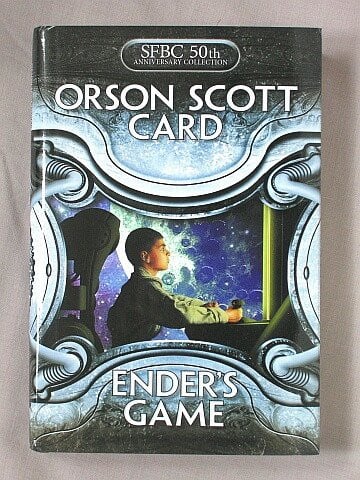
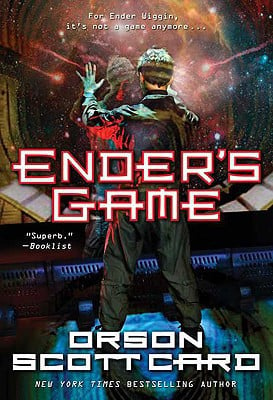
In a future where humanity is still reeling from two devastating conflicts with an insectoid alien race, the survival of the species rests on the shoulders of its children. The international military has established an advanced training facility in orbit, the Battle School, to cultivate the next generation of commanders. Among the recruits is Andrew "Ender" Wiggin, a quiet but brilliant boy who is Earth's last hope. He is taken from his family and thrust into a relentless environment of zero-gravity war games and psychological manipulation, designed to sharpen his strategic genius.
Ender's abilities to understand his enemy, both in the battle room and within himself, make him a prodigy. Yet, this very empathy may be his greatest burden. As the training intensifies and the lines between game and reality blur, Ender must confront the immense pressure to become the perfect soldier. The book explores the complexities of leadership, the morality of war, and the profound cost of saving humanity, questioning what it means to win when the fight might cost you your own soul.
Humanity teetered on the brink, haunted by the memory of two devastating invasions by the insectoid alien race known as the Formics, or "buggers." With a third, final assault looming, the International Fleet turned to its most unlikely saviors: child prodigies, genetically engineered and rigorously trained to become the ultimate military commanders. Among them was Andrew "Ender" Wiggin, a boy burdened by the label of a "Third" - a rare third child in a world strictly limiting births, allowed to exist only because of the desperate need for his exceptional mind.
From the moment he was plucked from his family at the tender age of six, Ender's life became a crucible. Colonel Hyrum Graff, the enigmatic head of Battle School, orchestrated a cruel isolation around the boy, ensuring that Ender would rely only on his own ingenuity and strength. He was a weapon to be forged, and every friendship, every alliance, was tested and often shattered by the calculated manipulations of his superiors. In the zero-gravity Battle Room, a vast arena where cadets waged mock wars, Ender's tactical brilliance shone, quickly surpassing older, more experienced students.
His journey through Battle School was a relentless ascent, marked by both triumph and profound loneliness. He navigated the brutal hierarchies of various armies, enduring the bullying of boys like Bernard and the jealous rage of commanders like Bonzo Madrid, whom he ultimately, tragically, defeated in a shower room confrontation that left Bonzo dead. Yet, he also forged deep, if fragile, bonds with fellow cadets like Alai, whose kiss on Ender's cheek spoke of a connection deeper than military strategy, and Petra Arkanian, who taught him to shoot with deadly precision.
Meanwhile, back on Earth, Ender's older siblings, the brilliant but sociopathic Peter and the compassionate, manipulative Valentine, played their own dangerous games. Through pseudonyms, they subtly seized control of global political discourse, shaping the future of a world unaware of the child-soldiers fighting its deadliest war in the stars. Valentine, the only one who truly understood Ender's gentle heart beneath his warrior's exterior, was eventually coerced by Graff to write him a letter, a desperate measure to rekindle his fading spirit and push him further into the military's embrace.
Ender's final trials began at Command School, where he was placed under the tutelage of the legendary Mazer Rackham, the hero who single-handedly repelled the second Formic invasion. Here, Ender led his chosen squadron leaders, including his trusted Bean, through increasingly complex simulations against overwhelming Formic fleets. The pressure was immense, the stakes seemingly virtual, yet the exhaustion and the weight of command were undeniably real. He pushed his young commanders to their limits, devising unconventional strategies, often bending or breaking the rules of engagement, always to achieve victory.
Then came the final simulation, a desperate, seemingly unwinnable battle against the entire Formic homeworld. Ender, in a moment of inspired, ruthless genius, unleashed a weapon that annihilated the planet, believing it to be a mere game. The cheering of his commanders, however, quickly turned to a horrifying revelation: all his "simulations" had been real. He had not merely won a game; he had committed xenocide, eradicating an entire species. The weight of this truth, the realization that he had become the monster he always feared, crushed him.
In the aftermath, haunted by his actions, Ender refused to return to Earth. He joined a colony ship, seeking a new beginning among the stars. On a newly colonized Formic world, he stumbled upon a structure that mirrored the "Giant's Drink" game from his Battle School days. Inside, he discovered a dormant Formic queen pupa, a final, poignant message from the very species he had destroyed. Through a telepathic connection, he understood their intentions, their regret, and their hope. Ender, the "Speaker for the Dead," embarked on a new mission: to find a home for the last Formic queen, to atone for humanity's act, and to ensure that such a terrible misunderstanding would never happen again.
What other readers say
Liked
Reviews for this book indicate a range of strong opinions, with many praising its engaging plot and thought-provoking themes. Readers frequently highlight the novel's prescience, noting its anticipation of concepts like online forums and messaging systems years before their widespread adoption. The story is often lauded for its fast pace, compelling narrative, and the intricate, often brutal, tactical games that drive the plot. Many find the protagonist, Ender, to be a fascinating and sympathetic character, a child genius whose struggles with leadership, empathy, and the weight of humanity's future resonate deeply. The book is also commended for its exploration of complex moral and ethical dilemmas, particularly concerning the nature of conflict, military necessity, and the blurred lines between good and evil, inviting readers to ponder difficult philosophical questions without resorting to simplistic answers. Its characterization of young protagonists as intelligent, three-dimensional individuals facing adult challenges is frequently cited as a strength.
Disliked
Conversely, a significant portion of the reviews express strong criticisms, leading some readers to abandon the book. A recurring complaint centers on the perceived flat and one-dimensional nature of many characters, with some finding Ender himself to be an unearned prodigy who never truly fails or develops. The writing style is criticized by some as atrocious, with jarring shifts in perspective and a tendency to tell rather than show, making it difficult to connect with the characters or visualize action sequences. The plot, particularly in the middle, is described as repetitive and tedious, focusing too heavily on battle games without sufficient variation. Another major point of contention is the book's portrayal of gender, with specific dialogue cited as dismissive of female potential, along with a perceived general misogynistic undertone. Some reviewers also find the depiction of child characters, particularly their advanced intellect and capacity for cruelty, to be unrealistic or unsettling, with references to nudity among children noted as odd or creepy. The subplot involving Ender's siblings attempting to influence world politics through online writing is frequently deemed implausible and poorly integrated.
In short
Overall, "Ender's Game" is a polarizing science fiction novel that elicits passionate responses from its readers. Those who appreciate a fast-paced, intellectually stimulating story that delves into complex ethical questions of war, leadership, and human nature, especially within a military science fiction framework, are likely to find it a compelling and rewarding read. It particularly resonates with readers who enjoy narratives about gifted, often isolated, children grappling with immense responsibility and philosophical quandaries. However, readers seeking nuanced character development, a more diverse and equitable portrayal of gender, or a less repetitive plot may find the book's execution falls short, with some finding its themes and characterizations problematic.