
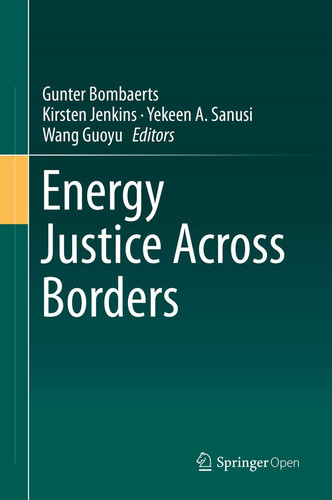
Energy Justice Across Borders
6 / 10 1 rating
Free- Language
- English
- Published
- 2019
- Publisher
- Springer International Publishing
- Pages
- 305
- ISBN
- 9783030240219
"Energy Justice Across Borders" presents an expansive view of energy justice, moving beyond conventional Western frameworks to explore diverse ethical traditions from around the globe. This volume offers new approaches to understanding transboundary energy issues, integrating ethical considerations directly into energy policy, and developing practical responses.
The book unites the fields of energy justice and comparative philosophy, providing a global perspective on applying energy ethics through various philosophical lenses, including African, Asian, European, South American, and Theistic traditions. It addresses the critical need for comparative analyses that inform and shape equitable energy transitions worldwide. This resource is designed for readers seeking to engage with the complex ethical dimensions of energy systems and contribute to more just and sustainable energy futures.
The book unites the fields of energy justice and comparative philosophy, providing a global perspective on applying energy ethics through various philosophical lenses, including African, Asian, European, South American, and Theistic traditions. It addresses the critical need for comparative analyses that inform and shape equitable energy transitions worldwide. This resource is designed for readers seeking to engage with the complex ethical dimensions of energy systems and contribute to more just and sustainable energy futures.
Subjects
- Business & Money
- Science & Math
- Earth Sciences
- Economic Conditions
- Economics
- Engineering & Transportation
- Politics & Social Sciences
- Social Sciences
- Business & Economics
- Industries
- Engineering
- Human Geography
- Energy & Mining
- Energy Production & Extraction
- Science
- Technology
- Geography
- Social Science
- Environment
- Environmental Science
- Energy
- Alternative & Renewable
- Technology & Engineering
- Electrical
- Energy policy
- Power resources
- Development
- Sustainable Development
- Environmental Economics
- Ethics & Moral Philosophy
- Ethics & Morality
- Renewable energy sources
- Moral and Ethical Aspects
- Ethics of Technology
- Electrical Power Engineering
Other editions (2)
Listen to the summary Narrated summary
The intricate web of global energy systems, vital to modern life, often operates with policies rooted in national perspectives, frequently detached from deeper ethical considerations. This presents a critical void: the necessity for innovative approaches to conceptualize transboundary energy issues, to weave ethical principles into the fabric of energy policy, and to translate these concerns into actionable responses. This exploration delves into that very gap, advocating for comparative frameworks of energy justice that extend beyond conventional Western ethical traditions, thereby offering a truly global lens through which to apply energy ethics.
The journey begins by setting the intellectual stage, highlighting that energy systems are inherently international, and their social justice impacts reverberate across borders. It becomes clear that a holistic understanding demands an engagement with diverse philosophical and cultural perspectives. The work then transitions into examining practical applications of energy justice, showcasing how these complex ideas manifest in real-world scenarios. For instance, the discussion moves to the ethical dimensions of nuclear non-proliferation, presenting a unique narrative from within Kazakhstan that champions the application of Kazakh traditional ethics. This perspective underscores the profound differences in energy justice approaches and makes a compelling case for integrating indigenous ethical traditions into global energy dialogues.
Further practical insights emerge from the Global South, where the focus shifts to the critical role of grid systems in energy debates. Here, the realities of both off-grid and on-grid energy access are explored, alongside the myriad micro-grid systems that exist in between. This exploration reveals the underexplored consequences for rights, responsibilities, opportunities, and constraints, suggesting that a conceptualization around macro- and micro-levels of justice is essential to elucidate this complexity. A comparative philosophical approach is then applied to the Democratic Republic of Congo, examining hydropower and its associated grid systems through the lens of spatial justice, drawing on original qualitative data to offer insights into conducting energy justice in such contexts.
The inquiry deepens by applying theoretical frameworks to these practical situations, bridging the gap between abstract principles and tangible challenges. It examines the impacts of policy on energy justice and considers the sociomaterial afterlives of solar waste, prompting reflections on sustainability and equity throughout the entire energy lifecycle. The discourse also navigates the temporal dimensions of energy justice through a Hindu philosophical perspective, broadening the understanding of how different cultural worldviews perceive time, responsibility, and intergenerational equity within energy systems.
Finally, the discussion turns to theoretical approaches, further enriching the conceptual toolkit for energy justice. It probes the very concept of "energy" from a transcultural perspective, revealing how diverse societies understand and relate to this fundamental resource. The overarching message emphasizes that achieving energy justice necessitates transcending not only national boundaries but also the borders of conventional thought and disciplinary silos. This comprehensive approach aims to equip students, scholars, policymakers, and analysts with a deeper understanding of the ethical complexities and diverse pathways toward a more equitable energy future.
The journey begins by setting the intellectual stage, highlighting that energy systems are inherently international, and their social justice impacts reverberate across borders. It becomes clear that a holistic understanding demands an engagement with diverse philosophical and cultural perspectives. The work then transitions into examining practical applications of energy justice, showcasing how these complex ideas manifest in real-world scenarios. For instance, the discussion moves to the ethical dimensions of nuclear non-proliferation, presenting a unique narrative from within Kazakhstan that champions the application of Kazakh traditional ethics. This perspective underscores the profound differences in energy justice approaches and makes a compelling case for integrating indigenous ethical traditions into global energy dialogues.
Further practical insights emerge from the Global South, where the focus shifts to the critical role of grid systems in energy debates. Here, the realities of both off-grid and on-grid energy access are explored, alongside the myriad micro-grid systems that exist in between. This exploration reveals the underexplored consequences for rights, responsibilities, opportunities, and constraints, suggesting that a conceptualization around macro- and micro-levels of justice is essential to elucidate this complexity. A comparative philosophical approach is then applied to the Democratic Republic of Congo, examining hydropower and its associated grid systems through the lens of spatial justice, drawing on original qualitative data to offer insights into conducting energy justice in such contexts.
The inquiry deepens by applying theoretical frameworks to these practical situations, bridging the gap between abstract principles and tangible challenges. It examines the impacts of policy on energy justice and considers the sociomaterial afterlives of solar waste, prompting reflections on sustainability and equity throughout the entire energy lifecycle. The discourse also navigates the temporal dimensions of energy justice through a Hindu philosophical perspective, broadening the understanding of how different cultural worldviews perceive time, responsibility, and intergenerational equity within energy systems.
Finally, the discussion turns to theoretical approaches, further enriching the conceptual toolkit for energy justice. It probes the very concept of "energy" from a transcultural perspective, revealing how diverse societies understand and relate to this fundamental resource. The overarching message emphasizes that achieving energy justice necessitates transcending not only national boundaries but also the borders of conventional thought and disciplinary silos. This comprehensive approach aims to equip students, scholars, policymakers, and analysts with a deeper understanding of the ethical complexities and diverse pathways toward a more equitable energy future.
Opening the reader…
No reviews yet. Be the first.