This edition of Hamlet is designed not just to be read, but to be experienced. It presents Shakespeare's text as a script, an invitation to step into the world of the play and explore it actively. For every page of dialogue, a facing page provides a wealth of resources: running synopses of the action, explanations of unfamiliar words, and a variety of classroom-tested activities. This approach encourages a deeper connection with the material, allowing readers to engage with the characters, language, and theatricality in a creative and accessible way.
Set in a court haunted by suspicion, a young prince is driven by grief and a demand for revenge. Hamlet's country is under threat of invasion, but his focus is singular: the recent death of his father and the hasty marriage of his mother to his uncle, the new king. This edition provides the tools to unpack the layers of one of literature's most compelling tragedies. Through guided explorations of themes, character motivations, and stagecraft, complete with photos from global performances, readers can form their own interpretations and understand why this story of madness, morality, and retribution continues to captivate audiences.
A chill wind often swept through the ramparts of Elsinore, but a deeper cold settled upon young Hamlet, Prince of Denmark, as he mourned his father, the recently departed King. Scarcely had the funeral meats grown cold when his mother, Queen Gertrude, wed his uncle, Claudius, who now sat upon the throne. This hasty, almost unseemly union, coupled with the shadow of his father's death, plunged Hamlet into a profound melancholy, a festering grief that made the world seem "an unweeded garden." Indeed, a sense of moral decay permeated the court, a subtle rot beneath the surface of celebration.
Then, in the dead of night, a spectral figure appeared upon the battlements: the ghost of King Hamlet himself. With a voice from beyond the grave, the apparition revealed a horrifying truth: he had not died of a serpent's bite, as publicly believed, but was murdered by his own brother, Claudius, who poured a "leprous distilment" into his ear as he slept. The ghost demanded vengeance, a sacred duty laid upon Hamlet's tormented soul, urging him to set right a world out of joint. Overwhelmed by this ghastly revelation, Hamlet swore to remember, though the weight of such a task threatened to consume him.
To navigate the treacherous currents of the court and gather proof, Hamlet resolved to feign madness, his sharp wit now cloaked in erratic behavior and cryptic pronouncements. This assumed insanity, however, blurred often with his genuine anguish, leading to heartbreaking encounters. He cruelly rejected Ophelia, the fair maiden he once loved, convinced that she, too, was a pawn in the schemes of his uncle and her meddling father, Polonius. "Get thee to a nunnery," he commanded, his words laced with a bitter scorn that wounded her deeply. Meanwhile, Claudius, ever watchful and suspicious, dispatched Hamlet's old friends, Rosencrantz and Guildenstern, to spy upon him, hoping to uncover the source of his strange distemper.
The arrival of a troupe of traveling actors provided Hamlet with a cunning instrument to "catch the conscience of the king." He requested them to perform a play, "The Murder of Gonzago," with added lines that mirrored the exact circumstances of his father's assassination. As the players enacted the poisoning of the sleeping king, Claudius's composure shattered. He rose abruptly, calling for lights, and fled the hall, his guilt unmistakably exposed. Hamlet's suspicions were confirmed, yet his path to revenge remained fraught with hesitation, a struggle between action and inaction that gnawed at his very being.
In a heated confrontation in his mother's private chamber, Hamlet verbally assailed Gertrude for her hasty marriage. When a noise betrayed the presence of an eavesdropper behind a tapestry, Hamlet, believing it to be Claudius, impulsively thrust his sword through the fabric, only to discover he had slain Polonius, Ophelia's father. This rash act sealed his fate. Claudius, now fearing for his own life, swiftly arranged for Hamlet to be sent to England, ostensibly as an ambassador, but secretly bearing letters ordering his execution upon arrival.
Back in Denmark, tragedy compounded upon tragedy. Distraught by Hamlet's rejection and the sudden, violent death of her father, Ophelia descended into madness, her songs and fragmented words mirroring her shattered mind. She met a watery end, drowning amidst flowers, a haunting image of innocence lost to the world's harshness. Her brother, Laertes, returned from France ablaze with grief and a furious desire for vengeance against Hamlet, skillfully manipulated by Claudius, who saw in Laertes a perfect instrument for his own designs.
Hamlet, however, escaped his intended fate at sea, returning to Denmark with a renewed, albeit still melancholic, resolve. He encountered two gravediggers jovially unearthing skulls in a churchyard, one of whom presented him with the skull of Yorick, the king's jester. Holding the skull, Hamlet mused profoundly on mortality, the fleeting nature of life, and the ultimate equality of death. It was here, too, that he stumbled upon Ophelia's funeral, a raw and public testament to the devastation his actions, and the court's corruption, had wrought.
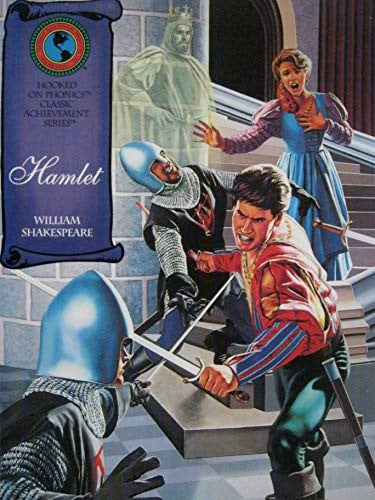
The final act unfolded with deadly precision. Claudius and Laertes conspired to eliminate Hamlet in a fencing match, with a poisoned rapier for Laertes and a poisoned cup of wine for Hamlet as a backup. During the duel, Gertrude, oblivious to the plot, drank from the poisoned cup meant for her son and collapsed. Laertes wounded Hamlet with the poisoned blade, but in the ensuing struggle, their rapiers were exchanged, and Hamlet, in turn, wounded Laertes. With his dying breath, Laertes confessed the treachery, implicating Claudius. Enraged, Hamlet finally struck down his uncle, forcing the poisoned wine upon him, before succumbing to the poison himself.
As the stage lay strewn with the dead, only Hamlet's loyal friend, Horatio, remained to recount the tragic tale to Fortinbras, the Prince of Norway, who arrived to claim the Danish throne, bringing a grim, yet decisive, end to the royal line of Denmark. The air was cleared of deceit, but at a devastating cost, leaving behind a kingdom forever scarred by revenge, madness, and the inescapable consequences of a world corrupted from within.