
How to Eat Fried Worms
by Unknown
7.5 / 10 49K ratings
- Language
- English
- Published
- 2006
- Publisher
- Listening Library
- Pages
- 116
- ISBN
- 9780307260666
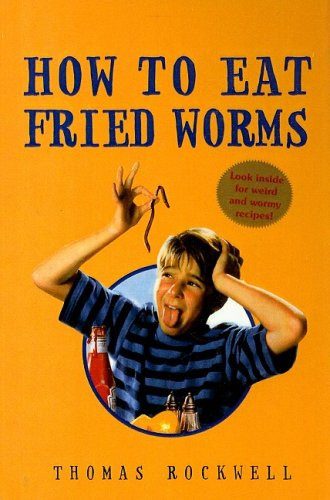
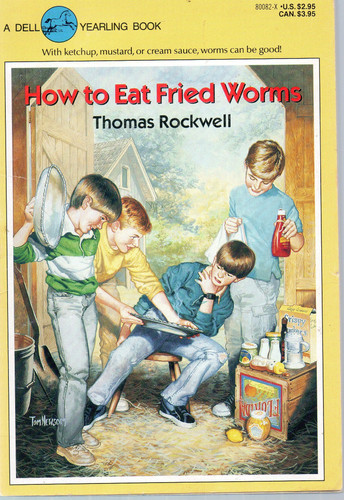
When Billy accepts a fifty-dollar bet, he commits to an unusual challenge: eating fifteen worms in fifteen days. The prize money could buy him the minibike he desperately wants, but the task proves more daunting than he imagined. As Billy attempts to make each worm palatable, from smothering them in ketchup to frying them, his opponent, Alan, and his friends devise tricks to ensure Billy loses.
This story of determination and unexpected culinary adventures unfolds with humor and suspense, leaving readers to wonder if Billy's resolve will last or if Alan's schemes will prove too much.
This story of determination and unexpected culinary adventures unfolds with humor and suspense, leaving readers to wonder if Billy's resolve will last or if Alan's schemes will prove too much.
Subjects
- Kindle Store
- Categories
- Kindle eBooks
- General
- Literature & Fiction
- Action & Adventure
- Children's Books
- Growing Up & Facts of Life
- Friendship, Social Skills & School Life
- CHILDREN'S FICTION
- Animals
- Poetry
- Family Life
- Friendship
- Humor
- Teen & Young Adult
- Fiction
- Juvenile Fiction
- Classics
- Media Tie-In
- Social Themes
- Adolescence & Coming of Age
- Juvenile Nonfiction
- Peer Pressure
- Values & Virtues
- Readers
- Humorous Stories
- BOYS_FICTION
- Intermediate
- Social Issues
- New Experience
- Beginner
- Insects, Spiders, etc
- Children's Audio - 4-8
- Cooking & Food
- Boys & Men
- Unabridged Audio - Fiction/General
- Adolescence
- Children's Audio - 9-12
Original edition
How to Eat Fried Worms (Swr 24)Originally published in 1900 Listening Library
Other editions (32)

Listen to the summary Narrated summary
The summer air hung heavy with the promise of adventure and the scent of freshly turned earth, but for Billy Forrester, it held the distinct aroma of a challenge. A daring wager had been struck: Billy, known for his adventurous spirit, had bet his friend Alan that he could eat fifteen worms in fifteen days. The stakes were high - fifty dollars, enough to buy the coveted minibike he had been dreaming of. Alan, with his friend Joe as his second, was confident Billy would fail, while Tom stood by Billy, ready to offer support and witness the audacious feat.
The rules were clear: the worms had to be common earthworms, specifically the long, thick night crawlers, and they could be prepared in any way Billy chose, smothered in any condiment imaginable to mask their slimy reality. The first worm, boiled and slathered in ketchup, was a monumental hurdle, a battle against his own gag reflex and the squirming image in his mind. Yet, with the prize of the minibike gleaming in his thoughts, Billy swallowed, the taste a jumble of condiments and the faint, earthy essence of his challenge.
As the days progressed, so did the ingenuity of both sides. Alan and Joe, desperate to win the fifty dollars, began to escalate their tactics. They presented worms hidden in elaborate dishes, hoping to catch Billy off guard or make the experience so repulsive he would give up. There were worms disguised in pancakes, mixed into mustard, and even served with horseradish, each concoction designed to test Billy's resolve. Billy, though, found his own methods of coping, learning to mask the taste and steel his nerves with each passing worm.
One night, a terrible stomach ache sent Billy into a panic, convinced he had poisoned himself with the worms. He confessed the bet to his parents, who, after a reassuring call to Poison Control, confirmed that eating worms was harmless. This revelation, coupled with his father's calm reassurance, surprisingly bolstered Billy's determination. He began to eat the subsequent worms with a newfound gusto, no longer plagued by fear, much to Alan and Joe's dismay.
Realizing their initial scare tactics had backfired, Alan and Joe devised a new plan. Knowing Billy's mother was away, they left strict instructions for her to supervise Billy's worm-eating, hoping her squeamishness would halt the process. Their scheme, however, spectacularly failed. Billy's mother, far from being repulsed, embraced the challenge with a culinary flair, researching European recipes and even creating a delicious worm-infused dessert, further solidifying Billy's progress.
The boys' rivalry intensified, leading to outright sabotage attempts. They glued worms together to make them impossible to swallow, and even attempted to lure Billy away to a Mets game, hoping he would miss a day and forfeit the bet. But Billy, ever vigilant and increasingly adept at discerning their tricks, managed to overcome each obstacle. There were fistfights, heated arguments, and even a forged doctor's note warning of paralysis and death from worm consumption, quickly exposed by Billy's father.
Finally, the day arrived for the fifteenth worm. Alan and Joe, in a last-ditch effort, presented what appeared to be the final worm, but Billy, having grown wise to their deceptions, recognized it as a fake made of beans. Despite their desperate attempts, Billy ultimately triumphed, consuming the genuine fifteenth worm and winning the bet. Alan was left to work off his debt, while Billy, with his hard-earned fifty dollars, purchased his minibike. Surprisingly, by the end of it all, Billy had developed an unexpected, almost fond, appreciation for the taste of worms.
The rules were clear: the worms had to be common earthworms, specifically the long, thick night crawlers, and they could be prepared in any way Billy chose, smothered in any condiment imaginable to mask their slimy reality. The first worm, boiled and slathered in ketchup, was a monumental hurdle, a battle against his own gag reflex and the squirming image in his mind. Yet, with the prize of the minibike gleaming in his thoughts, Billy swallowed, the taste a jumble of condiments and the faint, earthy essence of his challenge.
As the days progressed, so did the ingenuity of both sides. Alan and Joe, desperate to win the fifty dollars, began to escalate their tactics. They presented worms hidden in elaborate dishes, hoping to catch Billy off guard or make the experience so repulsive he would give up. There were worms disguised in pancakes, mixed into mustard, and even served with horseradish, each concoction designed to test Billy's resolve. Billy, though, found his own methods of coping, learning to mask the taste and steel his nerves with each passing worm.
One night, a terrible stomach ache sent Billy into a panic, convinced he had poisoned himself with the worms. He confessed the bet to his parents, who, after a reassuring call to Poison Control, confirmed that eating worms was harmless. This revelation, coupled with his father's calm reassurance, surprisingly bolstered Billy's determination. He began to eat the subsequent worms with a newfound gusto, no longer plagued by fear, much to Alan and Joe's dismay.
Realizing their initial scare tactics had backfired, Alan and Joe devised a new plan. Knowing Billy's mother was away, they left strict instructions for her to supervise Billy's worm-eating, hoping her squeamishness would halt the process. Their scheme, however, spectacularly failed. Billy's mother, far from being repulsed, embraced the challenge with a culinary flair, researching European recipes and even creating a delicious worm-infused dessert, further solidifying Billy's progress.
The boys' rivalry intensified, leading to outright sabotage attempts. They glued worms together to make them impossible to swallow, and even attempted to lure Billy away to a Mets game, hoping he would miss a day and forfeit the bet. But Billy, ever vigilant and increasingly adept at discerning their tricks, managed to overcome each obstacle. There were fistfights, heated arguments, and even a forged doctor's note warning of paralysis and death from worm consumption, quickly exposed by Billy's father.
Finally, the day arrived for the fifteenth worm. Alan and Joe, in a last-ditch effort, presented what appeared to be the final worm, but Billy, having grown wise to their deceptions, recognized it as a fake made of beans. Despite their desperate attempts, Billy ultimately triumphed, consuming the genuine fifteenth worm and winning the bet. Alan was left to work off his debt, while Billy, with his hard-earned fifty dollars, purchased his minibike. Surprisingly, by the end of it all, Billy had developed an unexpected, almost fond, appreciation for the taste of worms.
What other readers say
Liked
This book is widely celebrated by many readers for its unique premise and ability to captivate young audiences. Many reviewers fondly recall reading it in elementary school, highlighting its memorable and entertaining qualities. The story is praised for its "delightfully gross" humor and "gleefully childlike" tone, which resonates strongly with children, particularly boys, who find the antics hilarious and relatable. Readers appreciate the realistic portrayal of adolescent behavior, including themes of friendship, dares, and keeping one's word. The book's easy prose, short chapters, and vivid imagery are also noted as contributing to an engaging and quick read that holds up well as a read-aloud for middle grade students.
Disliked
However, several adult reviewers expressed that the book's charm often diminishes upon rereading. As adults, some find the narrative simplistic, lacking subplots or depth, and occasionally dragging in pace. Concerns were raised about certain aspects of the story, including themes of peer pressure, which some found problematic, and the depiction of gambling. A few reviewers also pointed out dated language and attitudes, such as an instance of a swear word that was later censored in newer editions, and "offhanded sexist remarks." While the gross-out factor is a positive for children, some adults found the details of worm-eating unsettling or even felt compassion for the worms. Additionally, some felt the characters were not ideal role models for children.
In short
In conclusion, this book remains a memorable and often beloved classic for its target audience of young readers, typically between the ages of eight and twelve. Its blend of gross-out humor, realistic childhood dares, and themes of friendship make it highly entertaining and engaging for kids, often sparking vivid imagination. While adults revisiting the story may find it simplistic or dated in parts, its core appeal as a fun, quick read about a peculiar bet endures. It is highly recommended for children who enjoy humorous and slightly outrageous stories about boyhood antics and challenges.
No reviews yet. Be the first.