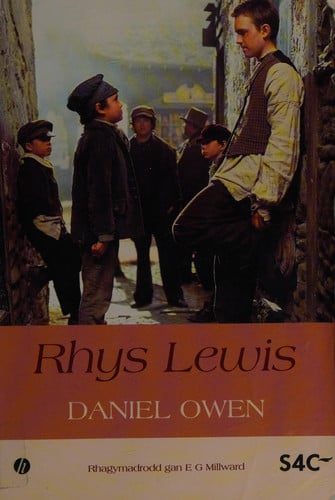
Step into 19th-century North Wales with the compelling autobiography of Rhys Lewis, a foundational work in Welsh literature that chronicles a life shaped by faith, hardship, and the shifting tides of a rapidly industrializing society. Born into poverty in the town of Mold, Rhys navigates a world where the Calvinistic Methodist chapel stands at the heart of the community, yet external influences and personal struggles threaten to pull him from his devout upbringing.
As Rhys recounts his journey from a young boy with an absent father and a deeply religious mother, readers witness his secret aspiration to preach, his encounters with temptation, and the dark family secrets that cast a long shadow over his path. This narrative offers a vivid portrayal of Welsh life, exploring the tension between rigid religious morality and the complexities of human nature, all while leading Rhys towards a destiny he must confront to truly fulfill his calling.
The life of Rhys Lewis unfolds from the quiet, devout corners of a humble home in Mold, a small Flintshire town where the echoes of evangelical faith shaped every waking moment. The narrative begins with the youthful Rhys, the younger son in a family touched by poverty and shadowed by an absent father. His mother, Mari Lewis, a pillar of Calvinistic Methodist piety, strove to raise her two boys in the tenets of her faith, while his older brother, Bob, toiled as a coal miner, his hard-earned wages often siphoned by their violent, unwelcome Uncle James, a poacher whose presence brought only strife.
Hardship was a constant companion. Bob, despite his arduous work in the mines, possessed a keen desire for self-improvement, even teaching himself English. His clashes, particularly with Rhys's schoolteacher, underscored the family's precarious position. A devastating mine flood claimed not only livelihoods but also left Rhys and his mother destitute. Yet, in their darkest hour, salvation came in the form of Thomas Bartley, a simple, generous cobbler and recent convert, who offered them a home and protection from the menacing Uncle James. Soon after, Rhys's mother passed, leaving him to the care of Abel Hughes, a respected chapel elder and draper, to whom Rhys was apprenticed.
As adolescence dawned, the strictures of his upbringing began to chafe. Though a secret desire to preach flickered within him, drawn by the esteemed status of ministers in Welsh society, Rhys found himself drifting from the fervent faith his mother had instilled. His closest companion, Wil Bryan, a free spirit, led him down paths further and further from the chapel's embrace. Their youthful escapades, filled with the boisterous energy of burgeoning manhood, threatened to unravel the moral fabric Mari had painstakingly woven.
The turning point arrived abruptly, a stark and terrifying incident with Wil Bryan that brought Rhys face to face with his own moral failings. In that moment of near-tragedy, a profound realization struck him: despite his upbringing, he had never truly embraced the Christian faith. Overwhelmed by this revelation, he confessed his spiritual turmoil to Abel Hughes, expecting rebuke. Instead, Abel met him with unexpected kindness and wise counsel, guiding him towards a genuine conversion. The fog lifted, and Rhys, now a zealous member of the chapel, felt the true call to the ministry settle upon his soul.
With a newfound purpose, Rhys applied himself diligently. After Abel Hughes's passing, Rhys meticulously managed his business, demonstrating unwavering honesty despite immense temptations, a testament to his transformed character. This integrity, coupled with the support of Abel's elderly sister and Thomas Bartley, enabled him to attend college. He excelled, overcoming the disadvantages of his humble beginnings. Yet, when the call came to serve as minister for the very Calvinistic Methodist chapel of his youth, a deep-seated shame resurfaced. The shadow of his Uncle James's unsavory reputation and the lingering mystery of his absent father made him hesitant to accept.
Driven by a need for closure, Rhys embarked on a poignant journey to Birmingham, hoping to glean answers about his father from Uncle James before the latter's death. The eventual encounter with his father proved deeply traumatic, a wound that reopened old sorrows. Yet, paradoxically, this painful reunion provided a crucial catharsis, clearing the path for Rhys to finally embrace his divine calling.
Rhys Lewis, now the minister of Bethel, embarked on a brief but impactful career, dedicating himself to his flock amidst a rapidly changing society grappling with industrialization and evolving spiritual landscapes. He navigated the challenges of maintaining evangelical Christian faith in the face of external influences, reflecting on the superficial adoption of Christianity by mainstream culture. His ministry, though cut short by a wasting disease - likely tuberculosis - was marked by unwavering devotion. The entirety of this story, rich with the vibrant tapestry of 19th-century Welsh life, humor, and profound spiritual introspection, is presented as Rhys's own autobiography, penned during his forced retirement, a final testament to a life lived in faith and struggle.