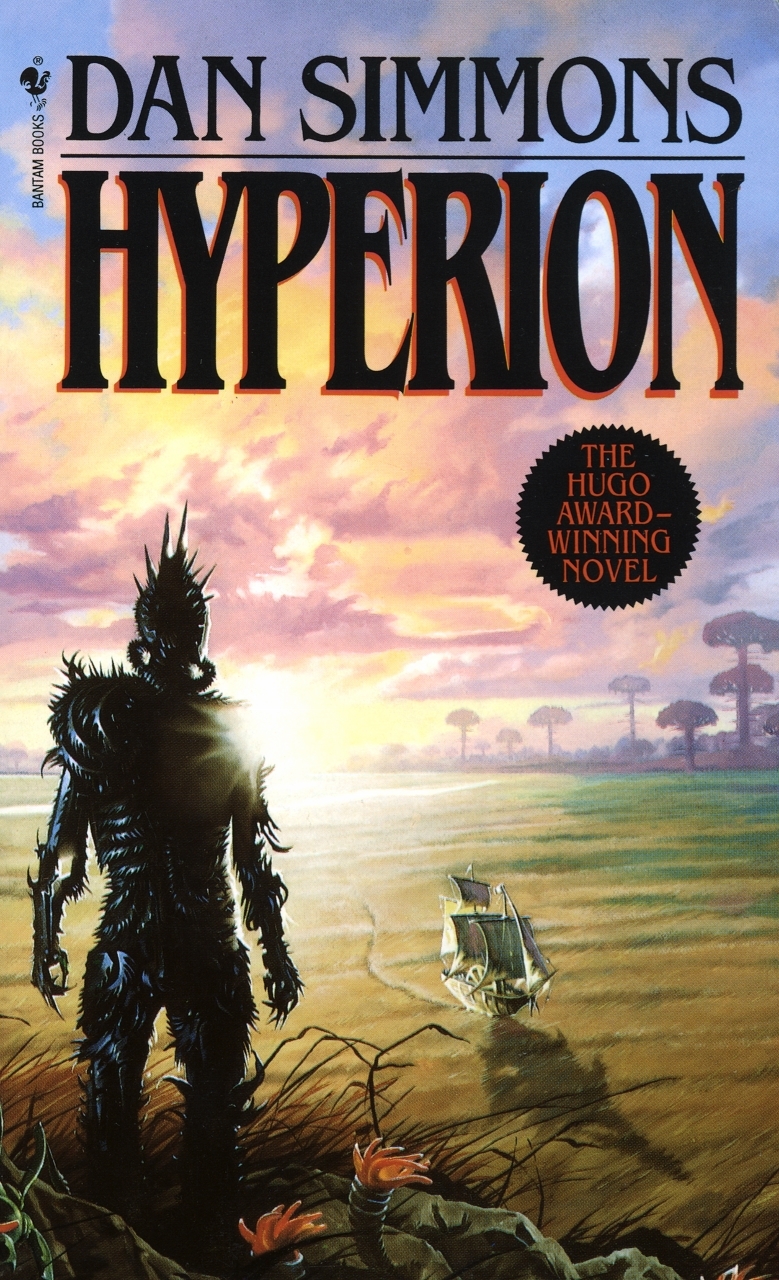
Hypérion 2
by Dan Simmons
- First published 1971
- 296 pages
- French
- Classic
On the world called Hyperion, beyond the reach of galactic law, a creature known as the Shrike awaits. Some worship it, some fear it, and others have vowed to destroy it. In the Valley of the Time Tombs, colossal structures that move backward through time, the Shrike waits for them all. With the galaxy on the verge of Armageddon, seven pilgrims embark on a final voyage to Hyperion, each seeking answers to the unsolved riddles of their lives. Each carries a desperate hope and a terrible secret, and one may hold the fate of humanity in their hands.
Structured as a series of interconnected tales, the novel follows the pilgrims as they share their stories, revealing their reasons for undertaking the dangerous journey. Their individual narratives—spanning genres from horror and mystery to romance and war—weave together to form a complex tapestry that explores themes of love, sacrifice, faith, and the ethical dilemmas of advanced technology. The pilgrims' pasts are all mysteriously linked to the Shrike, and their collective journey to the Time Tombs will unravel a cosmic struggle for power and the future of consciousness.
- Genres
- Fiction › Speculative fiction › Science fiction › Space operaFiction › Speculative fiction › Fantasy › Epic fantasyFiction › Speculative fiction › Horror & supernaturalFiction › RomanceFiction › Action & adventure
- Themes
- Science & technology › AliensReligion & faith › ChristianityMorality › Good & evilDeath & grief › AfterlifeScience & technology › Space
- Mood
- Adventurous
- Tropes
- Time travel
- Where and when
- United States
What readers say
4.28
321K ratings across the web 8 in 10 readers loved it, 1 didn't like it
Hyperion is widely celebrated as an exceptionally imaginative and magnificent classic within the science fiction genre. Reviewers frequently laud its unique narrative structure, often likened to The Canterbury Tales in space, which presents a series of interconnected stories told by diverse pilgrims. This approach is praised for its ability to reveal important insights into the universe and its central mysteries, while showcasing the author's remarkable versatility in writing style and tone across different tales. Many highlight the profound philosophical and emotional depth found in individual narratives, particularly noting a heartbreaking exploration of family and parenthood, and a terrifying and impactful story of faith. The novel is acclaimed for packing an astonishing number of original sci-fi ideas into its pages, with lush, poetic prose that offers strong characterization and subtle, yet expansive, world-building that feels both futuristic and familiar. Its prescience in envisioning future technologies and societal structures is also a common point of admiration.
Despite its many strengths, some readers found the novel's fragmented narrative structure to be a mixed experience, leading to varying levels of engagement with certain pilgrim tales and occasionally hindering deeper emotional connections with characters. A recurring criticism centers on the book's abrupt ending, which functions as a significant cliffhanger, leaving many overarching plotlines unresolved and frustrating those who expected a more conclusive narrative arc. Initial pacing was also cited as a challenge by some, who struggled to immerse themselves in the complex world and its concepts from the outset. For a segment of readers, the dense prose, extensive literary allusions, and emphasis on conceptual world-building over straightforward plot progression made the book feel overwhelming or overly academic. Additionally, some reviewers expressed dissatisfaction with aspects of character portrayal, including one female character's perceived limited role, and a few found elements of the dialogue flat or certain narrative choices indulgent.
Overall, Hyperion stands as a highly regarded classic and a significant achievement in science fiction, frequently appearing on "best of" lists for its ambition and originality. While its open-ended conclusion, intricate conceptual frameworks, and multifaceted narrative style may not appeal to every reader, its exceptional prose, imaginative scope, and profound thematic explorations are widely lauded. This book is strongly recommended for dedicated science fiction enthusiasts, readers who appreciate literary depth and philosophical inquiry, and those willing to engage with a challenging yet ultimately rewarding story that serves as a grand setup for a larger epic. It is particularly suited for those who enjoy a thought-provoking, gritty, and meticulously crafted universe, even if it sometimes leaves a sense of unsettling gloom rather than definitive resolution.
Reviews
No reviews yet. Be the first.
Details & editions
- This edition
- Pocket, 2000
- ISBN
- 9782266064774
- Language
- French
Original edition Asterix the Legionary Originally published in 1971 · English · Brockhampton Press, Leicester