
Add to library
You don't have any lists yet. Create one in My Library.
Go to My LibraryAdd to library
You don't have any lists yet. Create one in My Library.
Go to My LibraryI Am Malala How One Girl Stood Up for Education and Changed the World
- Language
- English
- Published in
- Publisher
- Little, Brown
- Pages
- 240
- ISBN
- 9781484474396
Malala's miraculous recovery has taken her on an extraordinary journey from a remote valley in northern Pakistan to the halls of the United Nations in New York. This is the remarkable story of a family uprooted by global terrorism, of the fight for girls' education, and of one girl's courage. It serves as a testament to the idea that a single voice can inspire change in the world, demonstrating the powerful truth that even in the face of immense adversity, the determination to create a better future cannot be extinguished.
Subjects
Original edition details
Other editions (36)

I Am Malala The Girl Who Stood Up for Education and Was Shot by the Taliban
2015 • Little, Brown
English

I Am Malala The Girl Who Stood Up for Education and Was Shot by the Taliban
2013 • Little, Brown
English

I Am Malala
2014 • Hachette
English

I Am Malala
2013 • Hachette
English

I Am Malala How One Girl Stood Up for Education and Changed the World
2015 • Hachette UK Distribution - Iwuk
English
Other editions
I Am Malala The Girl Who Stood Up for Education and Was Shot by the Taliban
2015 • Little, Brown
English
I Am Malala The Girl Who Stood Up for Education and Was Shot by the Taliban
2013 • Little, Brown
English
I Am Malala
2014 • Hachette
English
I Am Malala
2013 • Hachette
English
I Am Malala How One Girl Stood Up for Education and Changed the World
2015 • Hachette UK Distribution - Iwuk
English

I Am Malala The Girl who Stood Up for Education and was Shot by the Taliban
2014 • Phoenix
English

I Am Malala How One Girl Stood Up for Education and Changed the World (Young Readers Edition)
2015 • Little, Brown Books for Young Readers
English

I Am Malala The Girl Who Stood Up for Education and was Shot by the Taliban
2014 • Orion
English
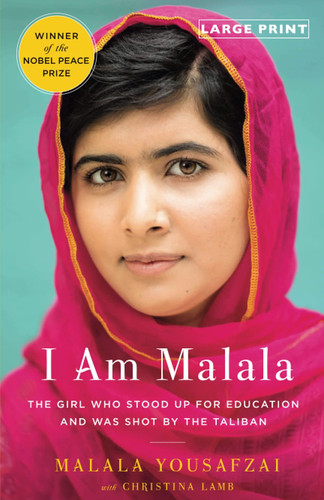
I Am Malala (Large Print)
2013 • Little, Brown
English

Ich bin Malala das Mädchen, das die Taliban erschießen wollten, weil es für das Recht auf Bildung kämpft
2013 • Droemer
German
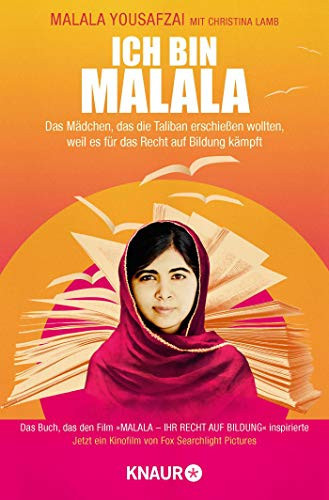
Ich bin Malala: Das Mädchen, das die Taliban erschießen wollten, weil es für das Recht auf Bildung kämpft
2015 • Knaur Taschenbuch
German

Moi, Malala je lutte pour l'éducation et je résiste aux talibans
2014 • Librairie générale française
French

Я-Малала девочка, которая боролась за право на образование и была ранена Талибами
2014 • Izdatel`skaya Gruppa "Azbuka-Attikus"
Russian

I Am Malala: The Girl Who Stood Up for Education and Was Shot by the Taliban
2015 • Little, Brown & Company
English
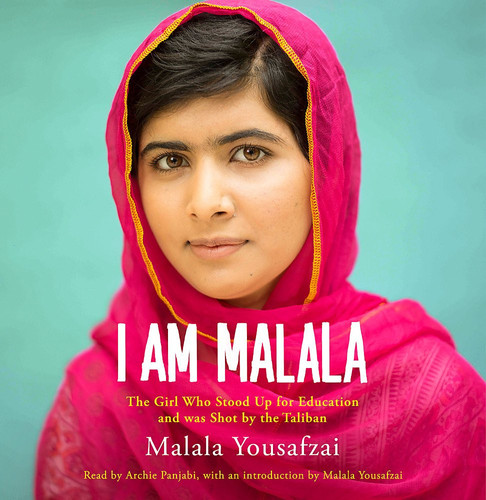
I Am Malala: The Girl Who Stood Up for Education and was Shot by the Taliban
2013 • GARDNERS VI BOOKS AMS006
English

I Am Malala The Girl who Stood Up for Education and was Shot by the Taliban
2013 • Weidenfeld & Nicolson
English
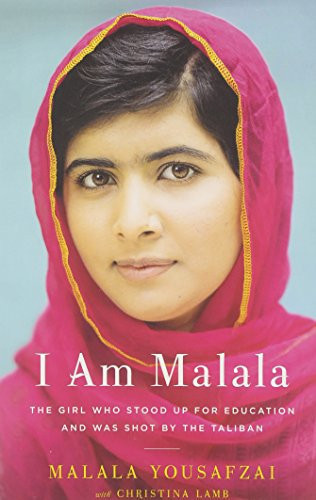
I Am Malala The Girl who Stood Up for Education and was Shot by the Taliban
2013 • Little, Brown,
English

I Am Malala The Girl Who Stood Up for Education and Was Shot by the Taliban
2023 • Orion Publishing Group, Limited
English

I Am Malala The Girl who Stood Up for Education and was Shot by the Taliban
2013 • Weidenfeld & Nicolson
English

わたしはマララ
2013 • 学研パブリッシング
Japanese

I Am Malala: The Girl Who Stood Up for Education and Was Shot by the Taliban
2013 • Little, Brown & Company
English

I Am Malala The Girl Who Stood Up for Education and Was Shot by the Taliban
2014 • Little Brown
English
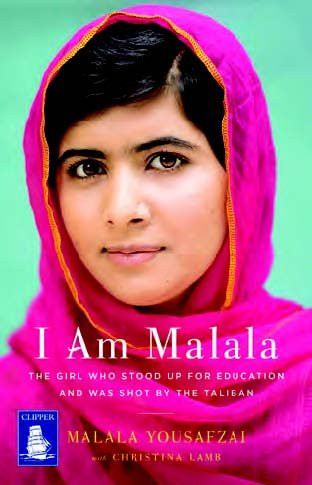
I Am Malala The Girl who Stood Up for Education and was Shot by the Taliban
2014 • W. F. Howes Limited
English

I Am Malala How One Girl Stood Up for Education and Changed the World
2017 • Thorndike Press
English

I Am Malala (Thai Language)
2014 • Matichon
Thai
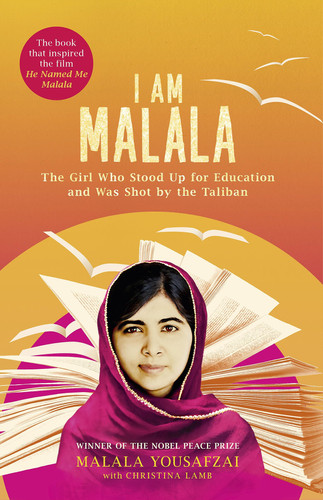
I Am Malala The Girl who Stood Up for Education and was Shot by the Taliban
2015 • Weidenfeld & Nicolson
English

Yo soy Malala la joven que defendió el derecho a la educación y fue tiroteada por los talibanes
2013 • Alianza Editorial
Spanish
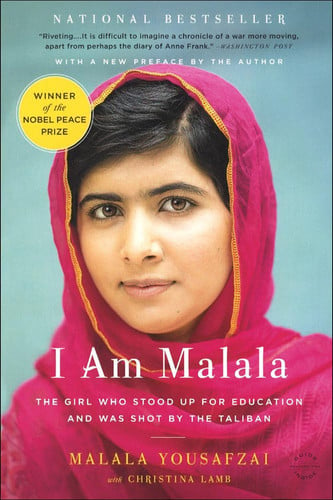
I Am Malala How One Girl Stood Up for Education and Changed the World
2016 • Little, Brown
English

我是馬拉拉 一位因爭取教育而被槍殺的女孩
2013 • 愛米粒出版
Chinese
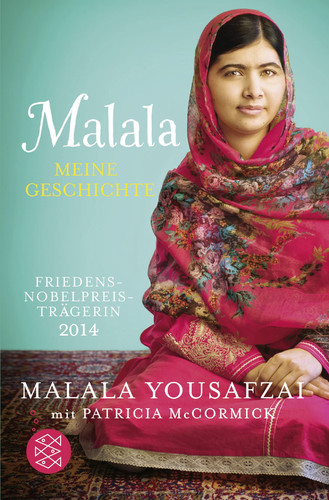
Malala meine Geschichte
2022 • Fischer Taschenbuch
German

Eu sou Malala a história da garota que defendeu o direito à educação e foi baleada pelo Talibã
2013 • Companhia das Letras
Portuguese

I Am Malala The Girl Who Stood Up for Education and Was Shot by the Taliban
2017 • CreateSpace Independent Publishing Platform
English

I Am Malala: The Girl Who Stood up for Education and Was Shot by the Taliban
2013 • Little Brown & Company
English

I Am Malala The Girl Who Stood up for Education and Was Shot by the Taliban
2014 • Little, Brown Books for Young Readers
English

マララ 教育のために立ち上がり、世界を変えた少女
2014 • 岩崎書店
Japanese
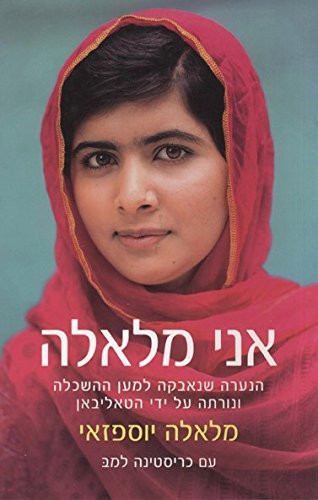
Ani Malala
2014 • Kinneret / Zmora-Bitan
English
I was born in a land where rifles are fired to celebrate the birth of a son, while daughters are hidden behind a curtain. But my father, Ziauddin, was different. When I was born, he looked into my eyes and fell in love. He added my name to the family tree, a document stretching back 300 years that contained only the names of men. Our home was in the Swat Valley, a heavenly kingdom of mountains and waterfalls that people called the Switzerland of the East. It was a place of wild flowers and fruit orchards, of ancient Buddhist statues carved into the rock, smiling over our valley. I grew up in the school my father founded, the Khushal School. It was my playground, and before I could even talk, I would toddle into the classrooms and pretend to teach. My father always told me, “Malala will be free as a bird.”
My father's own freedom had been a struggle. Born with a stutter, the son of an impatient, thundering imam, he found his voice by entering a public speaking competition, pouring all his passion into the words his father wrote for him. That first victory gave him the courage to follow his own path. He dreamed of an education that was not about learning by rote, but about thinking for oneself. He built his school from nothing, facing down corrupt officials and crushing debt. He and my mother, who could not read or write, created a home filled with love, poetry, and endless political discussions. They were a love match in a world of arranged marriages, and I would sit at my father's knee, listening as he and his friends debated the fate of our country, a nation lurching between military dictatorships and fragile democracy.
I was ten when the Taliban came to our valley. They arrived like vampires in the night, men with long, straggly hair and Kalashnikovs. Their leader, Maulana Fazlullah, started an illegal radio station, Mullah FM, that soon had everyone under its spell. At first, he sounded like a reformer, advising people on good habits and the proper way to pray. My own mother was impressed. But his broadcasts soon turned dark. Music was declared sinful, then dancing, then movies. He thundered that these acts had caused the great earthquake and that God's wrath would return if we did not mend our ways. Huge bonfires of televisions, CDs, and DVDs filled the streets with black smoke. His words were aimed especially at women, ordering us to stay in purdah, to remain inside.
The valley became a place of fear. Fazlullah's men patrolled the streets, looking for anyone who disobeyed his edicts. They began to target girls' education, congratulating girls by name on the radio for dropping out of school. “Miss So-and-so has stopped going to school and will go to heaven,” he would say. Then they started blowing up the schools themselves, usually at night, their explosions echoing through the mountains. Soon, more than four hundred schools were destroyed. The fear was a thick fog that settled over our town. Bodies began appearing in the main square, left overnight as a warning. We called it the Bloody Square. Still, my father refused to be silent. “If we believe in something greater than our lives,” he told me, “then our voices will only multiply even if we are dead.”
I knew he was right. If one man could destroy everything, why couldn't one girl change it? When a BBC correspondent asked my father to find a schoolgirl to write a diary about life under the Taliban, I volunteered. I wrote under the name Gul Makai, or “cornflower,” telling the world about the dream I had of military helicopters and the Taliban, and the fear I felt walking to school. I wrote about how we had to wear plain clothes instead of our uniforms and hide our books under our shawls. My words traveled far beyond Swat, and I began giving interviews, speaking out for the rights of all girls to an education. “They can stop us going to school,” I said, “but they can't stop us from learning.”
The threats grew more direct. A letter was taped to our school gate. My father received warnings. His friend and fellow activist, Zahid Khan, was shot in the face on his way to prayers. I began checking the locks on our doors and windows every night before bed, praying for protection. I worried a terrorist would jump out and shoot me on the steps leading to our house. I wondered what I would do. It would be better, I thought, to plead with him. “OK, shoot me, but first listen to me. What you are doing is wrong. I'm not against you personally, I just want every girl to go to school.”
After the shooting, I woke up in a green room with bright lights and no windows. I was in Birmingham, England. A tube in my neck kept me from speaking, and my vision was a blur of double images. I was terrified. Where was I? Where was my father? I spelled out his name on an alphabet board, my hand shaking. The doctors told me he was safe in Pakistan, but I didn't believe them. I was sure he was dead, and I was alone. For ten days, I drifted in and out of consciousness, convinced I had to find work to pay for my treatment and for a phone call home.
When my family finally arrived, I wept with a relief so profound it felt as if my heart might burst. But when I looked at them, I saw their shock. My father, who had always praised my “heavenly smile,” now saw a face that could not form one. The left side was paralyzed, my eye wouldn't close, and my hair had been shaved away. “The Taliban are very cruel,” he cried to my mother. “They have snatched her smile.” It would take months of surgery and rehabilitation - to repair the facial nerve, to fit a titanium plate where my skull had been removed, to install a cochlear implant so I could hear again - before I began to feel like myself.
I have been given a second life, and I know it was for a reason. While I was in the hospital, the world had risen up. Thousands of letters and cards arrived, addressed simply to “The Girl Shot in the Head, Birmingham.” The UN declared my birthday, July 12, as Malala Day. The Taliban made my voice louder. I don't want to be known as the girl who was shot, but as the girl who fought for education. Today, I live in a quiet house in England, a place of unimaginable safety, but I long for the mountains and streams of my valley. I know I will return one day. Until then, I will continue my fight. We have been spared, I believe, to use our lives for helping people. As I said at the United Nations, “Let us pick up our books and our pens. They are our most powerful weapons. One child, one teacher, one book and one pen can change the world.” My world has changed, but I have not. I am Malala.
No discussions yet for this book.
Delete Discussion
Are you sure you want to delete this discussion? This action cannot be undone.
Rating Sources
The book is widely praised for its inspiring and courageous narrative, offering a powerful account of a young girl's fight for education and human rights. Many readers found it deeply moving and a significant reminder of the freedoms often taken for granted, such as speech, religion, and access to education. Reviewers highlighted Malala's tenacity and her ability to give a voice to silenced children, particularly girls. The book is also commended for providing valuable insights into Pashtun culture, the history of Pakistan, and the realities of life under challenging political circumstances, making it an informative read for those interested in current events and women's rights. Malala's personal reflections, especially about her family and her cherished home in the Swat Valley, resonated with many, creating a strong connection with her story.
Despite the compelling subject matter, some reviewers noted a disjointed narrative structure, feeling that the book struggled to balance Malala's personal story with extensive historical and political context. This often led to sections described as "infodumping," where the focus shifted away from Malala's voice and became overly detailed about Pakistani politics, which some readers found tedious or felt diminished the memoir's emotional impact. Concerns were also raised about the co-author's influence, with some questioning the authenticity of Malala's voice in certain parts or feeling that the historical accounts presented a biased perspective. A few critics expressed discomfort with what they perceived as an excessive amount of self-praise or a tendency to "mythologize" Malala, rather than focusing purely on her cause. Additionally, some readers from the region felt the book might misrepresent Pakistan, painting a generalized negative image without fully acknowledging the country's diversity or progress.
Ultimately, the reviews indicate that this book is a significant and important read, even with its acknowledged structural and stylistic imperfections. It is highly recommended for anyone interested in women's rights, the global struggle for education, or gaining a deeper understanding of life in the Middle East during turbulent times. Readers who appreciate inspiring true stories of courage and advocacy, and those seeking an informative account that challenges preconceived notions, will likely find it valuable. While it may not appeal to those looking for a purely emotional or deeply introspective memoir, its powerful message and the unwavering spirit of its subject make it a compelling choice for a broad audience, including young adults seeking to understand the importance of their own educational opportunities.
No reviews yet. Be the first to review this book!
Delete Review
Are you sure you want to delete this review? This action cannot be undone.


