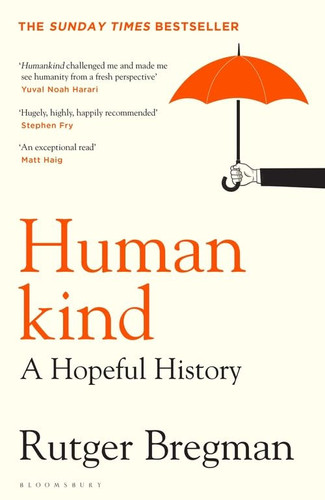
From the dawn of our existence, a pervasive myth has shadowed our understanding of ourselves: that beneath a thin veneer of civilization, humanity is inherently selfish, brutal, and driven by self-interest. This deeply ingrained belief, echoed in philosophical treatises and popular culture alike, has shaped our societies, our institutions, and even how we raise our children. But what if this belief is fundamentally flawed? What if, instead, we are wired for kindness, cooperation, and trust?
Consider the widespread tale of Easter Island, often cited as a cautionary fable of ecological collapse brought on by human greed. The narrative paints a picture of warring tribes depleting their resources until only ruin remained. Yet, more recent archaeological findings and analyses suggest a different story, one of resilience and adaptation, where the islanders likely navigated environmental shifts with ingenuity rather than succumbing to an inevitable, violent demise. The prevailing, darker version, it seems, serves to reinforce a predetermined view of our species.
Or recall the chilling premise of William Golding's *Lord of the Flies*, a staple in many school curricula, depicting schoolboys marooned on an island who quickly descend into savagery. This fictional account has long been held up as a mirror to our true nature. However, a real-life counterpoint exists: the astonishing story of six Tongan boys, shipwrecked on a deserted island in the 1960s. Far from turning on each other, they established a cooperative society, rationing food, creating a garden, and even devising a schedule for duties and conflict resolution, surviving for over a year before their rescue. Their tale, largely untold, offers a powerful testament to our innate capacity for mutual aid, even in the direst circumstances.
The very foundations of our understanding of human behavior, often rooted in infamous psychological experiments, demand a closer look. The Stanford Prison Experiment and Milgram's shock experiments, for instance, have long been presented as irrefutable proof of our susceptibility to cruelty under authority or within certain roles. Yet, upon closer examination, these studies reveal significant methodological flaws and biases, suggesting their conclusions may have been more a product of the experimenters' expectations and design than an unvarnished truth about human nature. The idea that we are easily manipulated into evil, it appears, is a narrative we have too readily embraced.
Our history, too, is often selectively interpreted to confirm our darker self-image. The agricultural revolution, for all its advancements, introduced hierarchical structures and the concept of private property, gradually eroding the egalitarian and cooperative norms of our hunter-gatherer ancestors. Before these societal shifts, humans largely lived in groups characterized by a natural trust and friendliness, seeking peaceful solutions to disputes. The horrors of modern warfare and atrocities like the Holocaust, while undeniable, are not evidence of inherent evil, but rather the result of specific, often engineered, conditions that exploit our capacity for empathy – a dark empathy that can bind us fiercely to our immediate group, sometimes blinding us to the suffering of outsiders. Soldiers, even in the heat of battle, often struggle to kill, demonstrating a profound aversion to violence.
This optimistic perspective on human nature carries profound implications for how we structure our societies. If we believe people are fundamentally lazy, we resist measures like universal basic income. If we believe they are selfish, we build systems of surveillance and control. But what if we dared to believe in our inherent decency? Imagine prisons designed for rehabilitation, where trust and responsibility are fostered, leading to dramatically reduced recidivism. Envision schools where curiosity and collaboration thrive, rather than rote memorization and competition.
To embrace this hopeful history is to recognize that cynicism is not realism, but often a self-fulfilling prophecy. When we expect the worst from others, we often bring it out. Conversely, when we approach the world with an understanding of our deep-seated inclination towards goodness, we unlock the potential for more meaningful relationships, greater societal well-being, and a future built on cooperation rather than conflict. It is a call to shed the old, worn narratives and step into a more accurate, and ultimately more empowering, understanding of what it truly means to be human.