Add to library
You don't have any lists yet. Create one in My Library.
Go to My LibraryAdd to library
You don't have any lists yet. Create one in My Library.
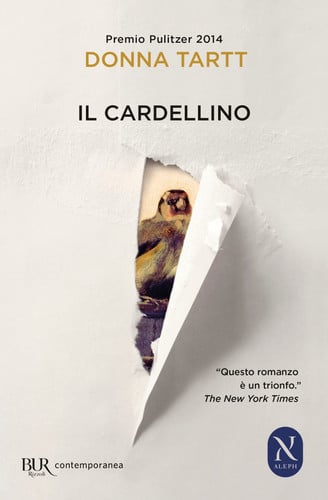
Go to My LibraryIl cardellino
- Language
- Italian
- Published in
- Publisher
- Rizzoli
- Pages
- 893
- ISBN
- 9788817090933
As Theo navigates the ensuing years, the stolen masterpiece remains his most closely guarded secret and his greatest burden. This story charts his journey through grief and his attempts at self-invention, exploring the powerful hold of obsession and the unpredictable ways a single object can define a person's fate. It is an examination of loss, survival, and the profound, mysterious power of art to both anchor and endanger a life.
Subjects
Original edition details
Other editions (35)

The Goldfinch
2013 • Hachette
English

The Goldfinch A Novel (Pulitzer Prize for Fiction)
2015 • Little, Brown
English

The Goldfinch: A Novel (Pulitzer Prize for Fiction)
2013 • Little, Brown and Company
English

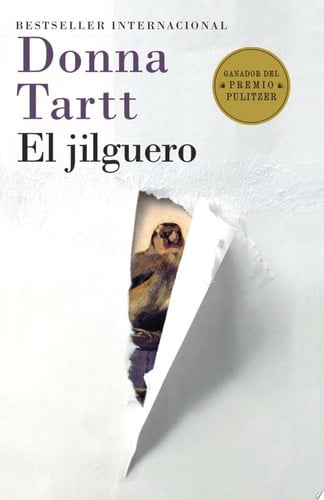
El jilguero
2017 • DEBOLSILLO
Spanish
El jilguero (Spanish Edition)
2014 • Vintage Espanol
Spanish
Other editions
The Goldfinch
2013 • Hachette
English
The Goldfinch A Novel (Pulitzer Prize for Fiction)
2015 • Little, Brown
English
The Goldfinch: A Novel (Pulitzer Prize for Fiction)
2013 • Little, Brown and Company
English
El jilguero
2017 • DEBOLSILLO
Spanish
El jilguero (Spanish Edition)
2014 • Vintage Espanol
Spanish

The Goldfinch A Novel (Pulitzer Prize for Fiction)
2016 • Little, Brown
English
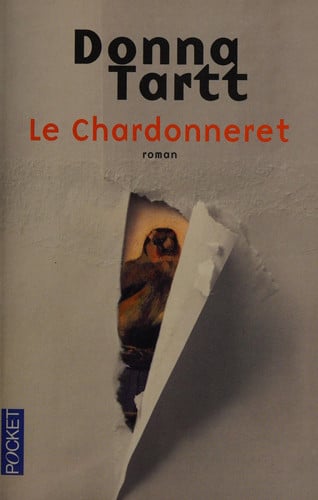
Le chardonneret
2015 • Feux croisés
French
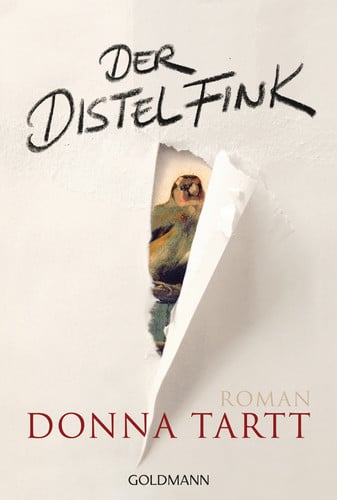
Der Distelfink: Roman
2015 • Goldmann Verlag
German
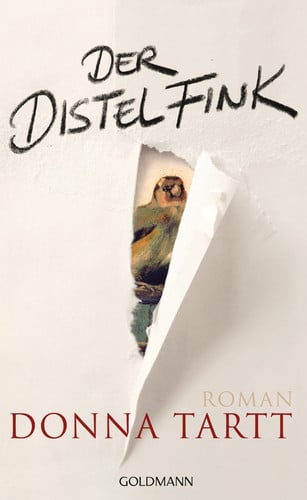
Der Distelfink: Roman
2014 • Goldmann Verlag
German
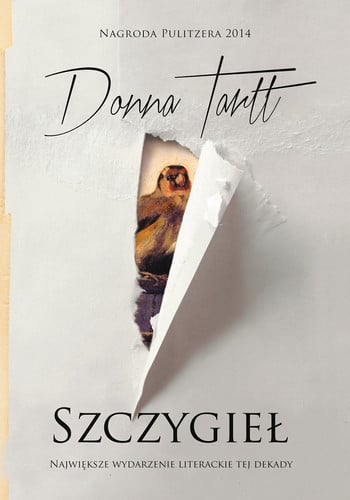
Szczygiel
2015 • Znak
Polish

Goldfinch
2013 • Little, Brown Book Group Limited
English
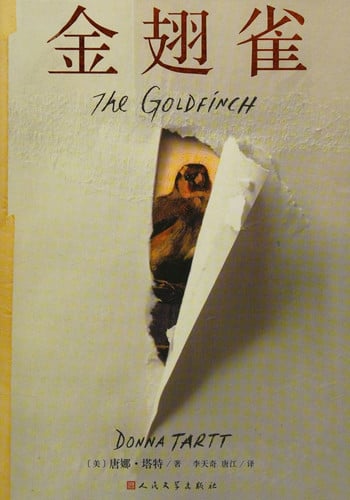
The Goldfinch (Chinese Edition)
2016 • People's Literature Publishing House
Chinese
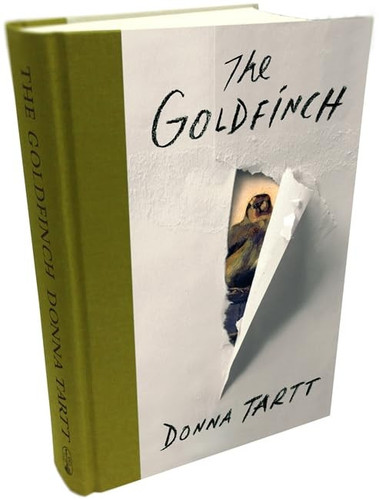
The Goldfinch
2013 • Little, Brown
English
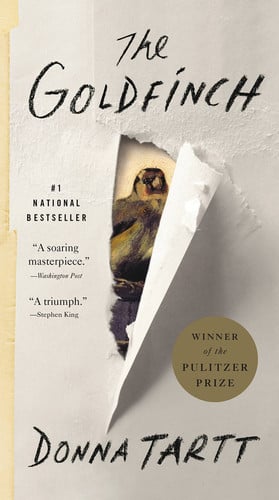
The Goldfinch: A Novel (Pulitzer Prize for Fiction)
2013 • Little, Brown and Company
English
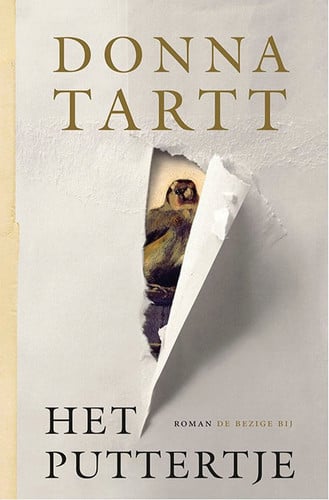
Het puttertje
2013 • De Bezige Bij Amsterdam
Dutch
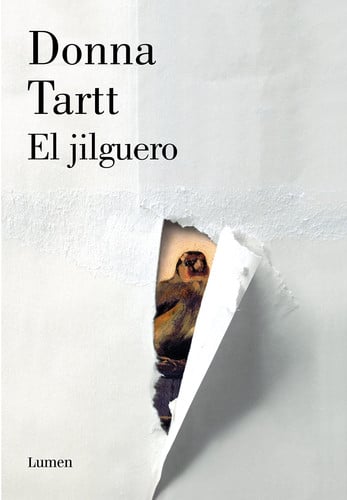
El jilguero (Spanish Edition)
2014 • LUMEN
Spanish
Het puttertje
2013 • De Bezige Bij
Dutch

Saka Kusu
2016 • Pegasus
Turkish
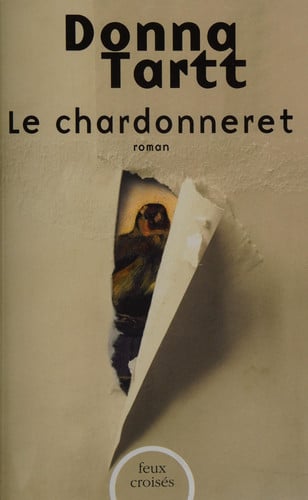
Le chardonneret
2014 • Plon
French
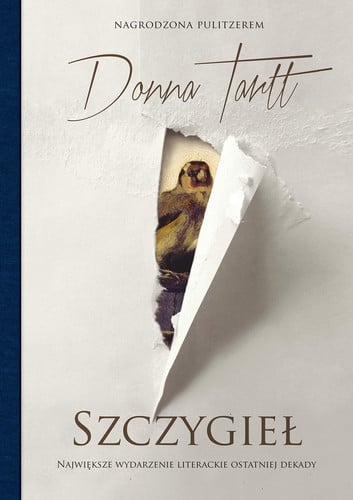
Szczygiel, wydanie 3
2019 • Znak
Polish

Щегол роман
2015 • CORPUS
Russian
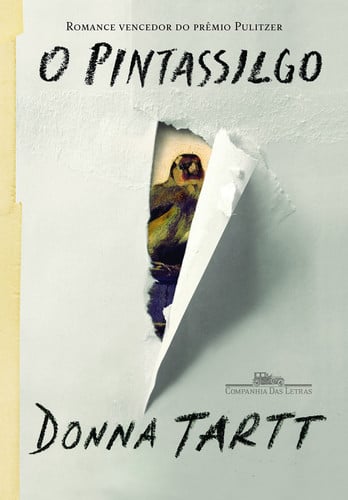
O pintassilgo
2014 • Companhia das Letras
Portuguese
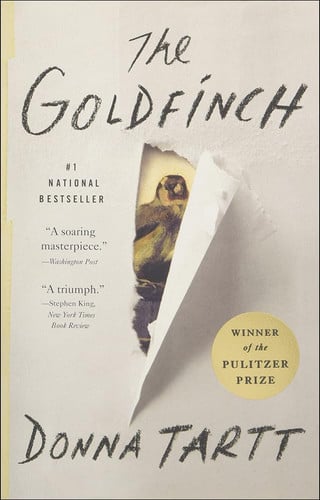
The Goldfinch
2015 • Turtleback Books
English
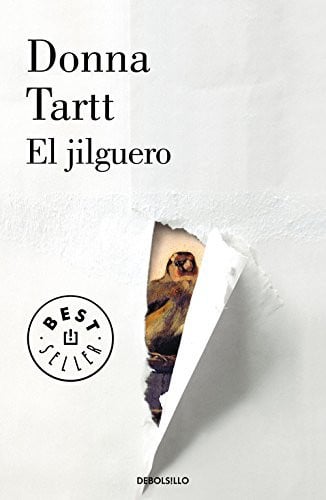
El jilguero (Spanish Edition)
2015 • DEBOLSILLO
Spanish
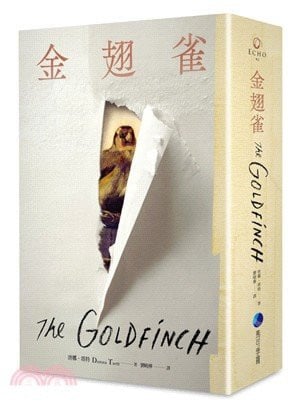
金翅雀
2015 • 馬可孛羅
Chinese

The Goldfinch - 10th Anniversary Edition
2023 • Little, Brown Book Group Limited
English

The Goldfinch A Novel (Pulitzer Prize for Fiction)
2014 • Little Brown
English
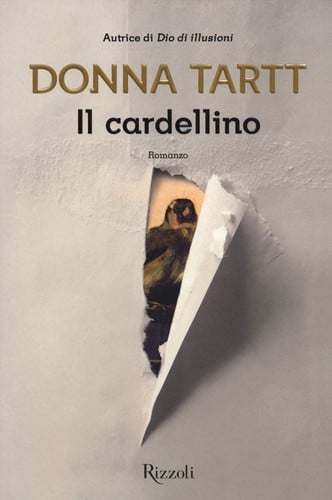
Il cardellino
2014 • Rizzoli
French
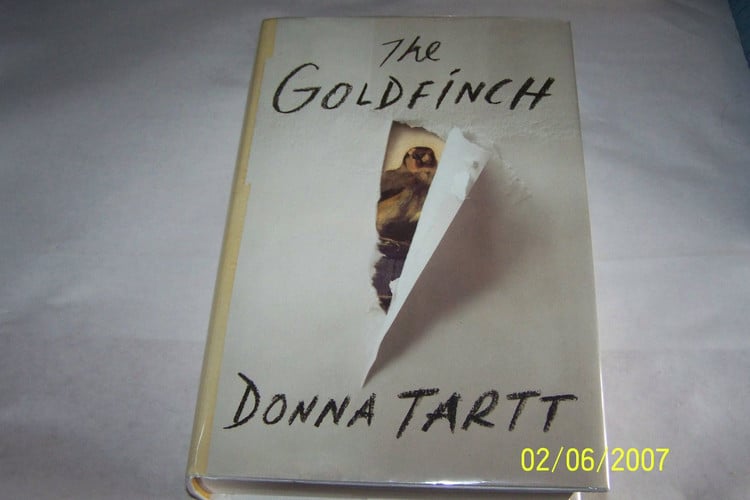
The Goldfinch
2013 • Little, Brown
English

The Goldfinch
2014 • Abacus
English
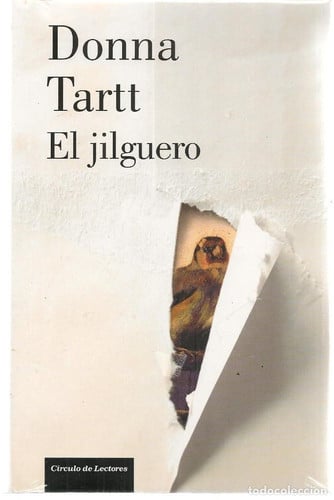
El jilguero
2014 • Círculo de Lectores.
Spanish
ゴールドフィンチ 2
2016 • Kawadeshobōshinsha
Japanese
ゴールドフィンチ 4
2016 • Kawadeshobōshinsha
Japanese
ゴールドフィンチ 3
2016 • Kawadeshobōshinsha
Japanese

Goldfinch
2013 • Little Brown & Company
English
Things would have turned out better if she had lived. Her death was the dividing mark: Before and After. It happened fourteen years ago, on a day that began with a terrible storm. I was thirteen and suspended from school, and the two of us were standing stiffly on the squelching carpet outside our building while the doorman, Goldie, tried to whistle us a cab. She was furious with me, and I was sick with worry about the conference awaiting us at my school. I remember her white trench coat, her filmy pink scarf snapping in the wind, the way she looked so exhausted it was as if she were about to unfurl her wings and sail away over the park. When a sudden downpour sent us scurrying for cover, we ran up the steps of the museum, quick, quick, as if we were escaping something terrible instead of running right into it.
Inside, she came alive. She led me through the exhibition of Northern Masterworks, her voice a low, excited murmur in the carpeted hush. “They really knew how to work this edge, the Dutch painters - ripeness sliding into rot.” We stood before a portrait of a boy holding a skull, and she tugged my hair, teasing that he needed a haircut as much as I did. But it was a small painting of a goldfinch that held her. “This is just about the first painting I ever really loved,” she whispered. It was a tiny, bright creature, chained to its perch by a twig of an ankle. As she spoke, I became aware of a girl with bright red hair and a funny old white-haired man beside her, listening. The girl and I had been eyeing each other through the galleries, and when my mother hurried back to take another look at Rembrandt's *The Anatomy Lesson*, I thought it was my chance. But as I turned, a museum guard ran screaming from the gift shop. Then a tremendous, earsplitting blast shook the room, and a roar of hot wind threw me across the gallery.
I don't know how long I was out. When I came to, I was in a ragged white cave, choking on plaster dust, my ears ringing with alarms. In the wreckage, I saw the old man from the gallery, struggling to sit up. He was dying. He grabbed my hand, his eyes intelligent and despairing in his ruined face. “Pippa,” he said thickly, asking for the girl. He pressed a heavy gold ring into my palm. “Hobart and Blackwell,” he rasped, his voice a wet, miserable sound. “Ring the green bell.” Then he pointed to a dusty rectangle of board in the rubbish. It was the little painting of the goldfinch. “Take it,” he urged, frantic. “They mustn't see it.” I did as he asked, slipping it into a shopping bag I'd found. He seemed to calm then, and as he drifted into stillness, I sat with him, my head swimming, until I knew he was gone.
I stumbled out of the wreckage into a city screaming with sirens. The building had been evacuated; another bomb had been found. Cops shoved me back from the museum, and in the chaos, I was swept along in a river of panicky, dripping-wet people. I looked for my mother, expecting to see her, certain she would be waiting for me at home, as we'd planned. But when I finally made it back to our apartment, it was dark and silent. The hours crawled by. The answering machine blinked with a message from her office, but not from her. The death toll on the news rose from twenty-one to twenty-five. I called the emergency number again and again. “She's not listed among the dead,” a woman told me, “or the injured.” But she never came home. In the hollow, pre-dawn hours, two social workers arrived at the door, their kind faces confirming what I already knew in my heart. My life, as I had known it, was over.
They took me to the Barbours' apartment on Park Avenue, the home of my old school friend, Andy. It was a place of pre-war gloom and privilege, all glazed chintz and Chinese jars, where the light seemed permanently trapped at midnight. Mrs. Barbour, cool and blonde, moved with a slinky, remote grace; Mr. Barbour, with his prematurely white hair and boyish face, was kind but distractedly so. I felt like a ghost in their household, drifting through the polished halls while Andy and I sat in his room over a chessboard, the silence between us a comfort. He was my only anchor in those first terrible weeks, a companion in adversity just as he had been years before, when we were two undersized boys skipped ahead a grade and tormented by our older classmates.
Then my father reappeared, eight months after he'd vanished to “start a new life.” He arrived with a tan, a new Lexus, and a girlfriend named Xandra with a whiskey voice and a tattoo on her big toe. In a blur, I was taken from the hushed quiet of Park Avenue to a half-empty stucco house on the edge of Las Vegas, a sun-scorched wasteland of foreclosures and strip malls. There, I met Boris. Pale, thin, and sly, with a thicket of foreign accents and a history that spanned continents, he was my shadow and my brother. Together, we navigated a new kind of wilderness, a parentless world of drugs, alcohol, and shared loneliness, stealing food from supermarkets and drinking ourselves to sleep in front of the television, two lost boys adrift in the American desert.
After my father was killed in a car crash, I made my way back to New York. I found the address the old man had given me, rang the green bell, and was taken in by James Hobart - Hobie - Welty Blackwell's partner. In the quiet of his dusty, antique-filled house, I found a sanctuary. He taught me the craft of furniture restoration, the pore and luster of different woods, the magic that came from centuries of being touched and passed through human hands. For a time, Pippa was there, too, recovering from her injuries, a ghost of the girl from the museum, her hair shorn, her head scarred with steel staples. We shared a brief, fragile connection before she was sent away to live with her aunt, and then to a school in Switzerland. I stayed with Hobie, became his partner, and took over the front of the shop.
Years passed. I lived a double life, restoring furniture with Hobie in the workshop while secretly selling his brilliant fakes to unsuspecting clients. The painting, which I'd hidden away, was my secret, my talisman, and my constant terror. Then Boris reappeared, pulling me back into the world of trouble I had tried to leave behind. He had stolen the painting from me years before, replacing it with a textbook, and it had since been circulating in the criminal underworld as collateral for drug deals. To get it back, we flew to Amsterdam. But the deal went wrong. In a concrete parking garage, amidst the stench of cordite and the deafening echo of gunfire, the painting was snatched away again, this time by a terrified boy running into the night.
What followed was a blur of fever and flight. Boris, it turned out, had orchestrated a masterful recovery. He had anonymously tipped off the art-crimes division, leading them not only to my goldfinch but to a trove of other stolen masterworks. There was a reward, millions of dollars, which he gave to me. When I finally returned to New York, I confessed everything to Hobie - the fakes, the lies, my whole dirty story. He listened, his face full of a sorrow that was worse than any anger. But in the end, it is love and beauty that have the final word. That little bird, chained to its perch, has survived so much - disaster, fire, loss. It is a secret whisper from an alleyway, a psst across four hundred years. It is a glory and a privilege to love what Death doesn't touch. And in the midst of our dying, as we rise from the organic and sink back into it, I add my own love to the history of people who have loved beautiful things, and looked out for them, and pulled them from the fire, singing out brilliantly from the wreck of time.
No discussions yet for this book.
Delete Discussion
Are you sure you want to delete this discussion? This action cannot be undone.
Rating Sources
Many reviewers laud "The Goldfinch" as a masterfully written and immersive novel, praising Donna Tartt's beautiful, lyrical prose and her ability to craft arresting descriptions. The book is frequently described as a compelling and captivating page-turner, drawing readers deeply into its narrative world. Critics particularly highlight the richly developed and memorable characters, such as the complex Boris and the endearing Hobie, who are brought to life with nuance and realism. The story itself is commended for its broad scope, detailed plot, and brilliant illustration of diverse settings, from the vibrant streets of New York to the desolate landscapes of Las Vegas and the charming atmosphere of Amsterdam. Reviewers also appreciate the novel's profound exploration of themes including loss, grief, loyalty, the enduring power of art, and the intricate relationship between human life and artistic expression, often comparing its expansive narrative to Dickensian works.
Conversely, a significant number of reviewers express considerable disappointment, primarily citing the book's excessive length and often tedious, repetitive detail. Many found the 700-800 pages to be unnecessarily long and bloated, leading to a loss of momentum, particularly in the middle sections. Common criticisms include a perceived lack of credibility and implausible plot points, with some reviewers finding the coincidences too convenient. The main character, Theo, along with others like his father and Boris, are frequently described as unlikable, making it difficult for readers to remain invested in their fates. Additionally, the extensive coverage of drug and alcohol abuse is noted as repetitive and unoriginal, contributing to a depressing and anxious reading experience. Some critics also point to disjointed storytelling, underdeveloped supporting characters, and an ending that is deemed anti-climactic or overly philosophical.
Ultimately, "The Goldfinch" emerges as a highly polarizing novel, inspiring both fervent admiration and strong criticism. While some consider it a brilliant masterpiece worthy of its accolades, others found it to be a frustrating and disappointing endeavor. The book is likely to appeal to readers who appreciate richly detailed prose, character-driven narratives, and a deep dive into philosophical themes surrounding art, loss, and the human condition, provided they are willing to commit to its considerable length and tolerate morally ambiguous protagonists. However, those who prefer a faster pace, tighter plotting, more likable characters, or a less explicit depiction of addiction may find it a challenging and ultimately unrewarding read.
No reviews yet. Be the first to review this book!
Delete Review
Are you sure you want to delete this review? This action cannot be undone.


