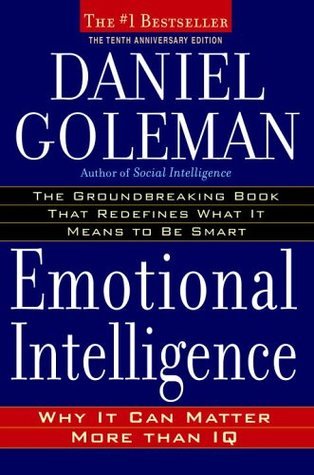
Inteligência Emocional: A Teoria Revolucionária que Redefine o que é Ser Inteligente
- First published 1995
- 384 pages
- Portuguese
For decades, conventional wisdom held that IQ was the primary determinant of success. Daniel Goleman challenges this notion, presenting a compelling argument that emotional intelligence, the ability to recognize, understand, and manage emotions in ourselves and others, plays an equally, if not more, crucial role in navigating life's complexities and achieving fulfillment.
Drawing on groundbreaking research in psychology and neuroscience, this book introduces five key domains of emotional intelligence: self-awareness, self-regulation, motivation, empathy, and social skills. It explains how these capacities influence our decisions, relationships, and overall well-being. Far from being fixed traits, these emotional competencies can be learned and developed throughout life, offering a pathway to improved personal and professional outcomes, better stress management, and enhanced leadership abilities. Discover how harmonizing your head and heart can lead to a more effective and satisfying life.
Drawing on groundbreaking research in psychology and neuroscience, this book introduces five key domains of emotional intelligence: self-awareness, self-regulation, motivation, empathy, and social skills. It explains how these capacities influence our decisions, relationships, and overall well-being. Far from being fixed traits, these emotional competencies can be learned and developed throughout life, offering a pathway to improved personal and professional outcomes, better stress management, and enhanced leadership abilities. Discover how harmonizing your head and heart can lead to a more effective and satisfying life.
What readers say
4.06
141K ratings across the web 7 in 10 readers loved it, 1 didn't like it
Many reviewers hail this book as a visionary and seminal contribution, offering a profound understanding of human emotions and their critical role in life. It is widely praised for introducing and thoroughly explaining the concept of emotional intelligence, challenging the traditional emphasis on IQ as the sole determinant of success. Readers found it insightful in detailing the brain's emotional mechanisms and the necessity of balancing rational thought with emotional responses. The book is appreciated for outlining key components of emotional intelligence, such as self-awareness, self-regulation, motivation, empathy, and social skills, and for motivating individuals to cultivate these abilities. It is also noted for its academic credibility and its accessible approach to a complex subject, making it an important read for those new to the field.
Despite its strengths, several readers found the book to be overly long, dense, and repetitive, often reiterating its core thesis without offering enough practical, actionable advice for daily life. Some critics feel that while the book effectively describes the importance of emotional intelligence, it falls short on providing concrete "how-to" methods. Concerns were also raised about the book's dated perspectives, particularly its "hard-wired" view of the brain and its tendency to attribute societal problems solely to a lack of emotional intelligence rather than systemic issues. Reviewers noted instances of logical fallacies, editorializing, and potentially problematic generalizations about historical figures or social groups, which detracted from its objectivity for some.
In conclusion, the book remains a significant and influential work that brought emotional intelligence to the forefront of public consciousness. While its comprehensive theoretical framework and motivational aspects are highly valued, readers should be aware of its length, occasional repetitiveness, and some dated societal analyses. This book is particularly recommended for those seeking a foundational understanding of emotional intelligence and its components, individuals looking to understand the interplay between emotions and rationality, and parents or educators interested in fostering emotional literacy. It serves as an excellent starting point for anyone motivated to explore and develop their emotional skills, offering a compelling argument for their importance in achieving a more balanced and successful life.
Reviews
No reviews yet. Be the first.
Details & editions
- This edition
- OBJETIVA, 1996
- ISBN
- 9788573020809
- Language
- Portuguese
Original edition Emotional Intelligence Originally published in 1995 · English · Bantam