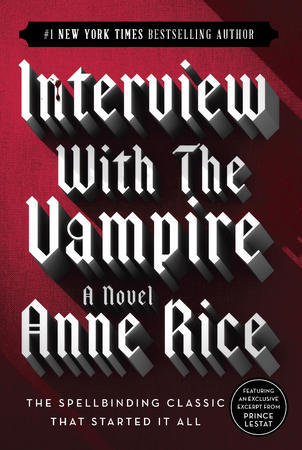
In a darkened room, a vampire named Louis de Pointe du Lac tells the story of his 200-year life to a reporter. It begins in 1791 New Orleans, where Louis, a wealthy plantation owner wracked with grief over his brother's death, encounters Lestat de Lioncourt. Alluring and terrifying, Lestat offers him an escape from his mortal suffering through the gift of immortality. Louis accepts, only to find that eternal life is a curse of moral decay and relentless thirst, forcing him to confront the nature of good and evil as he struggles to hold on to his humanity.
Their volatile companionship spans decades, from the Louisiana plantations to the streets of New Orleans and beyond. The dynamic is further complicated by the creation of Claudia, a five-year-old girl turned into a vampire, forever trapping a woman's mind in a child's body. This gothic horror novel explores the depths of love, loss, loneliness, and desire through the eyes of a reluctant predator. It is a journey into the meaning of existence when time has no end, questioning whether immortality is a gift or an unbearable sentence.
Their volatile companionship spans decades, from the Louisiana plantations to the streets of New Orleans and beyond. The dynamic is further complicated by the creation of Claudia, a five-year-old girl turned into a vampire, forever trapping a woman's mind in a child's body. This gothic horror novel explores the depths of love, loss, loneliness, and desire through the eyes of a reluctant predator. It is a journey into the meaning of existence when time has no end, questioning whether immortality is a gift or an unbearable sentence.
What readers say
4.02
673K ratings across the web 7 in 10 readers loved it, 1 didn't like it
Reviewers widely praise Interview with the Vampire for its dark, gothic, and sensual atmosphere, often describing it as haunting and macabre. Many highlight Anne Rice's beautiful, lyrical, and baroque prose, as well as her vivid descriptive imagery, which immerses readers in the settings of 18th-century Louisiana and Old World Europe. The novel is widely recognized for its groundbreaking influence on vampire literature, popularizing the concept of empathetic, complex, and psychologically deep vampires who grapple with their immortality, loneliness, and the eternal struggle between good and evil. Readers appreciate the intricate character dynamics, particularly the compelling portrayals of the central figures, whose relationships explore universal human emotions like love, hate, guilt, and the search for meaning. The book's philosophical depth, its examination of morality, and its unique take on vampiric existence are frequently cited as its strongest aspects, offering a narrative that transcends typical genre conventions.
Despite its strengths, several reviewers found the book to be slow-paced, monotonous, and overly repetitive, particularly regarding the protagonist Louis's constant philosophical musings and existential angst, which some described as "whining." The writing style, while praised by some, was criticized by others for being "purple prose" or excessively detailed to the point of boredom. A significant concern raised by multiple readers is the problematic depiction of the relationship between Louis and the child vampire, Claudia, with descriptions of their interactions being labeled as "creepy" and having an "air of pedophilia." Additionally, Louis's background as a plantation owner in 18th-century Louisiana, coupled with his perceived racism, made it difficult for some to sympathize with him. Some readers felt the plot lacked excitement or clear direction, leading to a sense of disappointment, and a few preferred the movie adaptation, finding the book less engaging.
Ultimately, Interview with the Vampire is considered a landmark work in vampire literature, highly impactful for its innovative portrayal of vampires as complex, empathetic, and morally ambiguous figures. While its slow pace, extensive philosophical introspection, and certain problematic elements may not appeal to all, it offers a deeply atmospheric and psychologically rich experience for those seeking more than just a surface-level horror story. This book is particularly recommended for readers who appreciate gothic horror, philosophical fiction, and character-driven narratives that delve into themes of immortality, loneliness, grief, and the human condition. It will resonate with those looking for a dark, sensual, and emotionally profound exploration of vampirism, especially if they are open to its unique narrative style and challenging subject matter, and are interested in the genre's historical evolution.
Reviews
No reviews yet. Be the first.
Details & editions
- This edition
- Ballantine Books, 1997
- ISBN
- 9780345409645
- Language
- English
Original edition Interview with the Vampire Originally published in 1976 · English · Alfred A Knopf