Add to library
You don't have any lists yet. Create one in My Library.
Go to My LibraryAdd to library
You don't have any lists yet. Create one in My Library.
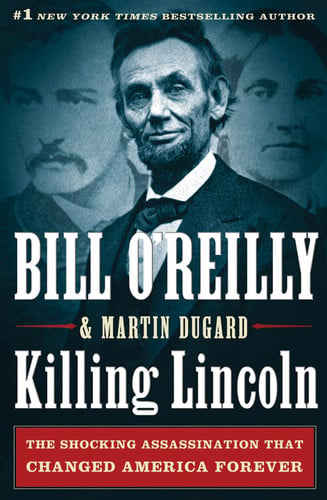
Go to My LibraryKilling Lincoln The Shocking Assassination that Changed America Forever
- Language
- English
- Published in
- Publisher
- Macmillan
- Pages
- 324
- ISBN
- 9780805093070
The book details Booth's evolving intentions, from an initial plan to kidnap Lincoln to the eventual decision to murder him, revealing the motivations behind this pivotal act. It explores the immediate chaos that engulfed Washington D.C. after Lincoln's death, the subsequent manhunt for Booth and his co-conspirators, and the profound grief that swept across the nation. Delve into the themes of patriotism, loyalty, revenge, and the enduring impact of a single, violent act on a divided country striving for reunification.
Subjects
Among those unwilling to accept the Union's victory was John Wilkes Booth, a celebrated actor whose personal allegiances lay fiercely with the fallen Confederacy. Consumed by a virulent hatred for Lincoln and the abolition of slavery, which he viewed as an attack on the Southern way of life, Booth's bitterness festered into a desperate quest for recognition and a twisted sense of justice. He had initially plotted to kidnap the President, hoping to turn the tide of the war, but with the Confederacy's collapse, his intentions mutated into something far more deadly.
Booth meticulously assembled a cadre of like-minded individuals, each with a role in his escalating conspiracy. George Atzerodt was tasked with assassinating Vice President Andrew Johnson, while Lewis Powell, a man of imposing physical strength, was assigned the brutal mission of murdering Secretary of State William Seward. David Herold would assist Powell in his escape. Other figures, such as the unsuspecting Mary Surratt and Dr. Samuel Mudd, were drawn into the intricate web, providing aid and shelter, unknowingly sealing their own tragic fates.
The fateful day of April 14, 1865, dawned with an almost ordinary air, a Good Friday that Lincoln traditionally observed with solemn reflection. Yet, that evening, the President and his wife, Mary, chose to attend a performance of "Our American Cousin" at Ford's Theatre. The theater, a place of entertainment and escapism, would soon become the stage for an unspeakable act. Booth, intimately familiar with the building from his acting career, exploited a momentary lapse in security, slipping into the presidential box.
As the play unfolded, a single gunshot shattered the evening's merriment, echoing through the theater and across the nation. Lincoln slumped forward, mortally wounded. Below, pandemonium erupted as Booth, brandishing a dagger and shouting "Sic semper tyrannis!", leaped from the box to the stage, breaking his leg in the fall, before vanishing into the night. Simultaneously, Lewis Powell launched his ferocious attack on Secretary Seward in his home, inflicting terrible wounds, though Seward miraculously survived.
The immediate aftermath was a maelstrom of shock, grief, and frantic pursuit. A massive manhunt commenced for Booth and his accomplices, transforming the serene landscape of Maryland and Virginia into a labyrinth of danger and desperation. Telegraph wires hummed with news of the tragedy, plunging a nation already scarred by war into profound mourning. Flags were lowered to half-mast, and the joyous celebrations of peace were abruptly replaced by an overwhelming sense of loss.
Booth, injured and hunted, embarked on a harrowing twelve-day flight, aided by various Confederate sympathizers. His escape, however, was doomed. Cornered in a barn in rural Virginia, he refused to surrender and was ultimately shot and killed by Sergeant Boston Corbett, his body paralyzed from the neck down. His co-conspirators were swiftly apprehended, tried by a military commission, and many, including Mary Surratt, faced execution, marking a somber end to one of the most shocking conspiracies in American history.
Lincoln's assassination irrevocably altered the course of a nation yearning for unity. His vision of a gentle Reconstruction, one of healing and forgiveness, was abruptly cut short, leaving his successor, Andrew Johnson, to grapple with the immense task of reuniting a deeply divided country. The echoes of that single gunshot at Ford's Theatre reverberated for generations, forever embedding the tragedy into the American psyche and shaping the legacy of a president who, even in death, continued to define the struggle for a more perfect Union.
No discussions yet for this book.
Delete Discussion
Are you sure you want to delete this discussion? This action cannot be undone.
Rating Sources
This book is widely praised for its highly engaging and accessible approach to history, often described as reading like a suspense novel or thriller. Reviewers consistently highlight its readability and ability to make a well-known historical event feel fresh and exciting. Many appreciated how the authors brought the period to life, detailing the events leading up to the assassination of President Lincoln and the subsequent manhunt. Readers found themselves captivated by the dynamic storytelling, learning new details about Lincoln, John Wilkes Booth, and other figures from the era. The narrative style, which often alternates perspectives and uses a chronological structure, was effective in creating a sense of immediacy and immersion, making it difficult for many to put down.
However, the book also drew criticism, primarily concerning its scholarly depth and perceived bias. Several reviewers questioned the authors' use of speculation, particularly in attributing thoughts and emotions to historical figures without explicit sourcing, and noted the absence of traditional footnotes. This led some to describe it as "pop history" rather than a rigorous academic work, with concerns that it might be mistaken for impartial scholarship. The public persona of one of the authors was a polarizing factor for some, influencing their perception of the book's objectivity and intent. Other criticisms included a narrative style that occasionally felt repetitive or disjointed, and a desire for more in-depth coverage of the broader Civil War context or the assassination's aftermath.
Ultimately, "Killing Lincoln" is generally recommended as an entertaining and fast-paced historical narrative. It is particularly suited for readers who are interested in the Civil War era, President Lincoln, or enjoy history presented in a compelling, thriller-like style, rather than a dry academic text. While it may not satisfy those seeking a deeply scholarly account with extensive historical debate, it excels at making a pivotal moment in American history accessible and engaging for a broad audience, including casual history enthusiasts and younger readers.
No reviews yet. Be the first to review this book!
Delete Review
Are you sure you want to delete this review? This action cannot be undone.