
Løbeild
8.72 / 10 4.3M ratings
- Language
- Danish
- Published
- 2010
- Publisher
- Gyldendal
- Pages
- 315
- ISBN
- 9788702074567
Against all odds, Katniss Everdeen and Peeta Mellark survived the Hunger Games. They should be safe, but their victory was an act of defiance that has ignited a spark of rebellion in the districts of Panem. Now, the Capitol is watching their every move, and the ruthless President Snow has made it clear that Katniss is a threat he intends to control. As she and Peeta embark on a Victory Tour, they are forced to maintain a charade of their star-crossed love, knowing that any misstep could mean destruction for their families and their home.
The 75th Hunger Games - the Quarter Quell - is approaching, an event that occurs every twenty-five years with a devastating twist. As the unrest across Panem grows, the Capitol devises a new set of rules that will change not only Katniss's life but the very future of the nation. Pulled back into a deadlier and more complex political game, Katniss must confront an impossible choice: cling to the life she has fought so hard to save or embrace her role as a symbol of hope and ignite a revolution. The game is no longer just about survival; it's about challenging an entire system.
The 75th Hunger Games - the Quarter Quell - is approaching, an event that occurs every twenty-five years with a devastating twist. As the unrest across Panem grows, the Capitol devises a new set of rules that will change not only Katniss's life but the very future of the nation. Pulled back into a deadlier and more complex political game, Katniss must confront an impossible choice: cling to the life she has fought so hard to save or embrace her role as a symbol of hope and ignite a revolution. The game is no longer just about survival; it's about challenging an entire system.
Subjects
- Categories
- Literature & Fiction
- Genre Fiction
- Subjects
- Literary
- Action & Adventure
- Fantasy
- Science Fiction & Fantasy
- Epic
- Self Service
- Arborist Merchandising Root
- Children's Books
- Growing Up & Facts of Life
- Friendship, Social Skills & School Life
- CHILDREN'S FICTION
- Contemporary
- Science Fiction
- Specialty Boutique
- New, Used & Rental Textbooks
- Teen & Young Adult
- Humor & Entertainment
- Fiction
- Juvenile Fiction
- Paranormal & Urban
- Fantasy & Magic
- Performing Arts
- Interpersonal relations
- Literary Collections
- Children's fiction
- Games
- Romans, nouvelles, etc. pour la jeunesse
- Difficult Discussions
- Foreign Language Study
- Social Themes
- Social & Family Issues
- Television
- Juvenile Nonfiction
- Self-Esteem & Self-Reliance
- Fiction, science fiction, general
- Young Adult Fiction
- Dystopian
- SCIENCE FICTION
- Girls
- Love & Romance
- Spanish language
- Adventure and adventurers
- Large type books
- World Literature
- Film
- Survival
- INTERPERSONAL RELATIONS_FICTION
- Collections & Anthologies
- Sisters
- Survival Stories
- Physical & Emotional Abuse
- Social Issues
- New York Times bestseller
- Science fiction
- Dating & Relationships
- Books and reading
- JUVENILE FICTION
- Novela
- Poverty
- Television programs
- Teenage girls
- Russian & Soviet
- Competition
- Television & Radio
- Spanish language materials
- Insurgency
Original edition
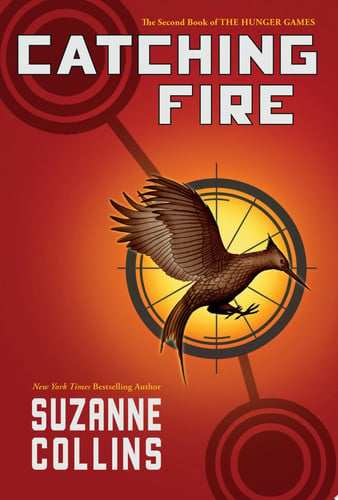
Catching Fire The Second Book of the Hunger GamesOriginally published in 2009 English Scholastic Press
Other editions (78)




Listen to the summary Narrated summary
The lingering taste of ash and blood still clings to Katniss Everdeen, even months after her impossible victory in the 74th Hunger Games. She and Peeta Mellark, co-victors from the impoverished District 12, have returned home, but the quiet solace they crave is shattered by a chilling visit from President Snow. He makes it clear: their defiant act in the arena, the berries that threatened a double suicide, has not been interpreted as love by the downtrodden districts, but as a spark of rebellion. Katniss must convince everyone during the upcoming Victory Tour that her actions were born of overwhelming love for Peeta, or face unthinkable consequences for those she holds dear.
The Victory Tour begins, a macabre parade through the very districts where unrest is simmering. In each stop, Katniss sees the glimmers of hope and defiance in the eyes of the people, a silent understanding that her act of rebellion has resonated far beyond her intentions. She tries to play her part, to sell the fabricated romance with Peeta, but the weight of the lie and the President's watchful gaze are suffocating. The public whipping of Gale, her oldest friend, by a new, brutal Head Peacekeeper in District 12, serves as a stark reminder of the Capitol's power and the personal cost of her perceived rebellion.
Whispers of an uprising against the tyrannical Capitol grow louder, even as Katniss grapples with the traumatic memories of the arena and the forced public display of affection with Peeta. She encounters refugees from District 8 who speak of a burgeoning underground resistance and a mythical District 13, believed to be destroyed. The political machinations of Panem become terrifyingly clear: the Capitol is not just punishing, but actively suppressing any hint of dissent, and Katniss has become an unwilling symbol of that defiance.
Then comes the announcement that shatters their fragile peace: the 75th Hunger Games will be a Quarter Quell, a special edition with a twist. This year, the tributes will be reaped from the existing pool of victors. For District 12, this means Katniss is guaranteed to return to the arena, as she is the only living female victor. The male tribute will be either Haymitch or Peeta. Peeta volunteers instantly when Haymitch's name is drawn, a desperate act of self-sacrifice to protect Katniss once more.
Back in the Capitol, the preparations for the Games are more elaborate, more cruel. Katniss and Peeta are dressed in stunning, symbolic costumes by Cinna, who subtly fuels the rebellion. During the televised interviews, Peeta drops a bombshell, falsely claiming Katniss is pregnant, an attempt to sway public opinion and perhaps even halt the Games. The arena itself is a terrifying clock, each hour bringing a new, deadly horror: blood rain, poisonous fog, monstrous baboons, and tidal waves. They form alliances with other victors, including the charming Finnick Odair, the brilliant Beetee, and the fierce Johanna Mason, though trust remains a dangerous commodity.
As the Quarter Quell progresses, it becomes evident that many of the victors are not simply fighting for survival, but are part of a larger, clandestine plan. The alliances are not just for protection, but for a coordinated effort to dismantle the arena itself. In a climactic moment, guided by a cryptic message, Katniss fires an arrow into the force field surrounding the arena just as lightning strikes, destroying the dome and plunging the world into chaos.
Katniss is rescued by a hovercraft, but Peeta is not among the survivors. She awakens to find Haymitch, Finnick, and Plutarch Heavensbee, the Head Gamemaker, who reveal the truth: there was a plan, a rebellion orchestrated by many, including Haymitch and Plutarch, to break the tributes out of the arena. Katniss was the Mockingjay, the reluctant symbol, the spark they needed to ignite a full-scale revolution. Their destination is District 13, a place long thought destroyed, but now revealed to be a hidden stronghold of the rebellion. The Capitol, however, has captured Peeta, leaving Katniss with a searing mix of guilt, fury, and a fierce resolve to fight.
The Victory Tour begins, a macabre parade through the very districts where unrest is simmering. In each stop, Katniss sees the glimmers of hope and defiance in the eyes of the people, a silent understanding that her act of rebellion has resonated far beyond her intentions. She tries to play her part, to sell the fabricated romance with Peeta, but the weight of the lie and the President's watchful gaze are suffocating. The public whipping of Gale, her oldest friend, by a new, brutal Head Peacekeeper in District 12, serves as a stark reminder of the Capitol's power and the personal cost of her perceived rebellion.
Whispers of an uprising against the tyrannical Capitol grow louder, even as Katniss grapples with the traumatic memories of the arena and the forced public display of affection with Peeta. She encounters refugees from District 8 who speak of a burgeoning underground resistance and a mythical District 13, believed to be destroyed. The political machinations of Panem become terrifyingly clear: the Capitol is not just punishing, but actively suppressing any hint of dissent, and Katniss has become an unwilling symbol of that defiance.
Then comes the announcement that shatters their fragile peace: the 75th Hunger Games will be a Quarter Quell, a special edition with a twist. This year, the tributes will be reaped from the existing pool of victors. For District 12, this means Katniss is guaranteed to return to the arena, as she is the only living female victor. The male tribute will be either Haymitch or Peeta. Peeta volunteers instantly when Haymitch's name is drawn, a desperate act of self-sacrifice to protect Katniss once more.
Back in the Capitol, the preparations for the Games are more elaborate, more cruel. Katniss and Peeta are dressed in stunning, symbolic costumes by Cinna, who subtly fuels the rebellion. During the televised interviews, Peeta drops a bombshell, falsely claiming Katniss is pregnant, an attempt to sway public opinion and perhaps even halt the Games. The arena itself is a terrifying clock, each hour bringing a new, deadly horror: blood rain, poisonous fog, monstrous baboons, and tidal waves. They form alliances with other victors, including the charming Finnick Odair, the brilliant Beetee, and the fierce Johanna Mason, though trust remains a dangerous commodity.
As the Quarter Quell progresses, it becomes evident that many of the victors are not simply fighting for survival, but are part of a larger, clandestine plan. The alliances are not just for protection, but for a coordinated effort to dismantle the arena itself. In a climactic moment, guided by a cryptic message, Katniss fires an arrow into the force field surrounding the arena just as lightning strikes, destroying the dome and plunging the world into chaos.
Katniss is rescued by a hovercraft, but Peeta is not among the survivors. She awakens to find Haymitch, Finnick, and Plutarch Heavensbee, the Head Gamemaker, who reveal the truth: there was a plan, a rebellion orchestrated by many, including Haymitch and Plutarch, to break the tributes out of the arena. Katniss was the Mockingjay, the reluctant symbol, the spark they needed to ignite a full-scale revolution. Their destination is District 13, a place long thought destroyed, but now revealed to be a hidden stronghold of the rebellion. The Capitol, however, has captured Peeta, leaving Katniss with a searing mix of guilt, fury, and a fierce resolve to fight.
What other readers say
Liked
Readers largely praise Catching Fire as a powerful and engrossing sequel that often surpasses its predecessor in intensity and depth. Many found the storytelling incredibly thought-provoking, prompting self-reflection on societal issues like global economics and consumption, and noting its potential for discussion in educational settings. The book is lauded for its superb pacing, action-packed narrative, and the introduction of a diverse cast of well-developed characters, both new and returning. The protagonist, Katniss, continues to be a compelling and realistic figure, and even the often-maligned love triangle is frequently cited as well-executed and integral to the story rather than a mere plot device. Reviewers highlight the novel's ability to evoke strong emotions, from empathy and fear to frustration and exhilaration, making it an addictive and unputdownable read.
Disliked
Despite the widespread acclaim, some readers expressed specific criticisms. A few found the book's pacing uneven, particularly in its initial chapters, and felt that certain plot developments were rushed or mechanical. One reviewer found the protagonist's internal monologue overly repetitive with an abundance of questions and expressions of uncertainty, which became distracting. Others felt that the narrative style, with its frequent use of conjunctions to start sentences, was a flaw. A minority opinion suggests that the book, despite strong plot elements, suffered from inept assembly and execution, leading to a less impactful "game" section compared to the first installment.
In short
Overall, Catching Fire is widely considered a successful and impactful dystopian novel, known for its intense emotional resonance and powerful cliffhanger ending that leaves readers desperate for the next installment. It is highly recommended for fans of the first book, those who appreciate young adult dystopian fiction with deeper social commentary, and readers who enjoy a fast-paced, character-driven story with complex moral questions. This book appeals to those who don't shy away from intense narratives and appreciate a story that challenges their perspectives while delivering thrilling entertainment.
No reviews yet. Be the first.