
L' Odyssýe
by Homer
6 / 10 1.2M ratings
- Language
- French
- Published
- 1974
- Publisher
- LGF
- Pages
- 544
- ISBN
- 9782253005643
This is the story of a man's decade-long struggle to return home after fighting in the Trojan War. Odysseus, the king of Ithaca, faces a perilous journey across the sea, a voyage prolonged by the wrath of the sea god Poseidon. His path is littered with formidable obstacles, from encounters with the sorceress Circe and the monstrous, six-headed Scylla to the temptation of the Sirens' deadly song. He must use his cunning and resilience to navigate a world of gods, monsters, and mortals, all while his crewmates are lost to the many dangers they face.
While Odysseus battles to survive, his wife, Penelope, and son, Telemachus, contend with their own crisis in Ithaca. A horde of arrogant suitors has overrun their palace, consuming the king's wealth and pressuring Penelope to remarry. As Odysseus's absence stretches to twenty years, he must endure a final, brutal test of strength and wit to reclaim his kingdom and reunite with his family. This epic poem explores the timeless human quest for home and the immense cost of war, a foundational story of endurance, loyalty, and the triumph of the human spirit against divine forces.
While Odysseus battles to survive, his wife, Penelope, and son, Telemachus, contend with their own crisis in Ithaca. A horde of arrogant suitors has overrun their palace, consuming the king's wealth and pressuring Penelope to remarry. As Odysseus's absence stretches to twenty years, he must endure a final, brutal test of strength and wit to reclaim his kingdom and reunite with his family. This epic poem explores the timeless human quest for home and the immense cost of war, a foundational story of endurance, loyalty, and the triumph of the human spirit against divine forces.
Subjects
- Comics & Graphic Novels
- General
- Reference
- Literature & Fiction
- Genre Fiction
- Europe
- Subjects
- Literary
- Action & Adventure
- Fantasy
- Epic
- Historical
- Self Service
- History
- Custom Stores
- Anthologies
- Arborist Merchandising Root
- Business & Money
- Children's Books
- Education & Teaching
- Schools & Teaching
- Non-Classifiable
- Novelty
- Greece
- CHILDREN'S FICTION
- Poetry
- Horses
- Contemporary
- United States
- Crafts, Hobbies & Home
- Americas
- Crafts & Hobbies
- Study Guides
- FICTION_GENERAL
- Education Theory
- FICTION_ACTION & ADVENTURE
- Politics & Social Sciences
- POETRY (POETIC WORKS BY ONE AUTHOR)
- Specialty Boutique
- New, Used & Rental Textbooks
- Teen & Young Adult
- Dramas & Plays
- Foreign Language Study & Reference
- Social Sciences
- Fiction
- Juvenile Fiction
- Classics
- Graphic Novels
- Criticism
- Education
- Literary Collections
- Folklore & Mythology
- Children's fiction
- Adaptations
- LITERATURE
- ADVENTURE AND ADVENTURERS_FICTION
- History & Criticism
- Antiques & Collectibles
- Family Saga
- Instruction
- Religion
- Social Science
- Linguistics
- Juvenile literature
- Classic Literature
- Teaching
- Ancient & Medieval Literature
- Ancient & Classical
- Commerce
- Fiction - General
- LARGE TYPE BOOKS
- Audio Adult: Books On Tape
- Foreign Language Study
- Regional & Cultural
- Anthologies (multiple authors)
- European
- Juvenile Nonfiction
- MYTHOLOGY
- Language Arts & Disciplines
- Language
- German
- Fairy Tales, Folk Tales & Myths
- Criticism & Theory
- Movements & Periods
- Language Arts
- Themes & Styles
- Classical
- English language
- American
- Literary Criticism
- Drama
- Study Aids
- Literature
- Schools
- Levels
- Chinese
- POETRY_COLLECTIONS
- Papercrafts, Stamping & Stenciling
- Diseases
- French
- Criticism and interpretation
- Children's Books/Ages 9-12 Nonfiction
- Dictionaries
- Books & Reading
- Book Notes
- History and criticism
- Fairy Tales, Folk Tales, Legends & Mythology
- Bilingual Education
- Readers
- Greek language
- War
- Poetry (poetic works by one author)
- Caribbean & Latin American
- Foreign Language - Dictionaries
- Phrase Books
- Cities and towns
- Study guides
- Canadian
- Children's Books/Baby-Preschool
- Ancient
- Audiobooks
- Men's Adventure
- POETRY
- CHILDREN'S POETRY
- In literature
- Italian language
- Classic fiction
- Literature - Classics
- Dialects
- Mythology
- Translations into Russian
- Secondary
- Early works to 1800
- Translations
- Unabridged Audio - Fiction/General
- CONTINENTAL EUROPEAN FICTION (FICTIONAL WORKS BY ONE AUTHOR)
- Ancient, Classical & Medieval
- CONTINENTAL EUROPEAN DRAMA (DRAMATIC WORKS BY ONE AUTHOR)
- English language readers
- Educational tests and measurements
- Translations into English
- Growth
- Literary Criticism & Collections
- Children's Audio - 9-12
- Drama (dramatic works by one author)
- Greek (Modern)
- Library
- Fairy tales
- Water resources development
- Science Fiction - General
- Greeks
Original edition
The Odyssey (Lake Illustrated Classics, Collection 5)Originally published in 1707 English Ags Pub
Other editions (322)
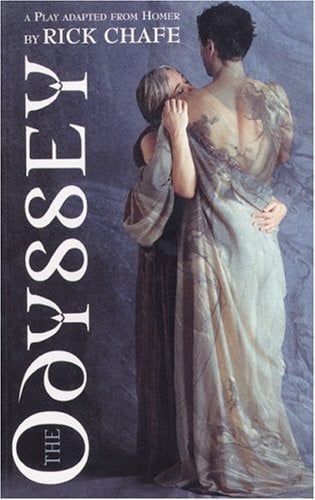


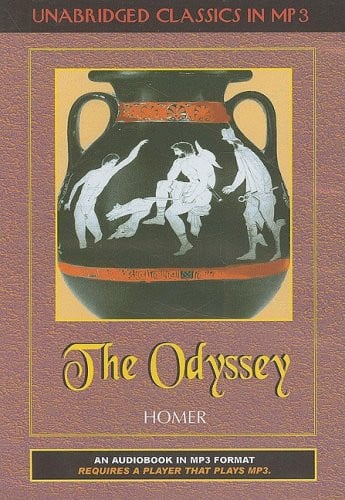
Listen to the summary Narrated summary
In the halls of Ithaca, a plague of suitors devours the wealth of a long-lost king, their swagger and laughter echoing through a house hollowed out by grief. Here, a boy chafing in the shadow of a ghost, Prince Telemachus, watches as his mother, the steadfast Penelope, holds the rapacious lords at bay with promises she never intends to keep. For twenty years, his father, Odysseus, has been a mere rumor, a name whispered by old soldiers, a story sung by bards. But the gods have not forgotten. A goddess, Athena, descends in the guise of an old family friend, her words breathing fire into the prince's flagging spirit. She urges him to become the man his father's kingdom needs, to seek news of the hero who has been gone too long. And so, under the cover of night, Telemachus slips away from his island home, setting sail for the mainland, a boy on a man's quest, leaving behind a palace of vultures who plot to kill him upon his return.
Far away, on a wave-washed island named Ogygia, the great Odysseus himself is a prisoner. The nymph Calypso, bewitching in her beauty, holds him captive in her arching caverns, offering him immortality if he will only forget his home and be her husband. Yet every day he sits on the rocky headlands, gazing out over the barren sea through blinding tears, his heart aching for the sight of his own wife and land. At last, the will of Zeus is heard: the hero must be released. With the nymph's reluctant help, Odysseus builds a sturdy raft and entrusts himself to the waves. But his torment is not over. Poseidon, the god of the sea, whose giant son Odysseus blinded years before, unleashes a furious storm. A colossal wave crashes down, spinning his craft, snapping its mast, and flinging him into the churning chaos. For two nights and two days he is adrift, clinging to a piece of wreckage, until at last, broken and naked, he washes ashore on the misty island of Scheria, home of the Phaeacians.
In the court of King Alcinous, welcomed as a mysterious, storm-tossed stranger, Odysseus is moved by the songs of a blind bard who sings of the glories and sorrows of Troy. His tears betray a hidden grief, and his hosts press him to reveal his story. And so the great teller of tales begins, recounting the long, disastrous voyage home. He speaks of raiding the Cicones, of drifting to the land of the Lotus-eaters, where his men tasted the honeyed fruit and lost all memory of home. He tells of the land of the Cyclops, of the one-eyed giant who trapped him and his men in a cave, devouring them two by two, until cunning saved them. “‘Nobody - that's my name,'” he had told the monster, and after blinding him with a fiery stake, he and his surviving crew escaped, clinging to the bellies of the giant's own sheep.
His tale continues, a litany of marvels and horrors. He recounts his visit to the bewitching queen of Aeaea, Circe, who turned his men to swine before he, with a god's help, mastered her and won back their humanity. He speaks of his journey to the Kingdom of the Dead, a joyless, shadowy realm where he consulted the blind prophet Tiresias. There he met the ghost of his own mother, and the shades of fallen comrades from Troy. The great Achilles himself confessed his regret, his voice a whisper from the gloom: “I'd rather slave on earth for another man - some dirt-poor tenant farmer who scrapes to keep alive - than rule down here over all the breathless dead.” He tells of sailing past the Sirens, their thrilling song promising knowledge of all things, a temptation he endured by having his men lash him to the mast. He describes the impossible choice between Scylla, the six-headed monster who snatched six of his best men from the decks, and Charybdis, the monstrous whirlpool that threatened to swallow his ship whole. Finally, he tells of the fatal mistake on the island of the Sun, where his starving crew slaughtered the sacred cattle of Helios, earning the wrath of Zeus, who shattered their ship with a lightning-bolt, killing all but Odysseus himself.
Moved by his suffering, the Phaeacians grant him passage. On one of their magical, swift ships, he is carried home while deep in an enchanted sleep. He awakens on the shore of Ithaca, shrouded in mist by Athena, and does not recognize his own land. The goddess appears, reveals the truth, and transforms him, with a touch of her wand, into an old, broken beggar. “I will shrivel the supple skin on your lithe limbs,” she warns, “dim the fire in your eyes.” In this squalid disguise, he makes his way to the hut of his loyal swineherd, Eumaeus, a man who has never lost faith in his master's return. There he is welcomed with simple food and drink, and he tests the servant's heart with a fabricated story of woe, all the while gathering news of the ruin that has befallen his house.
The goddess then guides Telemachus safely home, steering him clear of the suitors' ambush. He makes his way to the swineherd's hut, and there, as Eumaeus is sent to the palace with a message for Penelope, Athena washes away the years and the grime from Odysseus. He stands before his son, no longer a beggar but a king in his prime. Telemachus, stunned, thinks him a god, but Odysseus's words persuade him: “No, I am your father.” They fall into each other's arms, weeping for all the lost years. Soon after, Odysseus returns to his beggar's rags and enters his own palace. He is met with scorn and abuse, a footstool hurled at his head by the arrogant suitor Antinous. But there is one who knows him. His old dog, Argos, lying neglected on a dung heap, recognizes his master's voice, thumps his tail one last time, and dies.
That night, alone with his wife, who does not recognize him, he spins another tale of his travels, weaving truths among the lies. He describes Odysseus's clothing so perfectly that Penelope breaks down in tears. Later, as the old nurse Eurycleia washes the stranger's feet, her hands find a familiar scar on his thigh, a wound from a boar hunt in his youth. She knows him in a flash, but he silences her with a hand to her throat and a whispered threat. The secret is kept. Penelope, still unknowing but deeply moved by the stranger, announces her decision: she will hold a contest for the suitors. Whoever can string her husband's great bow and shoot an arrow through twelve axes will win her hand in marriage.
The day of the contest arrives. The suitors, one by one, try to string the mighty bow and fail, their strength no match for the weapon of a hero. They curse their weakness, while Odysseus, still in his beggar's disguise, quietly asks for a turn. The suitors mock him, but Telemachus insists. The old man takes the bow, handles it with virtuoso ease, and without rising from his stool, strings it. The bowstring sings under his touch, clear and sharp as a swallow's cry, and as Zeus cracks the sky with a bolt of thunder, he sends an arrow flying cleanly through all twelve axes.
Now stripping back his rags, Odysseus leaps onto the great threshold, his arrows poured at his feet. “Look - your crucial test is finished, now, at last!” he thunders. His first shaft finds the throat of Antinous, who falls with a golden cup still in his hands. Panic erupts, but there is no escape. With Telemachus and his two loyal herdsmen at his side, the king unleashes his fury. “You dogs! you never imagined I'd return from Troy,” he cries, and the slaughter begins. Arrows fly, then spears and swords clash as the suitors, trapped and weaponless, are cut down. The great hall, once filled with arrogant laughter, runs with blood until not one of the traitors is left alive.
The battle is won, but one final trial remains. Penelope, summoned from her chambers, cannot bring herself to believe. She stands apart, testing the blood-splattered man who claims to be her husband. It is only when, in a flash of fury, he reveals the secret of their marriage bed - how he built it himself from the trunk of a living olive tree, a sign known only to them - that her heart finally surrenders. She rushes to him, weeping, and they cling to each other, like shipwrecked sailors who have at last found solid ground. Their long night of stories and reunion is followed by a journey to the country, where Odysseus reveals himself to his aging father, Laertes. But their peace is short-lived; the families of the slain suitors march on them, seeking revenge. A final battle looms, but Athena intervenes, her voice ringing out to command peace. And so the long, wandering course comes to its fixed end, with the king restored to his wife, his son, and his kingdom, his trials at last complete.
Far away, on a wave-washed island named Ogygia, the great Odysseus himself is a prisoner. The nymph Calypso, bewitching in her beauty, holds him captive in her arching caverns, offering him immortality if he will only forget his home and be her husband. Yet every day he sits on the rocky headlands, gazing out over the barren sea through blinding tears, his heart aching for the sight of his own wife and land. At last, the will of Zeus is heard: the hero must be released. With the nymph's reluctant help, Odysseus builds a sturdy raft and entrusts himself to the waves. But his torment is not over. Poseidon, the god of the sea, whose giant son Odysseus blinded years before, unleashes a furious storm. A colossal wave crashes down, spinning his craft, snapping its mast, and flinging him into the churning chaos. For two nights and two days he is adrift, clinging to a piece of wreckage, until at last, broken and naked, he washes ashore on the misty island of Scheria, home of the Phaeacians.
In the court of King Alcinous, welcomed as a mysterious, storm-tossed stranger, Odysseus is moved by the songs of a blind bard who sings of the glories and sorrows of Troy. His tears betray a hidden grief, and his hosts press him to reveal his story. And so the great teller of tales begins, recounting the long, disastrous voyage home. He speaks of raiding the Cicones, of drifting to the land of the Lotus-eaters, where his men tasted the honeyed fruit and lost all memory of home. He tells of the land of the Cyclops, of the one-eyed giant who trapped him and his men in a cave, devouring them two by two, until cunning saved them. “‘Nobody - that's my name,'” he had told the monster, and after blinding him with a fiery stake, he and his surviving crew escaped, clinging to the bellies of the giant's own sheep.
His tale continues, a litany of marvels and horrors. He recounts his visit to the bewitching queen of Aeaea, Circe, who turned his men to swine before he, with a god's help, mastered her and won back their humanity. He speaks of his journey to the Kingdom of the Dead, a joyless, shadowy realm where he consulted the blind prophet Tiresias. There he met the ghost of his own mother, and the shades of fallen comrades from Troy. The great Achilles himself confessed his regret, his voice a whisper from the gloom: “I'd rather slave on earth for another man - some dirt-poor tenant farmer who scrapes to keep alive - than rule down here over all the breathless dead.” He tells of sailing past the Sirens, their thrilling song promising knowledge of all things, a temptation he endured by having his men lash him to the mast. He describes the impossible choice between Scylla, the six-headed monster who snatched six of his best men from the decks, and Charybdis, the monstrous whirlpool that threatened to swallow his ship whole. Finally, he tells of the fatal mistake on the island of the Sun, where his starving crew slaughtered the sacred cattle of Helios, earning the wrath of Zeus, who shattered their ship with a lightning-bolt, killing all but Odysseus himself.
Moved by his suffering, the Phaeacians grant him passage. On one of their magical, swift ships, he is carried home while deep in an enchanted sleep. He awakens on the shore of Ithaca, shrouded in mist by Athena, and does not recognize his own land. The goddess appears, reveals the truth, and transforms him, with a touch of her wand, into an old, broken beggar. “I will shrivel the supple skin on your lithe limbs,” she warns, “dim the fire in your eyes.” In this squalid disguise, he makes his way to the hut of his loyal swineherd, Eumaeus, a man who has never lost faith in his master's return. There he is welcomed with simple food and drink, and he tests the servant's heart with a fabricated story of woe, all the while gathering news of the ruin that has befallen his house.
The goddess then guides Telemachus safely home, steering him clear of the suitors' ambush. He makes his way to the swineherd's hut, and there, as Eumaeus is sent to the palace with a message for Penelope, Athena washes away the years and the grime from Odysseus. He stands before his son, no longer a beggar but a king in his prime. Telemachus, stunned, thinks him a god, but Odysseus's words persuade him: “No, I am your father.” They fall into each other's arms, weeping for all the lost years. Soon after, Odysseus returns to his beggar's rags and enters his own palace. He is met with scorn and abuse, a footstool hurled at his head by the arrogant suitor Antinous. But there is one who knows him. His old dog, Argos, lying neglected on a dung heap, recognizes his master's voice, thumps his tail one last time, and dies.
That night, alone with his wife, who does not recognize him, he spins another tale of his travels, weaving truths among the lies. He describes Odysseus's clothing so perfectly that Penelope breaks down in tears. Later, as the old nurse Eurycleia washes the stranger's feet, her hands find a familiar scar on his thigh, a wound from a boar hunt in his youth. She knows him in a flash, but he silences her with a hand to her throat and a whispered threat. The secret is kept. Penelope, still unknowing but deeply moved by the stranger, announces her decision: she will hold a contest for the suitors. Whoever can string her husband's great bow and shoot an arrow through twelve axes will win her hand in marriage.
The day of the contest arrives. The suitors, one by one, try to string the mighty bow and fail, their strength no match for the weapon of a hero. They curse their weakness, while Odysseus, still in his beggar's disguise, quietly asks for a turn. The suitors mock him, but Telemachus insists. The old man takes the bow, handles it with virtuoso ease, and without rising from his stool, strings it. The bowstring sings under his touch, clear and sharp as a swallow's cry, and as Zeus cracks the sky with a bolt of thunder, he sends an arrow flying cleanly through all twelve axes.
Now stripping back his rags, Odysseus leaps onto the great threshold, his arrows poured at his feet. “Look - your crucial test is finished, now, at last!” he thunders. His first shaft finds the throat of Antinous, who falls with a golden cup still in his hands. Panic erupts, but there is no escape. With Telemachus and his two loyal herdsmen at his side, the king unleashes his fury. “You dogs! you never imagined I'd return from Troy,” he cries, and the slaughter begins. Arrows fly, then spears and swords clash as the suitors, trapped and weaponless, are cut down. The great hall, once filled with arrogant laughter, runs with blood until not one of the traitors is left alive.
The battle is won, but one final trial remains. Penelope, summoned from her chambers, cannot bring herself to believe. She stands apart, testing the blood-splattered man who claims to be her husband. It is only when, in a flash of fury, he reveals the secret of their marriage bed - how he built it himself from the trunk of a living olive tree, a sign known only to them - that her heart finally surrenders. She rushes to him, weeping, and they cling to each other, like shipwrecked sailors who have at last found solid ground. Their long night of stories and reunion is followed by a journey to the country, where Odysseus reveals himself to his aging father, Laertes. But their peace is short-lived; the families of the slain suitors march on them, seeking revenge. A final battle looms, but Athena intervenes, her voice ringing out to command peace. And so the long, wandering course comes to its fixed end, with the king restored to his wife, his son, and his kingdom, his trials at last complete.
What other readers say
Liked
The reviews consistently praise The Odyssey as a captivating and foundational work of Western literature, often describing it as an exciting, thrilling, and surprisingly accessible read despite its ancient origins. Many reviewers highlighted its enduring entertainment value, rich storytelling, and sophisticated narrative techniques, including non-linear progression and embedded flashbacks. The book is celebrated for igniting a love for Greek mythology and inspiring countless subsequent narratives across various genres. Readers appreciated its exploration of universal themes such as love, loyalty, heroism, perseverance, and the complexities of the human condition. The vibrant characters, swift pace, and blend of adventure with cultural insights were frequently mentioned as reasons for its widespread appeal, with several modern translations lauded for making the epic poem fresh and engaging for contemporary audiences.
Disliked
However, the reviews also point out several challenging aspects of The Odyssey. Some found parts of the narrative repetitive or dense, and the sheer length of the epic can be intimidating. A significant criticism revolves around the portrayal of violence, misogyny, and slavery, which many modern readers found difficult to reconcile with contemporary moral standards, even when accounting for historical context. Specific instances of extreme violence and the treatment of female characters or slaves were noted as unsettling. The protagonist, Odysseus, is frequently described as a "complicated man" - cunning, a liar, and at times bloodthirsty - which led some reviewers to question his heroic status. Additionally, some readers were surprised to find that the fantastical adventure sections (featuring mythical creatures and perilous journeys) constitute a relatively small portion of the book, with a larger focus on the homecoming and subsequent events, which disappointed those expecting more continuous mythological encounters.
In short
Ultimately, The Odyssey is recognized as a monumental work that, despite its potential difficulties for modern sensibilities, remains a compelling and important read. Its status as a cornerstone of literature is well-deserved, offering a blend of epic adventure, intricate character study, and deep cultural insight. Readers who appreciate foundational texts, complex moral questions, and a story that has profoundly shaped literary tradition will likely find it rewarding. Choosing a translation that resonates with one's reading style is frequently emphasized as crucial for a positive experience, as some modern versions are praised for their clarity and accessibility, making this ancient epic enjoyable for a wide range of readers willing to engage with a story that is both "fun and brain food."
No reviews yet. Be the first.