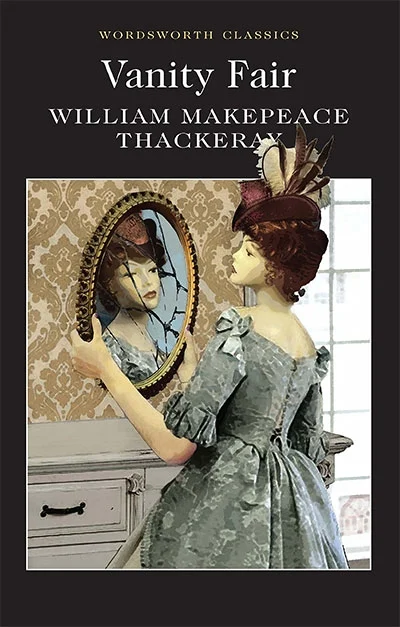
La Foire Aux Vanités...
by William Makepeace Thackeray, Guiffrey
- First published 1848
- 456 pages
- French
- Classic
Step into the bustling, unforgiving world of 19th-century British society, where appearances are paramount and ambition knows no bounds. William Makepeace Thackeray's Vanity Fair introduces two contrasting women, Rebecca Sharp and Amelia Sedley, as they navigate a landscape driven by wealth, status, and the pursuit of love. Becky, an orphaned governess, uses her sharp wit and cunning to climb the social ladder, determined to secure her place among the elite. Amelia, her good-natured but naive school friend, seeks happiness through conventional paths, often finding herself at the mercy of others' machinations.
Against the backdrop of the Napoleonic Wars, their lives intertwine with a cast of characters equally entangled in the era's social complexities. This satirical masterpiece offers a critical look at the superficiality and moral compromises inherent in a society obsessed with outward show, exposing the vanities that motivate its inhabitants. Discover a timeless narrative that questions the very nature of heroism and the true cost of chasing worldly desires.
Against the backdrop of the Napoleonic Wars, their lives intertwine with a cast of characters equally entangled in the era's social complexities. This satirical masterpiece offers a critical look at the superficiality and moral compromises inherent in a society obsessed with outward show, exposing the vanities that motivate its inhabitants. Discover a timeless narrative that questions the very nature of heroism and the true cost of chasing worldly desires.
What readers say
3.81
135K ratings across the web 6 in 10 readers loved it, 1 didn't like it
The reviews consistently highlight the novel's brilliant satire, sharp wit, and droll humor as its strongest attributes. Readers praise William Makepeace Thackeray's distinctive authorial voice, which frequently breaks the fourth wall to offer wry observations and engage directly with the audience, making the reading experience feel like a lively debate or a captivating play with a knowledgeable commentator. Rebecca Sharp emerges as a standout character, celebrated for her complex, ambitious, and manipulative nature; even when disliked, her ingenuity and fierce determination to navigate a challenging world are widely admired. Beyond its engaging characters, the book is lauded for its timeless observations on human vanity, social climbing, hypocrisy, and the pursuit of wealth, prompting readers to reflect on societal dynamics that remain relevant today. Many reviewers found the extensive narrative surprisingly engaging, likening it to a compelling drama series filled with humor, moments of romance, and thought-provoking insights.
Despite its many strengths, the novel frequently draws criticism for its excessive length and uneven pacing. Reviewers commonly describe it as "bloated" and "too long-winded," with certain sections, such as detailed descriptions of minor events or characters, feeling tangential and slowing the narrative considerably. This makes the book a significant time commitment, challenging even seasoned readers. Another point of contention is the prevalence of unlikable characters; while Rebecca Sharp is fascinating, many other figures, including Amelia Sedley, are often characterized as boring, annoying, or lacking depth, making it difficult for some to emotionally invest in their stories. Furthermore, while Thackeray's authorial voice is generally appreciated, some find it overly dominant, and modern readers occasionally cringe at the 19th-century prejudices, particularly instances of racism and perceived misogynistic observations.
Overall, "Vanity Fair" is recognized as a profound and masterful classic, celebrated for its incisive social commentary and unforgettable characters, especially its complex anti-heroine. While its considerable length and the often-unflattering portrayal of human nature present a challenge, most reviewers ultimately found the experience to be deeply rewarding. This book is particularly recommended for readers who appreciate 19th-century literary classics, especially those with a strong inclination towards social satire and character-driven narratives featuring morally ambiguous protagonists. It will appeal to those who enjoy a distinct authorial presence and are prepared to immerse themselves in a lengthy, critical examination of society, willing to engage with historical attitudes as part of the period's authenticity.
Reviews
No reviews yet. Be the first.
Details & editions
- This edition
- Legare Street Press, 2022
- ISBN
- 9781015896284
- Language
- French
Original edition Vanity Fair Originally published in 1848 · English