Add to library
You don't have any lists yet. Create one in My Library.
Go to My LibraryAdd to library
You don't have any lists yet. Create one in My Library.
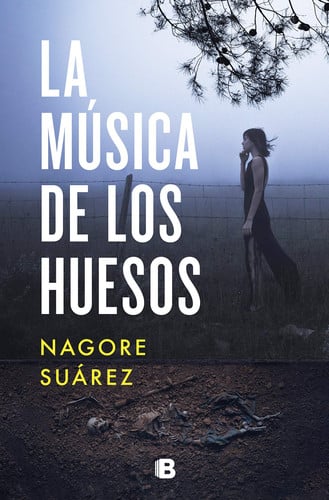
Go to My LibraryLa música de los huesos / The Music in Bones
- Language
- Spanish
- Published in
- Publisher
- National Geographic Books
- Pages
- 400
- ISBN
- 9788466668408
As Gabriel's investigation begins, it becomes clear that the bones are just the beginning. The story weaves between the present-day mystery and the events of a fateful summer in 1978, unearthing a story of secrets and long-held grudges. What starts as a summer getaway for Anne spirals into a dangerous effort to reconstruct a terrifying plot, forcing her to question how deep the roots of evil can run in a place she thought she knew.
Subjects
The house stood on a hill overlooking the town, a white mansion that felt more like a living creature than a building. It smelled of old wood, damp stone, and ghosts. I'd barely arrived when the past decided to literally unearth itself. Workmen repairing the garden fountain called my grandmother, frantic. They'd found bones. I laughed it off, explaining that my childhood friends, Paloma, Abel, and I had buried Abel's giant dog, Uva, there fifteen years ago. It was a funny misunderstanding, a story to tell over drinks. But the relief was short-lived. The Policía Foral arrived, led by sub-inspector Gabriel Palacios, a handsome, serious man I vaguely remembered from my youth. He confirmed the dog's bones were there, but beneath them, buried deeper in the earth, lay a human skeleton.
As Gabriel's investigation began, the house itself seemed to whisper its secrets. In the attic, tucked away in a dusty box of my mother's teenage keepsakes, I found old photos from the summer of 1978. There she was, a girl named Marga, with her best friend Carmen - Paloma's mother. In the faded Polaroids, they were laughing with a group of hippies led by a charismatic American with a guitar, a man named Anthony. They looked so free, so alive, their summer unfolding against the backdrop of the very first Milenio music festival. But there was another girl in the photos, one with piercing blue eyes and an intense, unsettling gaze. Her name was Eba.
The past and present collided when I found a silver necklace in that same box, its pendant bearing a strange symbol: a capital ‘M' inside a pentagram. My heart stopped. Gabriel had already told me an identical necklace was found clutched in the skeleton's hand. Suddenly, my mother's long-ago summer wasn't just a nostalgic story; it was a dark, buried secret. My calls to her, away on a humanitarian trip in India, went unanswered. Carmen, when I pressed her, grew pale and evasive, her fear a palpable thing. The secrets of that summer were still alive, and they were dangerous.
The new Milenio Music Fest exploded into life on the same red, dusty plains as the original, a vibrant sea of sound and color. But a chilling echo of the past rippled through the celebration. A young woman was found dead, a tragic accident after taking the hallucinogenic plant estramonio. Then another. Both victims had a fresh, bloody symbol carved into their arms - the same symbol from the necklaces. The deaths weren't accidents. Someone was turning the festival's promise of freedom into a hunting ground, and the key was locked in that summer of 1978.
Driven by a desperate need for answers, Gabriel and I followed the ghost of Eba to her desolate hometown. We learned she was a troubled soul, obsessed with ancient rituals and deeply in love with Anthony. We also learned she was dead, having died years ago, along with the baby she was carrying. It felt like a dead end, another ghost leading nowhere. Gabriel, pragmatic and professional, warned me to stop, to let the police handle it. He believed the cases were unrelated, a tragic coincidence. But I couldn't shake the feeling that the monster from 1978 was still walking among us.
On the festival's final night, under the light of a full moon, the trap was sprung. I was lured to a remote cave in the hills overlooking the festival grounds. The killer wasn't a ghost, but flesh and blood: Haizea, the beautiful and serene girlfriend of the festival organizer. She was Eba's daughter, a child no one knew existed, raised on a twisted legacy of vengeance against my mother, the woman she believed had stolen Anthony and destroyed her own mother's life. Drugged with estramonio, my mind fracturing into a nightmare of shadows and fear, I saw her for what she was: a smiling monster wielding a ritual knife.
In a blur of terror and adrenaline, Abel was struck down trying to protect me. As Haizea's blade plunged into my side, a force I couldn't explain - the protective spirit of the house, the energy of the land itself - surged through me. I fought back, a desperate, primal struggle for survival. Just as her eyes, so like her mother's, promised my end, the deafening crack of a gunshot echoed through the cave. Gabriel stood in the entrance, his face a mask of grim determination.
In the sterile quiet of a hospital room, the final pieces of the story fell into place. My mother, finally returned from India, sat beside me with Carmen, and the truth of that summer spilled out between tears and trembling breaths. Anthony hadn't been murdered by Eba; he had died from an overdose of the estramonio she'd given him in a jealous rage. Terrified and only eighteen, my mother and Carmen had made a pact, burying his body and their secret in the garden. For forty years, that secret had haunted them, shaping their lives in ways I was only just beginning to understand.
As I packed my bags to return to Madrid, the house watched me in silence. The summer that was meant to be a quiet retreat had become a violent confrontation with the past. The bones in the garden had been given a name, the ghosts had been laid to rest, and the music had finally faded. I was leaving, but I knew it wasn't for good. The house, the town, the memories - they were part of me now. This wasn't an ending; it was just a long, quiet pause before the next song.
No discussions yet for this book.
Delete Discussion
Are you sure you want to delete this discussion? This action cannot be undone.
Rating Sources
The book is widely praised for its fast pace and engaging narrative, with many reviewers noting how quickly it reads and its ability to keep them hooked. Described as "trepidante y ágil," it builds tension, particularly in its latter half, making it difficult to put down. Readers appreciate its straightforward and accessible style, which makes it an ideal entry point for those new to the thriller genre. The story, which skillfully intertwines two distinct timelines and revolves around a mysterious discovery, is found to be well-balanced. Many consider it a promising debut for the author, highlighting its refreshing and entertaining quality, and noting the protagonist as sympathetic and easy to empathize with.
Despite its engaging qualities, several reviewers point out significant drawbacks. A common criticism is that the plot, while easy to follow, is often too simple, lacking sufficient development or deeper intrigue, with some feeling that little of consequence happens until very late in the story. The ending is frequently described as predictable, rushed, and even unbelievable. Character development is another recurring issue, with many finding both main and secondary characters to be rather flat or underdeveloped. A particular concern is that the adult characters in the present-day timeline often speak and behave more like adolescents, making it difficult for readers to connect with them. Some reviewers also felt the book lacked genuine tension for a thriller, preferring to categorize it as a light mystery or adventure, and criticized extraneous elements like unnecessary romantic subplots or forced cliffhanger chapter endings.
Overall, "La música de los huesos" emerges as an entertaining and quick read, albeit one with notable flaws. It is generally considered a good debut novel that delivers on its promise of a light, engaging experience, even if it falls short on deeper complexity or originality. This book is particularly well-suited for readers seeking a simple, undemanding story to enjoy during a relaxed afternoon or to overcome a reading slump. It comes highly recommended for those new to thrillers, a younger or "juvenile" audience, and anyone who prioritizes a fast-paced narrative and light entertainment over intricate plots, profound character arcs, or intense suspense.
No reviews yet. Be the first to review this book!
Delete Review
Are you sure you want to delete this review? This action cannot be undone.


