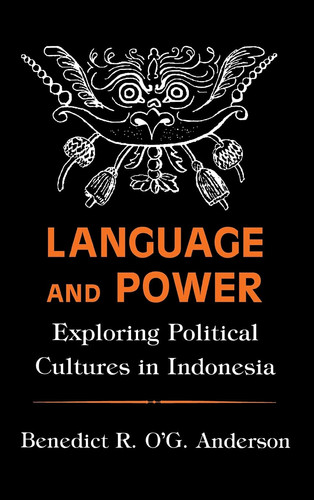
Positives The book is widely praised for its profound insights into Indonesian political culture, particularly concerning Java. Reviewers highlight Benedict Anderson's remarkable deep understanding of the region and his unique exploration of how power and language intricately relate to the nation's struggle for independence. The work is lauded for its multidisciplinary approach, drawing from anthropology, linguistics, history, and politics without sacrificing analytical rigor, offering a fresh perspective that moves beyond standard postcolonial analysis. Readers found it exceptional for illuminating how authority is performed through rituals, symbols, and language, and for its relevant historical reflections on traditional Javanese power systems and the evolving role of Bahasa Indonesia. Many consider its analysis of the nation-state concept foundational and universal, with particular strengths in tracing the genealogy of Bahasa Indonesia. The prose is described as clean, clear, and logically presented, making it an enlightening and thought-provoking read that serves as an excellent gateway to further academic sources.
Negatives Despite its strengths, some reviewers found the book challenging to navigate. Common criticisms include its complexity and occasional obscurity, with some parts being difficult to follow due to subtle allusions. As a collection of essays written over several decades, it sometimes presents small inconsistencies or reversals across chapters. A few readers felt that the book's broad scope, encompassing a wide array of topics within a single volume, could be overwhelming and might have benefited from being separated into multiple, more focused works. Furthermore, the highly subtle nature of many subjects discussed may necessitate a second reading for full comprehension, and for those reading a translated version, the translation itself was noted as potentially verbose.
Conclusion Overall, "Language and Power" is considered an indispensable and valuable academic text for anyone seeking a comprehensive understanding of the deeper logics underpinning Indonesian politics, culture, and society, especially its Javanese cultural core. It provides a systematic and academically grounded framework for decoding the often-opaque operations of power in the region. This book is highly recommended for scholars, policy professionals, businesspeople, and any reader interested in postcolonial studies, anthropology, linguistics, or the formation of nation-states. It particularly appeals to those who appreciate rigorous academic analysis and are prepared to engage with complex, nuanced, and subtly presented ideas about the interplay of power, language, and identity.