
Le Dernier des Mohicans édition Originale et Annotée
7.4 / 10 104K ratings
- Language
- French
- Published
- 2020
- Publisher
- Independently Published
- Pages
- 240
- ISBN
- 9798664948486
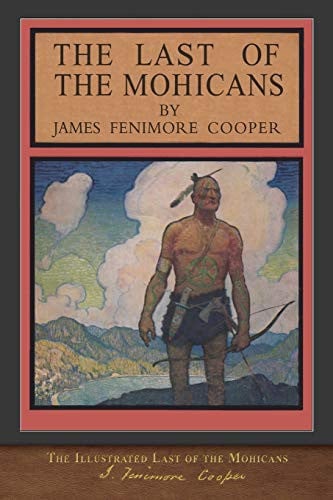
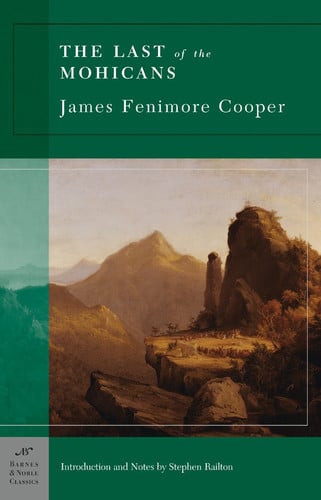
Set in the perilous wilderness of upstate New York during the French and Indian War of 1757, James Fenimore Cooper's The Last of the Mohicans plunges readers into a struggle for survival. Two sisters, Cora and Alice Munro, embark on a dangerous journey to reach their father at Fort William Henry, only to find themselves betrayed and captured by the cunning Huron warrior, Magua. Their fate becomes intertwined with Natty Bumppo, the skilled frontiersman known as Hawkeye, and his Mohican companions, Chingachgook and his son Uncas, as they navigate treacherous landscapes and the brutal realities of a frontier conflict.
This historical romance explores themes of loyalty, cultural clash, and heroism amidst the backdrop of a changing American frontier. As alliances shift and dangers mount, the characters confront their beliefs and forge unexpected bonds in a world where survival depends on wit, courage, and the understanding of an untamed land.
This historical romance explores themes of loyalty, cultural clash, and heroism amidst the backdrop of a changing American frontier. As alliances shift and dangers mount, the characters confront their beliefs and forge unexpected bonds in a world where survival depends on wit, courage, and the understanding of an untamed land.
Subjects
- Comics & Graphic Novels
- Kindle Store
- Categories
- Kindle eBooks
- General
- Reference
- Literature & Fiction
- Genre Fiction
- Subjects
- Literary
- Action & Adventure
- Fantasy
- Mythology & Folk Tales
- Science Fiction & Fantasy
- Historical
- UNITED STATES_FICTION
- Self Service
- History
- Anthologies
- Military
- Arborist Merchandising Root
- Children's Books
- Non-Classifiable
- Romance
- Novelty
- CHILDREN'S FICTION
- Coming of Age
- United States
- Study Guides
- English & College Success
- English
- FICTION_GENERAL
- Study & Teaching
- Science Fiction
- FICTION_ACTION & ADVENTURE
- Specialty Boutique
- New, Used & Rental Textbooks
- Foreign Language Study & Reference
- Fiction
- Biography & Autobiography
- Juvenile Fiction
- Classics
- Expeditions & Discoveries
- Fiction, historical, general
- Criticism
- Education
- American fiction (fictional works by one author)
- Fiction, action & adventure
- Literary Collections
- Fiction, general
- Children's fiction
- Adventure and adventurers, fiction
- Juvenile fiction
- Fiction, war & military
- Adventure stories
- Adaptations
- FICTION_HISTORICAL_GENERAL
- AMERICAN FICTION (FICTIONAL WORKS BY ONE AUTHOR)
- ADVENTURE AND ADVENTURERS_FICTION
- Alternative History
- Westerns
- COMICS & GRAPHIC NOVELS_GENERAL
- English as a Second Language
- Classic Literature
- Teaching
- Ancient & Medieval Literature
- Ancient & Classical
- Commerce
- AMERICAN LITERATURE
- Audio Adult: Books On Tape
- Foreign Language Study
- People & Places
- Mystery & Detective
- European
- Language Arts & Disciplines
- Language
- Language Arts
- English language
- American
- Literary Criticism
- Drama
- Study Aids
- Literature
- War & Military
- Sale Books
- Chinese
- Spanish
- French
- Fiction, historical
- Large type books
- Dictionaries
- World Literature
- Asian American
- Book Notes
- Bilingual Education
- Readers
- Readers (Primary)
- Black & African American
- Histoire
- War
- American literature
- Traditional
- 19th Century
- Romans, nouvelles
- Intermediate
- Americas (North, Central, South, West Indies)
- Indians of North America
- Historical fiction
- Historical - General
- Foreign Language - Dictionaries
- Phrase Books
- Historia
- FICTION_WESTERNS
- Land tenure
- Native American
- Ancient
- Audiobooks
- Economic conditions
- Comics & graphic novels, general
- Alternate History
- INDIANS OF NORTH AMERICA_FICTION
- Specimens
- Literature - Classics
- Textbooks for foreign speakers
- Indigenous
- Frontier and pioneer life
- Unabridged Audio - Fiction/General
- Ficción
- Comic books, strips
- Graphic novels
- Colonial & Revolutionary Periods
- Roman
- Audio - Fiction (Unabridged)
Original edition
Last Of The Mohicans (Notable American Authors Series - Part I)Originally published in 1826 English Reprint Services Corp
Other editions (688)



Listen to the summary Narrated summary
The year is 1757, and the wild, untamed forests of upstate New York are a crucible of conflict, gripped by the brutal French and Indian War. Amidst this perilous landscape, two sisters, Cora and Alice Munro, embark on a perilous journey from Fort Edward to reach their father, Colonel Munro, at the beleaguered Fort William Henry. They are escorted by the earnest Major Duncan Heyward and guided by a seemingly trustworthy Native American named Magua. Their path is fraught with tension, a sense of foreboding hanging heavy in the air, a whisper of unseen dangers lurking within the dense foliage.
Their initial guide, Magua, a Huron, soon reveals his true, treacherous colors, leading the party astray with malicious intent. Fate, however, intervenes in the form of Natty Bumppo, the skilled frontiersman known as Hawkeye, and his two noble Mohican companions: the sagacious elder Chingachgook and his brave, swift son, Uncas. Together, these seasoned woodsmen unravel Magua's deception, but not before the sisters, Heyward, and a psalm-singing teacher named David Gamut are captured by Magua's Huron allies. Magua, nursing a deep-seated grievance against Colonel Munro, demands Cora as his bride, a chilling act of vengeance.
Hawkeye, Chingachgook, and Uncas, with Heyward now by their side, relentlessly pursue the captives through the labyrinthine wilderness. Their quest leads them to the very gates of Fort William Henry, now under siege by the French forces led by General Montcalm. The British, outmatched and without hope of reinforcement, are forced to surrender. A truce is declared, promising safe passage for the British troops and civilians. Yet, this promise shatters into a horrific massacre as the French-allied Hurons, their bloodlust unleashed, fall upon the retreating British column, scattering and slaughtering many.
In the ensuing chaos, Magua seizes his opportunity, recapturing Cora, Alice, and Gamut, dragging them once more into the depths of the forest. The pursuit resumes, a desperate race against time and the formidable cunning of Magua. The trail leads through a Huron village, where Cora, in a desperate attempt to save her sister, offers herself to Magua, and then to a Delaware village, where a council is held to determine the captives' fate.
The climax unfolds with heart-wrenching swiftness. In a final, desperate battle against Magua and his Hurons, Uncas, the valiant "Last of the Mohicans," fights with fierce determination. He falls, tragically, at Magua's hand, his life extinguished on a precipice. Cora, who had refused Magua's advances, is also brutally struck down by a Huron warrior as she attempts to flee. Enraged by the deaths of his adopted brother and the woman he admired, Hawkeye, with grim resolve, raises his rifle, Kildeer, and swiftly ends Magua's reign of terror. Alice is finally rescued, but the cost is immeasurable.
As the dust settles, a profound sorrow descends upon the survivors. Chingachgook, his spirit heavy with the loss of his only son, laments that he is now truly the last of his noble tribe. The wilderness, once a symbol of freedom and strength, now echoes with the mournful cries for those lost. The shared grief of colonial and native peoples intertwines, a poignant testament to the brutal realities of war and the fading of an ancient way of life.
Their initial guide, Magua, a Huron, soon reveals his true, treacherous colors, leading the party astray with malicious intent. Fate, however, intervenes in the form of Natty Bumppo, the skilled frontiersman known as Hawkeye, and his two noble Mohican companions: the sagacious elder Chingachgook and his brave, swift son, Uncas. Together, these seasoned woodsmen unravel Magua's deception, but not before the sisters, Heyward, and a psalm-singing teacher named David Gamut are captured by Magua's Huron allies. Magua, nursing a deep-seated grievance against Colonel Munro, demands Cora as his bride, a chilling act of vengeance.
Hawkeye, Chingachgook, and Uncas, with Heyward now by their side, relentlessly pursue the captives through the labyrinthine wilderness. Their quest leads them to the very gates of Fort William Henry, now under siege by the French forces led by General Montcalm. The British, outmatched and without hope of reinforcement, are forced to surrender. A truce is declared, promising safe passage for the British troops and civilians. Yet, this promise shatters into a horrific massacre as the French-allied Hurons, their bloodlust unleashed, fall upon the retreating British column, scattering and slaughtering many.
In the ensuing chaos, Magua seizes his opportunity, recapturing Cora, Alice, and Gamut, dragging them once more into the depths of the forest. The pursuit resumes, a desperate race against time and the formidable cunning of Magua. The trail leads through a Huron village, where Cora, in a desperate attempt to save her sister, offers herself to Magua, and then to a Delaware village, where a council is held to determine the captives' fate.
The climax unfolds with heart-wrenching swiftness. In a final, desperate battle against Magua and his Hurons, Uncas, the valiant "Last of the Mohicans," fights with fierce determination. He falls, tragically, at Magua's hand, his life extinguished on a precipice. Cora, who had refused Magua's advances, is also brutally struck down by a Huron warrior as she attempts to flee. Enraged by the deaths of his adopted brother and the woman he admired, Hawkeye, with grim resolve, raises his rifle, Kildeer, and swiftly ends Magua's reign of terror. Alice is finally rescued, but the cost is immeasurable.
As the dust settles, a profound sorrow descends upon the survivors. Chingachgook, his spirit heavy with the loss of his only son, laments that he is now truly the last of his noble tribe. The wilderness, once a symbol of freedom and strength, now echoes with the mournful cries for those lost. The shared grief of colonial and native peoples intertwines, a poignant testament to the brutal realities of war and the fading of an ancient way of life.
What other readers say
Liked
Reviews for James Fenimore Cooper's "The Last of the Mohicans" highlight its enduring significance in American literature and its groundbreaking exploration of the American frontier. Many readers appreciate Cooper's profound historical imagination and his detailed, often fascinating descriptions of the untouched wilderness, flora, and fauna, which offer a vivid glimpse into a disappearing world. The novel is recognized for its influence on American archetypes, particularly the character of Hawkeye as an early Western hero, inspiring countless literary descendants. Reviewers also note the book's adventurous plot, featuring moments of suspense, dramatic clashes, and well-rendered action sequences, while others value its attempt to depict diverse Native American traditions and the complex impact of colonization, which was considered revolutionary for its time. Some find the emotional depth of the story, particularly its ending, to be among the most evocative passages in American letters, capable of stirring strong feelings about the loss and change inherent in the nation's expansion.
Disliked
However, a significant number of reviews point out considerable flaws in Cooper's writing style. Many find the prose to be overly descriptive, dense, and convoluted, leading to a slow, laborious, and at times boring reading experience. The dialogue is frequently criticized as stilted, formal, and unnatural for the rugged setting, and some characters are seen as lacking depth or development, with their actions and conversations sometimes feeling artificial or repetitive. A common complaint is the repetitive plot structure, often revolving around cycles of capture and rescue, and some reviewers find certain plot points implausible or absurd. Furthermore, the portrayal of Native Americans and women is often deemed stereotypical, outdated, and culturally chauvinistic by modern standards, and Hawkeye's frequent emphasis on his "white blood" is noted as an irritating characteristic. The intrusive third-person narrator and the confusing use of multiple names for characters also detract from the reading experience for many.
In short
Ultimately, "The Last of the Mohicans" is widely regarded as a historically important classic, rather than a universally entertaining read for contemporary audiences. It is recommended for those interested in historical fiction, the early American frontier, or the evolution of American literature, particularly readers who are patient with 19th-century prose and can appreciate the book's historical context. While some find it a powerful anti-colonial narrative that critiques the prejudices of its era and explores profound themes of loss and the clash of cultures, others may struggle with its stylistic shortcomings and outdated characterizations. The novel appeals to readers who can look beyond its flaws to appreciate its ambition, its contribution to national identity, and its depiction of a bygone American landscape.
No reviews yet. Be the first.